Hari raya puasa, also known as Eid al-Fitr, is the Islamic festival marking the end of Ramadan, the holy month of fasting. It begins on the first day of Shawwal, the tenth month of the Islamic lunar calendar, following a confirmed sighting of the new moon.
The holiday is observed by Muslims worldwide through communal prayers, gift-giving, feasting, and visiting relatives. It is a time of gratitude, forgiveness, and renewed spiritual connection. The name "Hari raya puasa" translates literally to "Festival Day of Fasting," reflecting its roots in the completion of the month-long fast during Ramadan.
According to the Islamic Society of North America (ISNA), Eid al-Fitr is one of the two major religious festivals in Islam, the other being Eid al-Adha. The date varies annually due to the lunar calendar, falling approximately 11 days earlier each year compared to the Gregorian calendar.
Observance begins with the sighting of the new moon after Ramadan ends. Once confirmed, Muslims attend special morning prayers called Salat al-Eid, held in mosques or open fields. These prayers are led by an imam and include sermons focused on gratitude, charity, and community unity.
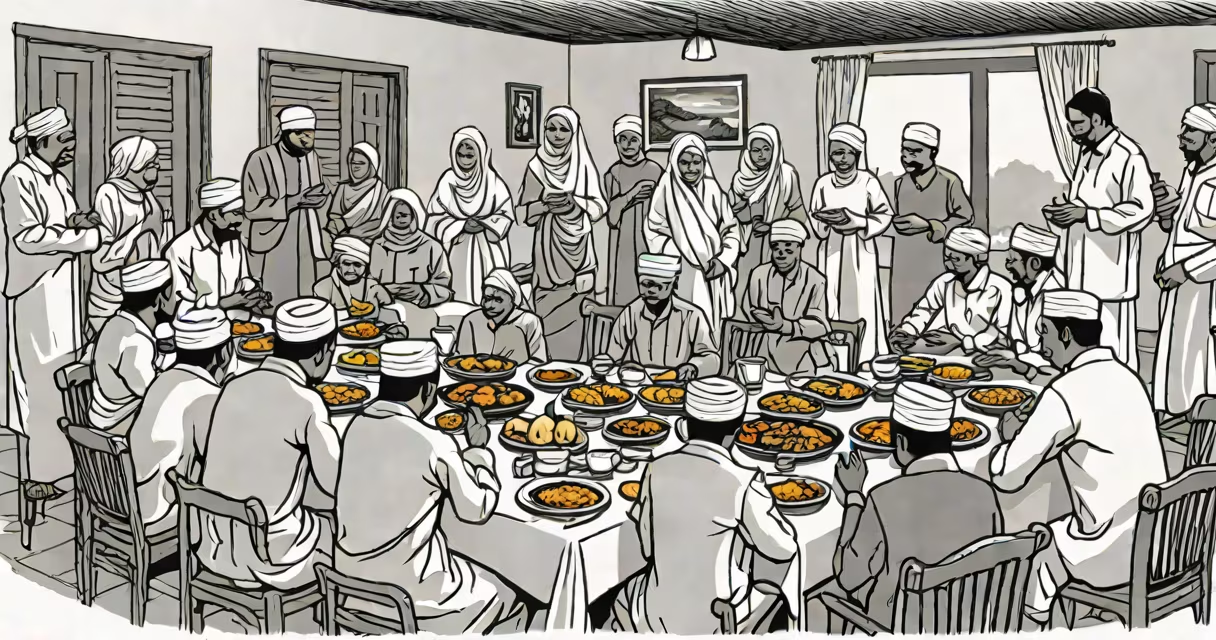
After prayers, families gather for large meals featuring regional dishes such as ketupat (rice cakes wrapped in woven palm leaves), rendang (spiced slow-cooked meat), and kuih-muih (traditional Malay sweets). Children receive angpau-red envelopes containing money-from elders as a gesture of blessing and goodwill.
Charity is central to the celebration. Muslims are required to pay zakat al-fitr, a form of almsgiving, before the Eid prayers. This helps even the poorest can participate in the festivities. The amount is typically equivalent to about 2.5 kilograms of staple food such as rice or wheat, according to the Fiqh Council of North America.
While the core religious observances remain consistent, cultural traditions differ widely. In Malaysia and Indonesia, Hari raya puasa is a national public holiday lasting three to five days. Families wear traditional batik or songket attire, and homes are decorated with lights and flowers.
In Turkey, the festival is known as Şeker Bayramı ("Sugar Holiday") and features children receiving candies and small gifts. In Egypt, people prepare a dish called koshari-a mix of lentils, rice, pasta, and fried onions-and share it with neighbors.
A lesser-known fact: in some parts of West Africa, including Senegal and Gambia, the start of Eid is announced via drum signals rather than official proclamations. This tradition dates back centuries and reflects local methods of communication before modern media.
| Region | Traditional Dish | Distinctive Practice |
|---|---|---|
| Malaysia/Indonesia | Ketupat, rendang | Wearing baju raya; visiting family graves |
| Turkey | Pilav, baklava | Children receive sugar treats and toys |
| Egypt | Koshari | Sharing meals with neighbors and strangers |
| Senegal | Moros, thieboudienne | Drum announcements for Eid start |
Hari raya puasa is often mistaken for the beginning of Ramadan, but it occurs at the end. Ramadan lasts 29 or 30 days depending on the lunar cycle, and Eid begins the day after the last day of fasting.
Another confusion arises around the term "Eid." Some assume it is a single event, but Eid al-Fitr and Eid al-Adha are separate holidays. Eid al-Fitr celebrates the completion of fasting; Eid al-Adha commemorates Prophet Ibrahim's willingness to sacrifice his son, as part of the Hajj pilgrimage.
There is also a common belief that all Muslims celebrate Hari raya puasa on the same day globally. However, due to differences in moon sighting, celebrations may begin a day apart in different regions. For example, in 2023, Eid was celebrated on April 10 in most of Southeast Asia, but on April 11 in parts of South Asia and the Middle East.
I attended a Hari raya puasa celebration in Kuala Lumpur in 2022. The mosque grounds were filled with over 5,000 people for the Eid prayer. Afterward, families moved to nearby parks and homes, where tables overflowed with dishes like sambal udang and lapis legit. The air smelled of cinnamon, turmeric, and grilled chicken.
One family invited me to their home, where the eldest woman distributed red envelopes to children while reciting short prayers. A young boy asked, "Why do we give money?" His grandmother replied, "To teach generosity, not just joy." That moment captured the spirit of the day: faith, family, and giving.
For many Muslims, Hari raya puasa is more than a holiday. It is a return to community, a reset of spiritual focus, and a reaffirmation of shared values. The act of breaking the fast together-after weeks of discipline-reinforces bonds across generations and social lines.
Understanding hari raya puasa requires recognizing both its religious foundations and its deep cultural expression. Whether observed in a quiet village in Aceh or a bustling city like Istanbul, the essence remains the same: renewal, gratitude, and connection.