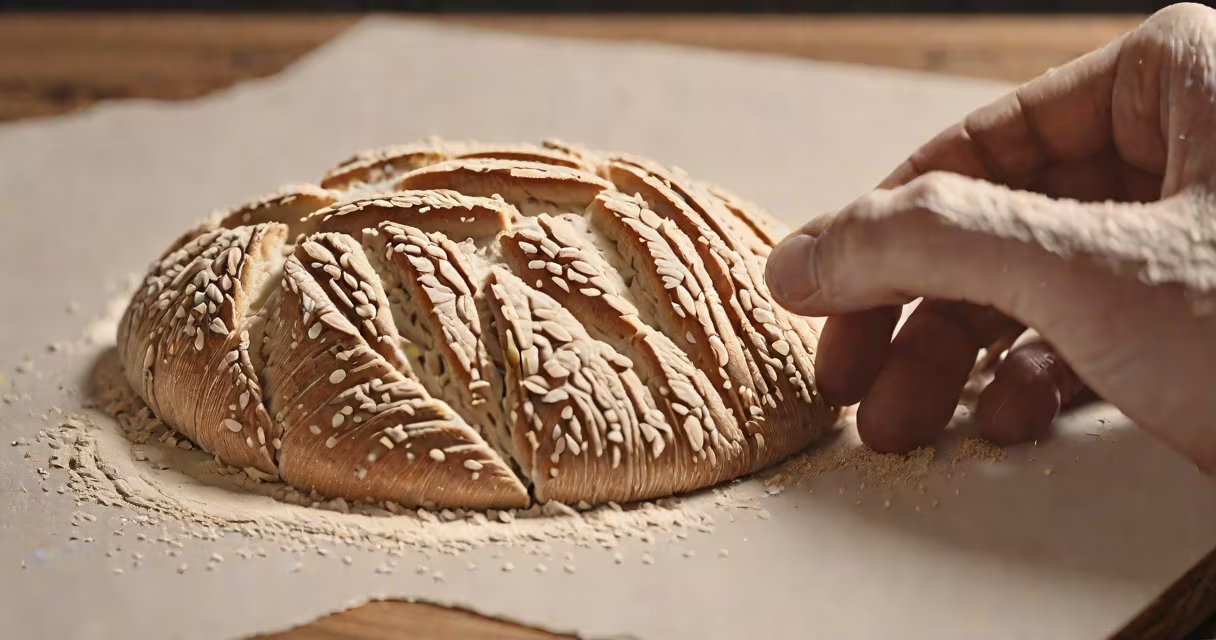
Bun Lab is a practical, science-driven approach to making high-quality bread at home by mastering fermentation, hydration, and gluten development through controlled experimentation. It treats bread baking as a repeatable process grounded in food chemistry and consistent results.
Unlike traditional baking methods passed down by memory or instinct, Bun Lab applies measurable variables-such as starter activity, bulk fermentation time, and oven spring-to produce predictable outcomes. It's not a brand or product, but a methodology rooted in understanding how ingredients interact under specific conditions.
The term emerged from online communities focused on sourdough and artisan bread, where bakers began documenting their processes with precision. The goal is not just to make bread, but to understand why certain steps work better than others.
Bun Lab operates on the principle that bread quality stems from controlling four core factors: starter health, hydration level, fermentation timing, and heat transfer during baking. Each variable is adjusted deliberately to observe its effect on crumb structure, crust texture, and flavor development.
For example, a baker using Bun Lab might test two loaves with identical flour and water ratios but different fermentation times-12 hours versus 18 hours. After baking, they compare crumb openness, chewiness, and acidity. This method isolates cause and effect, eliminating guesswork.
Success hinges on consistency. Bakers record every detail: room temperature, dough weight, resting intervals, and even the type of bowl used. Data collection turns intuition into repeatable technique.
Bun Lab relies on three foundational elements: a stable sourdough starter, accurate measurement tools, and a controlled environment. Without these, results vary too much to draw conclusions.
Starter Health: A mature starter (fed 12 hours prior, doubling in volume within 4-6 hours) ensures reliable leavening. A weak starter leads to dense loaves, regardless of other variables.
Hydration: Measured as a percentage of water relative to flour weight. A 75% hydration dough is wetter and more challenging to handle than a 65%, but produces larger holes in the crumb due to greater gas retention.
Fermentation Control: Time and temperature dictate yeast and bacteria activity. Cold fermentation (refrigerated overnight) slows acid production, preserving sweetness and improving digestibility.
| Variable | Typical Range | Effect on Final Loaf |
|---|---|---|
| Starter Feed Ratio | 1:1:1 (flour:water:starter) | Higher activity; faster rise but increased acidity |
| Hydration Level | 65%-80% | Higher = more open crumb, harder to shape |
| Bulk Fermentation Time | 4-6 hours (room temp), 12-18 hours (cold) | Longer = more flavor, risk of overproofing |
| Oven Spring Temperature | 450°F-500°F (230°C-260°C) | Higher = crispier crust, faster expansion |
A key insight from Bun Lab is that overproofing doesn't always result in collapse-it can lead to a porous, airy crumb if the gluten network remains intact. This contradicts common belief that overproofed dough must fail.
Bun Lab is used by home bakers aiming to move beyond trial-and-error. It's especially effective for those who want to replicate successful loaves consistently or troubleshoot failures.
For instance, a baker struggling with flat loaves may discover that their dough was over-proofed because the room temperature exceeded 78°F (25.5°C). By lowering ambient temperature and extending fermentation time, they achieve lift without collapse.
Professional bakers use similar systems in commercial kitchens. According to the Bread and Butter Institute, standardized fermentation protocols reduce waste by up to 30% in bakery operations. Bun Lab scales this discipline to home settings.
One baker documented a 14-day experiment comparing three hydration levels (65%, 75%, 80%) using the same flour, starter, and bake time. The 75% loaf had the most balanced crumb-open but not collapsed-and the cleanest flavor profile. The 80% loaf spread too much during proofing and baked with uneven texture.
Bun Lab is often mistaken for "sourdough-only" baking. While it originated in sourdough circles, the principles apply to any fermented dough, including baguettes, ciabatta, and even sweet brioche with levain.
Another misconception is that Bun Lab requires expensive equipment. A digital scale, timer, and basic mixing bowls are sufficient. A $20 kitchen thermometer can replace a $150 oven probe for monitoring dough temperature.
Most, Bun Lab is not about perfection. It's about learning. I once spent three weeks adjusting hydration and fold timing to fix a gummy crumb. The breakthrough came when I realized my starter was too acidic-reducing feed frequency improved flavor and texture. That single adjustment saved me 12 failed batches.
Some confuse Bun Lab with "baking hacks" or viral TikTok techniques. Those often prioritize speed over stability. Bun Lab prioritizes reproducibility. A recipe that works once is not reliable. One that works 10 times under the same conditions is valid.
Understanding what is Bun Lab means recognizing it as a structure-not a rigid set of rules. It empowers bakers to ask questions, test hypotheses, and refine their craft systematically. The result is bread that tastes better, looks better, and behaves predictably.