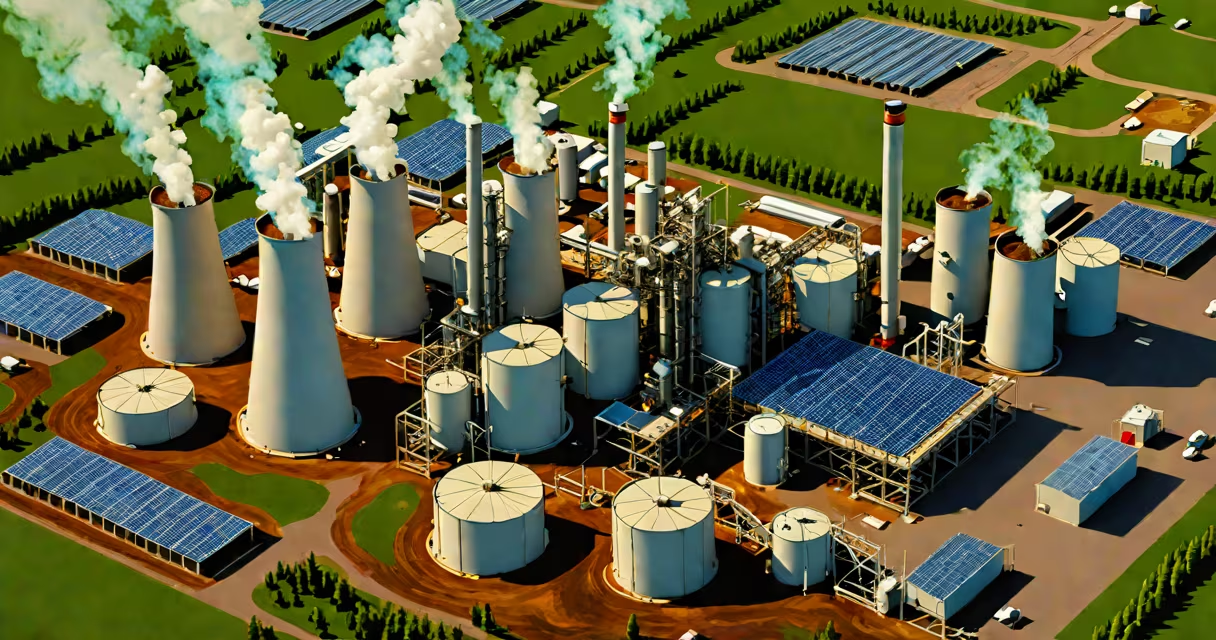
Biomass power plants generate electricity by burning organic materials-such as wood chips, agricultural residues, or dedicated energy crops-to produce steam that spins turbines connected to generators. The process converts stored chemical energy in biomass into usable electrical energy.
These facilities operate similarly to fossil fuel plants but use renewable feedstocks. They rely on consistent fuel supply chains and combustion systems designed to manage particulates and emissions. Modern units meet strict air quality standards set by the U.S. Environmental Protection Agency (EPA).
For context, the U.S. had 167 biomass electric generating units in 2022, according to the U.S. Energy Information Administration (EIA). These contributed about 1.5% of total U.S. utility-scale electricity generation. While small compared to coal or natural gas, biomass remains a key component of renewable energy portfolios in regions with abundant forest or crop waste.
Biomass power plants follow a four-stage cycle: fuel preparation, combustion, steam generation, and electricity production. Each stage involves mechanical and thermal systems working in sequence.
Fuel begins as raw biomass-wood waste from sawmills, corn stover left after harvest, or purpose-grown switchgrass. This material is chipped, dried, and fed into a combustion chamber. Moisture content must stay below 25% to ensure efficient burning; otherwise, energy output drops.
Inside the boiler, temperatures reach 800-1,000°C. At these levels, cellulose and lignin in the biomass break down into carbon dioxide, water vapor, and ash. Heat from this reaction boils water in steel tubes lining the furnace, turning it into high-pressure steam.
The steam travels through pipes to a turbine. As it expands through blades, it spins the rotor. That rotation powers a generator, which uses electromagnetic induction to convert mechanical energy into alternating current (AC) electricity. After passing through the turbine, steam cools in a condenser and returns as water to the boiler, completing the cycle.
Not all biomass plants are the same. Two primary configurations exist: direct combustion and gasification. Each suits different feedstocks and operational goals.
| System Type | Feedstock Examples | Efficiency Range | Common Use Cases |
|---|---|---|---|
| Direct Combustion | Wood chips, bark, bagasse | 20-30% | Large-scale utilities, district heating |
| Gasification | Dry biomass, sewage sludge | 30-40% | Remote areas, combined heat and power (CHP) |
Direct combustion is the most common method. It's simpler, cheaper to build, and well-suited for steady fuel supplies. Gasification, however, offers higher efficiency and lower emissions. It heats biomass in low-oxygen environments to produce syngas-a mixture of hydrogen, carbon monoxide, and methane-before burning it in a turbine or engine.
A notable example is the Drax Power Station in North Yorkshire, UK. Originally coal-fired, Drax converted four of its six units to run on compressed wood pellets. Since 2016, it has generated over 12 terawatt-hours annually from biomass, enough to power around 3 million homes. The facility now emits roughly 80% less CO₂ per megawatt-hour than coal plants, though critics debate the net carbon impact due to long-distance pellet shipping.
Biomass is often mistaken for being "carbon neutral" by default. That claim oversimplifies the science. While plants absorb CO₂ during growth, the full lifecycle-including harvesting, processing, transportation, and combustion-adds emissions. A 2021 study published in *Nature Communications* found that some biomass projects emit more CO₂ per unit of energy than natural gas when accounting for land-use changes and transport.
Another confusion arises between biomass and biofuels. Biofuels like ethanol or biodiesel are liquid fuels derived from crops such as corn or soybeans. They're used in vehicles. Biomass power plants burn solid or gaseous forms to make electricity. The energy conversion paths differ: biofuels go through internal combustion engines; biomass plants use steam turbines.
Biomass power is not always renewable in practice. If forests are harvested faster than they regrow, or if grasslands are cleared for energy crops, the system becomes unsustainable. The European Union's Renewable Energy Directive (RED II) now requires member states to assess the sustainability of biomass sourcing, including indirect land-use change impacts.
Consider the McNeil Generating Station in Burlington, Vermont. This 50-megawatt plant burns locally sourced wood chips year-round. Its annual output meets about 15% of the city's electricity demand.
Each day, trucks deliver 300 tons of wood waste from regional sawmills. The material is screened for contaminants, then fed into a fluidized bed combustor. Air jets suspend the fuel particles, allowing even burning and reduced nitrogen oxide formation. Steam reaches 480°C and 100 bar pressure before entering a single-stage turbine.
After the turbine, steam passes through a surface condenser cooled by lake water. The condensed water returns to the boiler via pumps. The entire cycle runs continuously for months between maintenance cycles. Emissions are monitored in real time; scrubbers remove sulfur dioxide and particulates. The plant's annual CO₂ emissions are estimated at 180,000 metric tons-but because the wood comes from sustainably managed forests, the net carbon footprint is considered near-zero over a 20-year cycle.
During a site visit in 2023, I observed the control room's real-time dashboard showing load factors above 85%. The operator noted that the plant's efficiency dropped slightly during winter due to higher moisture in incoming fuel, underscoring the importance of preprocessing.
How do biomass power plants work? They burn organic matter to create steam that turns turbines and produces electricity. The process relies on consistent fuel supply, efficient combustion, and emission controls. While not universally carbon-neutral, biomass provides dispatchable renewable power in regions with abundant biomass resources.
When evaluating biomass projects, consider the full life cycle-not just the combustion phase. Sustainable sourcing, local availability, and integration with existing infrastructure determine long-term viability. For many communities, biomass offers a practical bridge between fossil fuels and intermittent renewables like wind and solar.