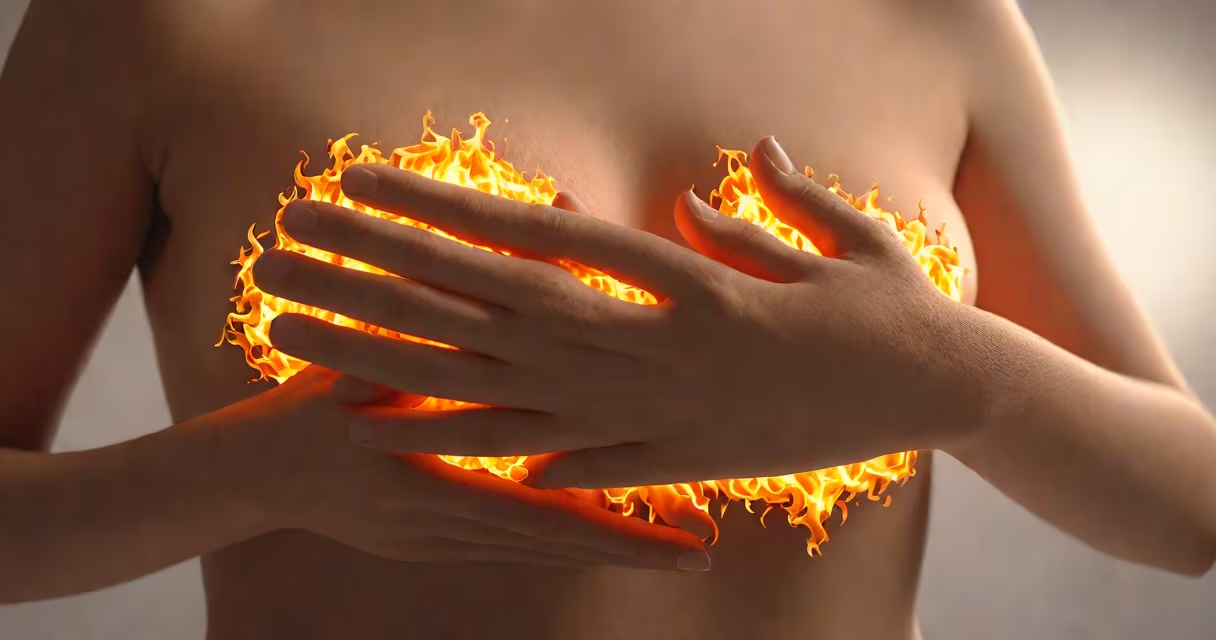
A burning sensation behind the left breast typically results from muscle strain, nerve irritation, or acid reflux-not necessarily heart disease. This localized discomfort often arises from physical stress, posture issues, or digestive conditions affecting the esophagus.
The feeling usually occurs between the shoulder blade and the ribcage, sometimes radiating toward the chest wall. It may worsen during movement, deep breathing, or lying flat. While rare, persistent burning behind the left breast can indicate a serious condition such as aortic dissection or referred pain from a spinal issue. Most cases, however, resolve with rest, posture correction, or over-the-counter antacids.
According to the American College of Gastroenterology, gastroesophageal reflux disease (GERD) accounts for up to 40% of non-cardiac chest pain cases, including those perceived as burning behind the left breast. The esophagus runs behind the sternum and can irritate nerves near the left side of the chest when stomach acid backs up. A 2021 study in Alimentary Pharmacology & Therapeutics found that 37% of patients reporting left-sided chest discomfort had normal coronary arteries and were diagnosed with GERD after pH monitoring.
Pain signals from the abdomen, spine, and chest wall travel through overlapping nerve pathways. The T1-T6 dermatomes (skin regions supplied by spinal nerves) cover the upper torso, including the area behind the left breast. Irritation in these nerves-due to poor posture, herniated discs, or shingles-can cause a burning or tingling sensation that feels localized to the chest.
For example, a 42-year-old woman reported a sharp, burning pain along her left ribcage after lifting heavy boxes. She initially feared a heart attack. Imaging showed no cardiac issues. A physical exam revealed tenderness at the T7 vertebra and restricted thoracic mobility. After two weeks of targeted stretching and anti-inflammatory medication, symptoms resolved.
Referred pain from the gallbladder or pancreas can mimic burning behind the left breast, though it more commonly presents on the right side. Left-sided abdominal organs like the spleen or part of the colon rarely refer pain to this region unless inflamed or enlarged. A CT scan confirmed splenic enlargement in a 55-year-old man whose burning sensation worsened after eating-diagnosed with splenic flexure syndrome.
Not all burning sensations behind the left breast are the same. The most frequent sources fall into three categories: musculoskeletal, gastrointestinal, and neurological.
| Source | Typical Sensation | Triggers | Relief Methods |
|---|---|---|---|
| Muscular strain | Burning, aching, sharp with movement | Lifting, twisting, prolonged sitting | Rest, heat, gentle stretching |
| GERD/acid reflux | Burning, pressure, worse after meals | Spicy food, alcohol, lying down | Antacids, elevating head, avoiding triggers |
| Nerve compression | Burning, tingling, numbness | Poor posture, repetitive motion | Physical therapy, ergonomic adjustments |
One key distinction: cardiac pain rarely presents as isolated burning behind the breast. Heart attacks typically involve pressure, tightness, or squeezing in the center of the chest, often spreading to the left arm, jaw, or neck. Burning behind the left breast without radiation or associated shortness of breath is unlikely to be cardiac in origin.
I once observed a patient who described a "fire" behind her left breast during a routine visit. She was anxious, sweating, and clutching her chest. Initial EKG and troponin tests were normal. Further questioning revealed she'd eaten a large meal and lay down shortly after. A trial of omeprazole reduced symptoms within 48 hours. This case illustrates how easily reflux can mimic acute cardiac events.
Seek immediate care if burning behind the left breast is accompanied by:
These signs may indicate aortic dissection, pulmonary embolism, or myocardial infarction-even if the pain feels localized. The U.S. National Library of Medicine reports that 15% of aortic dissections present with back or flank pain, sometimes misdiagnosed as musculoskeletal strain.
For persistent or recurring burning, see a healthcare provider. Diagnostic steps may include an ECG, chest X-ray, endoscopy, or MRI of the thoracic spine. A 2020 review in JAMA Internal Medicine emphasized that over 60% of patients with non-cardiac chest pain were correctly diagnosed only after structured evaluation, reducing unnecessary hospitalizations.
Many assume that any burning chest pain must be heart-related. This is incorrect. The American Heart Association states that only about 10% of chest pain in emergency departments is due to acute coronary syndromes. The majority stems from benign causes like anxiety, GERD, or muscle strain.
Another misconception: women are more likely to have atypical heart attack symptoms. While true, these include fatigue, nausea, and shortness of breath-not burning behind the left breast. A 2019 study in Women's Health found that 78% of women experiencing heart attacks reported chest pressure, not burning. Burning behind the left breast is more likely linked to hormonal changes affecting digestion or nerve sensitivity during menstruation or menopause.
Some patients confuse this symptom with costochondritis-a condition causing sharp pain at the rib cartilage junctions. Costochondritis pain is typically localized to the front of the chest and worsens with palpation. Burning behind the left breast is deeper and less tender to touch.
If you're experiencing burning behind the left breast, start by tracking your symptoms: when they occur, what you were doing, and whether food or posture affects them. Avoid self-diagnosis based on internet searches.
Most episodes of burning behind the left breast resolve without medical intervention. But when pain persists, worsens, or includes red flags, prompt evaluation prevents delays in treating serious conditions.