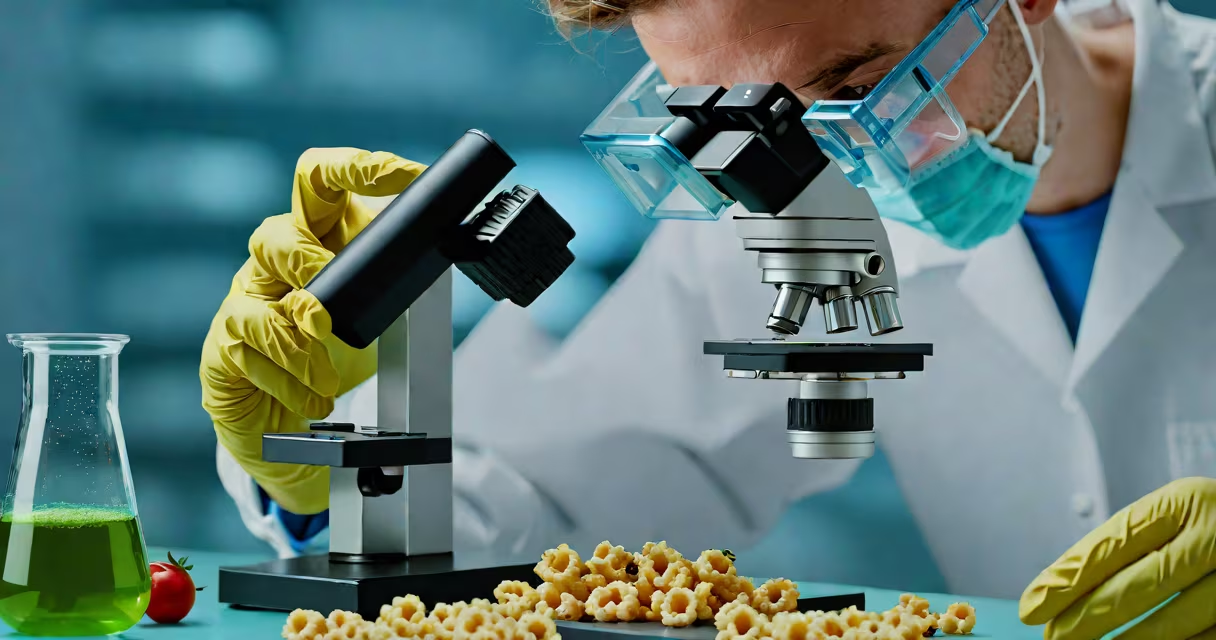
To become a food scientist, earn a bachelor's degree in food science, chemistry, biology, or a related field, gain lab experience through internships or research, and pursue advanced degrees or certifications for specialization. Entry-level roles require technical training and familiarity with food safety regulations like FDA and USDA standards.
Food scientists study the physical, chemical, and biological properties of food to improve safety, nutrition, shelf life, and taste. They work in labs, manufacturing facilities, government agencies, and research institutions. Their tasks include developing new products, analyzing ingredients, testing for contaminants, and ensuring compliance with food laws.
The U.S. Bureau of Labor Statistics reports that food scientists and technologists earned a median annual wage of $77,600 in 2023, with the highest earners working in pharmaceutical and medicine manufacturing. The field requires precision, attention to detail, and the ability to interpret complex data from sensory tests, microbiological assays, and nutritional analysis.
A bachelor's degree in food science, food technology, or a closely related STEM discipline is the minimum requirement. Programs accredited by the Institute of Food Technologists (IFT) meet industry standards and often include coursework in biochemistry, food microbiology, food engineering, and quality control.
Top programs include the University of California, Davis (BS in Food Science), Michigan State University (BS in Food Science and Human Nutrition), and Purdue University (BS in Food Science). These schools offer hands-on lab access, industry partnerships, and research opportunities. Students complete capstone projects such as reformulating a low-sodium snack or designing a shelf-stable plant-based protein bar.
For advancement into leadership, research, or regulatory roles, a master's or PhD is common. A PhD in food science typically takes four to six years beyond the bachelor's degree and includes original research. Many graduate students work as teaching assistants or research associates, gaining experience in grant writing and peer-reviewed publication.
| Education Level | Typical Duration | Common Roles | Salary Range (2023) |
|---|---|---|---|
| Bachelor's degree | 4 years | Quality control analyst, production technician, food safety inspector | $45,000 - $70,000 |
| Master's degree | 2 years | Product development specialist, R&D associate, regulatory affairs coordinator | $65,000 - $95,000 |
| PhD | 4-6 years | Senior scientist, university professor, government policy advisor | $90,000 - $130,000+ |
Successful food scientists combine scientific rigor with practical problem-solving. Key skills include analytical reasoning, statistical analysis using software like JMP or R, and proficiency in laboratory techniques such as HPLC (high-performance liquid chromatography), PCR (polymerase chain reaction), and spectrophotometry.
Internships during undergraduate studies provide direct exposure to real-world challenges. For example, a student at Cornell University completed a summer internship at General Mills, where they helped validate a new oat-based breakfast cereal's texture stability over 90 days. This experience led to a full-time role as a product development associate after graduation.
Many employers prioritize candidates with experience in GMP (Good Manufacturing Practices), HACCP (Hazard Analysis and Critical Control Points), and ISO 22000 food safety systems. Certifications like the Certified Food Scientist (CFS) credential from the Institute of Food Technologists improve credibility and are often required for federal positions.
Food scientists are employed across multiple sectors. In private industry, companies like Nestlé, PepsiCo, and Tyson Foods hire scientists to develop new products, improve packaging, and ensure consistent quality. A team at PepsiCo recently reduced sugar content in a popular soda by 15% using natural sweeteners while maintaining consumer taste preference in blind tests.
Government agencies such as the USDA's Agricultural Research Service and the FDA's Center for Food Safety and Applied Nutrition employ scientists to set national standards, conduct risk assessments, and respond to foodborne illness outbreaks. During the 2021 multistate outbreak of Salmonella linked to peanut butter, FDA food scientists traced contamination sources within 14 days using genomic sequencing.
Academic institutions and nonprofit research centers also offer roles. At the University of Wisconsin-Madison, researchers developed a method to extend the shelf life of fresh-cut produce by 50% using modified atmosphere packaging and antimicrobial coatings.
Food science is not synonymous with culinary arts. While both involve food, food scientists focus on measurable outcomes-nutrient retention, microbial safety, texture consistency-not flavor or presentation alone. A chef may create a dish based on intuition; a food scientist validates it through data.
Another misconception is that food scientists only work in kitchens or factories. Most spend time in laboratories, analyzing samples, running experiments, and writing technical reports. Fieldwork occurs rarely and usually involves sampling raw materials or conducting audits at supplier facilities.
Some assume that a degree in nutrition leads directly to a food science career. While overlapping, nutrition focuses on dietary impact on health, whereas food science emphasizes processing, preservation, and formulation. A person with a degree in dietetics may work in hospitals or wellness coaching but would need additional training to qualify for a food science role.
I once spent a week observing a food science team at a startup developing a gluten-free bread alternative. We ran 12 batches over five days, adjusting hydration levels and enzyme ratios. The final version passed all shelf-life and sensory evaluation criteria. That project taught me that success in food science hinges on iterative testing, not just theory.
Start by researching accredited food science programs. Visit the IFT website to explore certification pathways and job listings. Attend local events like the IFT Annual Meeting or regional food technology expos to network with professionals.
Gain early experience through volunteer work, campus research groups, or part-time lab assistant roles. Apply for internships with food manufacturers, testing labs, or government agencies. Many positions list "preferred" qualifications-such as experience with GC-MS or experience in FDA compliance-so build your resume around those specifics.
With structured education, targeted experience, and ongoing learning, anyone with a passion for food and science can enter this growing field. The path to becoming a food scientist is clear: start with a solid foundation in STEM, apply knowledge through practice, and stay engaged with evolving technologies and regulations.