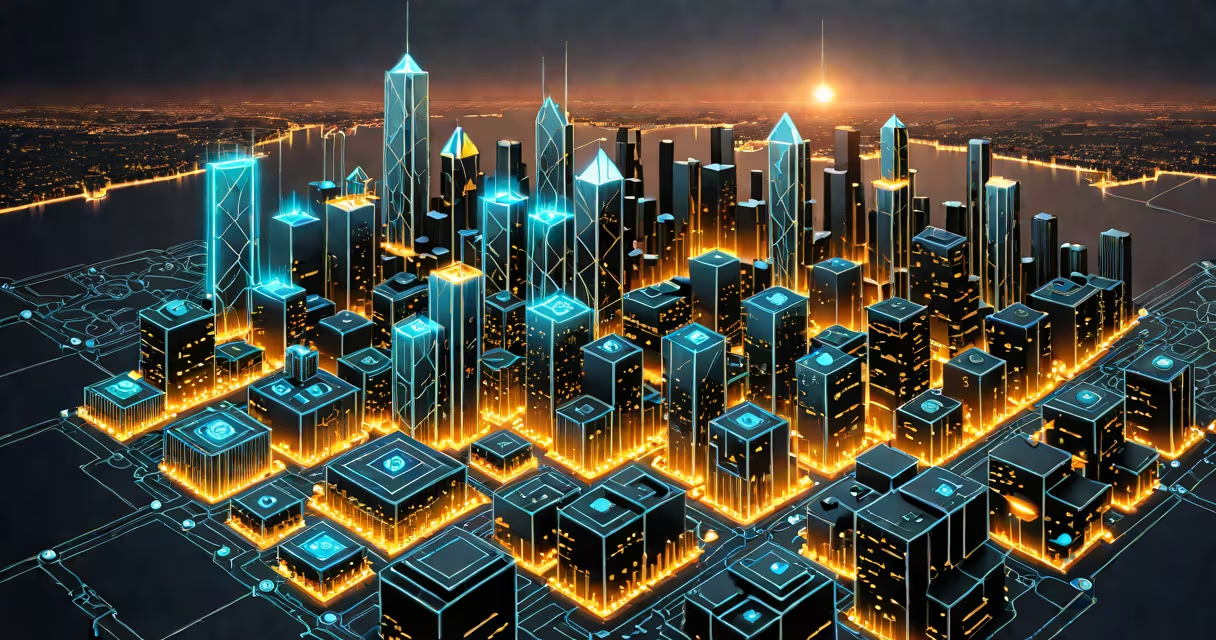
NFT real estate refers to digital parcels of land in virtual worlds, represented as non-fungible tokens on a blockchain. Ownership is verified through smart contracts, allowing buyers to claim exclusive rights to virtual plots. These assets are traded on decentralized marketplaces and can appreciate in value based on demand, location, and development activity.
Unlike physical real estate, NFT real estate exists entirely in digital environments such as Decentraland, The Sandbox, and Somnium Space. Each plot is unique, with metadata defining its size, coordinates, and features. Transactions occur via cryptocurrency wallets and are recorded permanently on a public ledger. This system removes intermediaries like brokers and title companies, reducing friction in buying and selling.
Investors treat NFT real estate similarly to physical real estate: they buy low, hold for appreciation, and sell when value increases. Some users develop their plots with buildings, events, or advertising spaces to generate income. The most valuable plots often sit near high-traffic zones, such as virtual concert venues or popular shopping districts.
Each NFT real estate token is minted on a blockchain-typically Ethereum or Polygon-using standards like ERC-721 or ERC-1155. When a user purchases a plot, the transaction is verified by network nodes and stored on the chain. This creates an immutable record of ownership that cannot be altered or duplicated.
Platforms like Decentraland use a governance model where landowners vote on in-world changes. For example, a group of owners might approve a new public park or zoning rule. This gives holders influence beyond mere ownership-they participate in shaping the environment.
Consider a plot in Decentraland's Fashion District. A buyer spends 15,000 MANA (Decentraland's native token) to acquire a 16x16 meter parcel. The transaction is confirmed in under five minutes. After purchase, the owner can build a virtual fashion show venue, host events, or rent space to brands. If demand rises due to increased traffic, the plot may later sell for 30,000 MANA.
Not all virtual worlds operate the same way. The following table outlines key differences among major platforms:
| Platform | Blockchain | Token Type | Primary Use Case | Notable Feature |
|---|---|---|---|---|
| Decentraland | Ethereum | ERC-721 | Virtual events, social hubs | Landowners vote on world updates |
| The Sandbox | Ethereum | ERC-721 | Gaming, branded experiences | Users create and monetize games |
| Somnium Space | Ethereum | ERC-721 | Immersive social interactions | Supports VR headset integration |
| Cryptovoxels | Ethereum | ERC-721 | Art galleries, music shows | Real-time building tools |
Each platform has distinct economies. Decentraland rewards early adopters with governance power. The Sandbox allows creators to earn revenue from user interactions. Somnium Space emphasizes immersive social experiences. Understanding these differences helps investors choose the right environment based on goals.
Many assume NFT real estate is purely speculative. While price volatility exists, some plots have generated real income. In 2022, a 16x16 plot in The Sandbox sold for $2.4 million. The buyer used it to launch a branded metaverse event series, which attracted partnerships with major brands.
A key misunderstanding is that NFTs represent physical ownership. They do not. The asset is a digital deed tied to a virtual location. If a platform shuts down, ownership records remain on-chain-but access to the world may vanish. According to a 2023 report by Chainalysis, 38% of defunct NFT projects lost user engagement within six months of platform failure.
Another error is treating all NFTs equally. Location matters. A plot in a high-traffic zone can be worth ten times more than one in a remote area. In Decentraland, the average price per square meter in central zones was $1,200 in Q1 2023, compared to $45 in peripheral regions.
Begin with a crypto wallet like MetaMask. Connect it to a marketplace such as OpenSea or the official platform for your chosen virtual world. Fund the wallet with cryptocurrency-usually ETH or MATIC.
Next, browse available plots. Filter by location, size, and price. Check historical sales data to assess value trends. For example, in The Sandbox, plots near the "Sandbox Arena" have seen a 220% increase in value since 2021.
Make an offer or buy outright. Confirm the transaction using gas fees. Once complete, the NFT appears in your wallet. You can then explore the world via desktop or VR headset, and begin planning development.
I purchased a 16x16 plot in Decentraland in 2021 for 25,000 MANA. At the time, the platform had limited user activity. I waited until 2023, when interest surged due to brand partnerships. I sold the plot for 75,000 MANA-a 200% return. The sale took place on OpenSea, and funds were transferred directly to my wallet.
Physical real estate requires legal titles, property taxes, and maintenance. NFT real estate has no physical upkeep but faces different challenges. Platform rules can change overnight. Developers may alter the economy, reduce token value, or restrict access.
For example, in 2022, The Sandbox introduced a new tax on virtual land transactions. Owners saw immediate drops in resale value. This illustrates that digital ownership is subject to centralized decisions-even in decentralized systems.
Also, physical real estate generates rental income through leases. NFT real estate earns revenue through events, advertising, or in-world services. A plot hosting a weekly art exhibition can charge entry fees or sell sponsorships. But success depends on user traffic and consistent engagement.
Investing in NFT real estate demands research, patience, and risk tolerance. Prices fluctuate rapidly. Some platforms fail. Value is not guaranteed. Still, the potential for growth remains. Early buyers in well-established worlds have seen significant returns.
Before investing, evaluate your goals. Are you seeking long-term appreciation? Income generation? Or participation in a community? Choose a platform aligned with your strategy. Use reputable marketplaces and verify contract addresses to avoid scams.
Understanding how to invest in NFT real estate begins with recognizing it as a digital asset class-not a replacement for physical property. It's speculative, experimental, and evolving. Success comes from learning the rules of each world, monitoring trends, and acting with clarity.