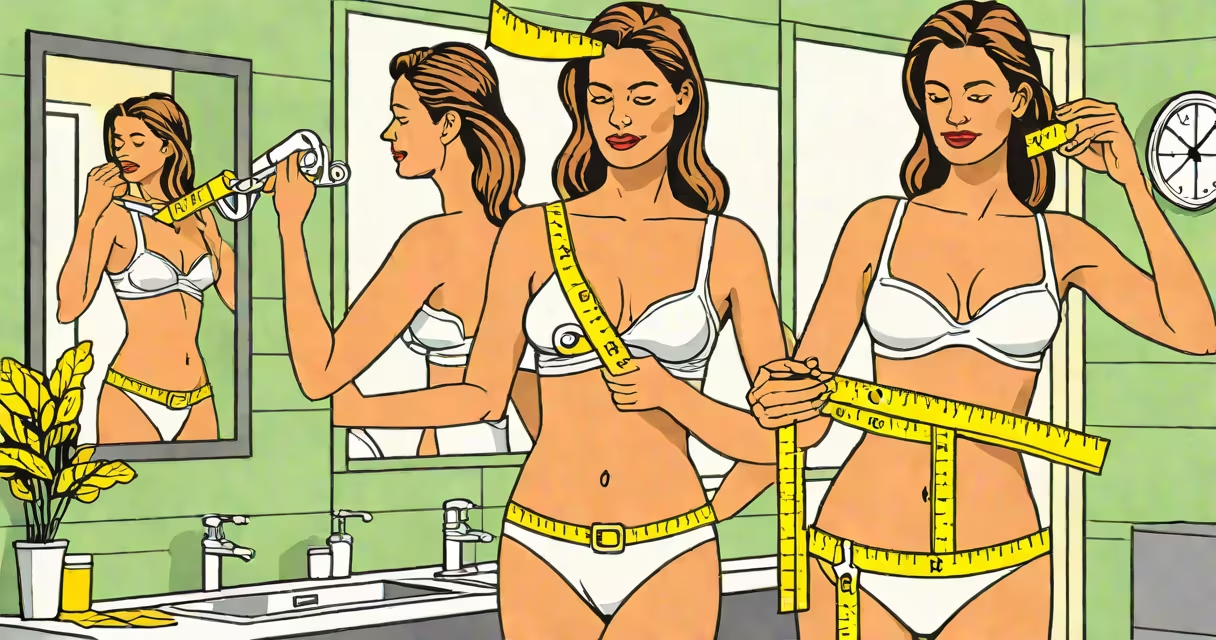
To get your correct bra size, measure your ribcage just below the bust and your bust at the fullest part, then subtract the first from the second to determine your cup size. Use a soft tape measure, wear a non-padded bra, and take measurements while standing upright.
Accurate bra sizing starts with consistent, repeatable steps. The process involves two key measurements: the band size and the cup size. Band size is determined by wrapping the tape measure snugly around your torso, just under the bust, at the level of the lowest point of the shoulder blades. Cup size results from subtracting the band measurement from the bust measurement. A difference of 1 inch equals a cup size A, 2 inches equals B, and so on.
The American Society for Aesthetic Plastic Surgery (ASAPS) notes that 85% of women wear the wrong bra size, often due to inconsistent measurement techniques. Many assume their size is standard, but sizes vary between brands and styles. Measuring correctly eliminates guesswork and ensures better support, comfort, and posture.
Use a flexible, non-stretchable tape measure-like a sewing or tailor's tape. Avoid metal tapes or elastic ones. Ensure the tape lies flat against the skin without sagging or pulling. Wear a well-fitting, non-padded bra or go without one to avoid distortion.
Stand in front of a mirror with your arms relaxed at your sides. Position the tape around your torso, just beneath the bust, ensuring it runs horizontally and touches the skin. Do not lift your chest or pull the tape tight-this is not a compression measurement. The tape should sit at the level of your lower ribs and remain parallel to the floor.
For the bust measurement, place the tape at the fullest part of your breasts, typically at the nipple line. Keep the tape parallel to the ground and avoid lifting or squeezing. Take both measurements in the same position and posture-don't slouch or arch your back.
Let's walk through a real example. Suppose your band measurement is 32 inches and your bust measurement is 36 inches. Subtract 32 from 36 to get 4 inches. That corresponds to a D cup. So your size is 32D.
Here's a breakdown of the standard conversion:
| Bust minus Band (inches) | Cup Size |
|---|---|
| 1 | A |
| 2 | B |
| 3 | C |
| 4 | D |
| 5 | DD/E |
| 6 | DDE/F |
| 7 | DDD/G |
Some brands use different labeling systems. For example, UK sizes may label DD as E, and European sizes use letters differently. Always check the brand's size chart. A 34C in one brand may be equivalent to a 36B in another.
One frequent error is measuring too loosely or too tightly. If the tape sags, you'll record a larger band size. If it's pulled taut, you'll get a smaller number. The tape should lie flat and follow the natural curve of your body.
Another mistake is measuring while wearing a padded or underwire bra. These alter the shape of your bust and lead to inaccurate results. Always measure without padding. Even a sports bra can distort the measurement.
Many people forget to measure at the fullest point of the bust. Some measure at the center of the chest, which can result in a smaller cup size. Stand in front of a mirror and look for the highest point of your breast tissue-this is where the tape should go.
Wearing the wrong size causes physical strain. A band that's too tight restricts breathing and can cause back pain. A band that's too loose offers no support, leading to shoulder grooves and poor posture. Cups that are too small create spillage; those that are too large result in gaps and instability.
According to the National Institute of Health (NIH), improper bra fit contributes to musculoskeletal discomfort in 60% of women who report chronic upper back and neck pain. Supportive bras reduce strain on the spine and improve alignment. Correct sizing isn't about aesthetics-it's about function and health.
I once measured my own size using a friend's tape and got a 34C. After redoing it with a proper tape and following the steps above, I discovered I was actually a 36B. The difference wasn't just in the number-it was in how the bra felt. The 36B had no digging, no bouncing, and no discomfort during movement.
Your size can change due to weight fluctuations, pregnancy, menopause, or even seasonal changes. It's recommended to remeasure every six months or after significant life events. Breast tissue responds to hormones, fluid retention, and age-related shifts.
If you're shopping online, always compare your measurements to the retailer's size chart. Don't rely on past sizes. Brands vary in cut and stretch. A 34C from Brand A may not fit like a 34C from Brand B.
Knowing how to measure to get correct bra size is not optional-it's essential for comfort, health, and confidence. Use the steps outlined here to ensure your bra fits precisely, supports properly, and lasts longer.