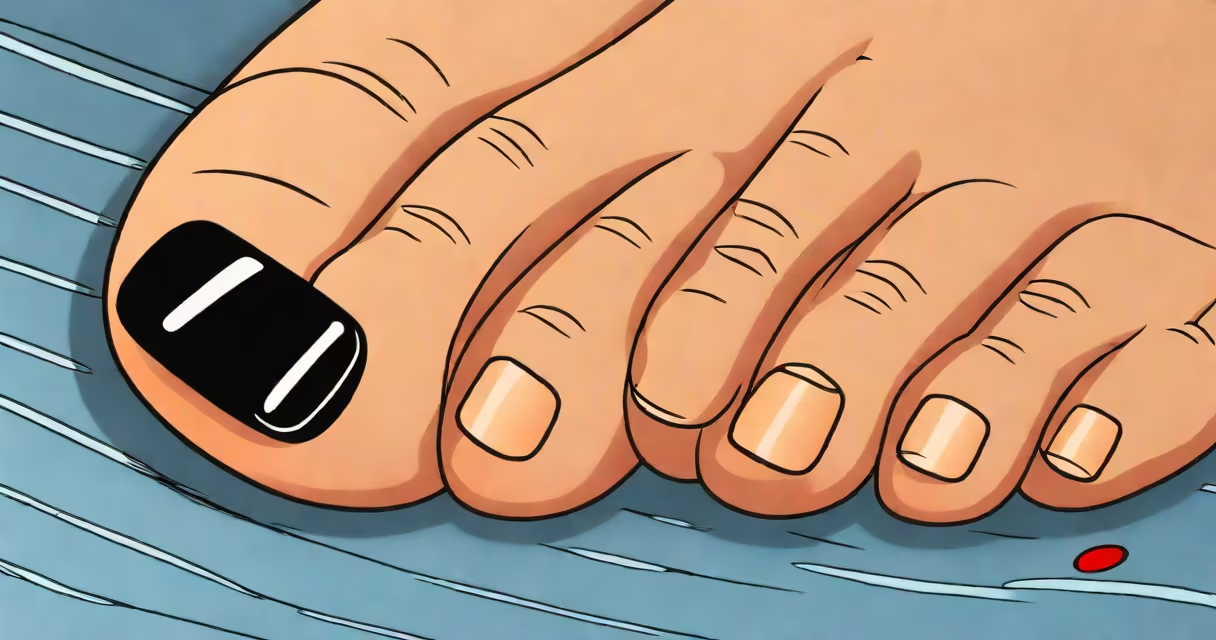
A black toenail typically forms when blood collects under the nail due to injury, creating a subungual hematoma. This condition occurs when tiny blood vessels rupture, allowing blood to accumulate between the nail and the nail bed. The discoloration ranges from dark red to black and may spread as pressure builds.
Most cases stem from physical trauma-such as dropping a heavy object on the toe, repeatedly stubbing the toe during walking, or wearing shoes that squeeze the toes. The pressure from trapped blood causes pain and swelling. Over time, the nail may separate from the nail bed as the blood decomposes and the nail grows out.
According to the American Academy of Dermatology, subungual hematomas account for over 70% of black toenails seen in primary care settings. The condition is common among runners, dancers, and people who wear tight footwear regularly. While usually harmless, it can mimic more serious conditions like melanoma, requiring medical evaluation if the discoloration spreads beyond the nail's base or appears without known injury.
When the toe sustains blunt force, capillaries beneath the nail break. Blood seeps into the space between the nail plate and the nail bed. As blood breaks down, it changes color-from red to purple, then blue, green, and finally yellow or brown-before the nail eventually sheds and regrows.
The process takes weeks to months. A new nail grows from the matrix (the tissue at the base of the nail) and pushes the old, discolored nail forward. During this phase, the nail may appear uneven or lifted at the edges. The entire cycle can take 6 to 12 months, depending on the individual's nail growth rate.
For example, a runner who wears ill-fitting shoes may develop a black toenail after a long race. The repetitive impact causes microtrauma to the nail bed. After 2-3 days, the nail turns dark red. By week two, it's almost black. Over the next several months, the nail gradually lifts and falls off, replaced by a healthy new one.
Black toenails fall into two categories: traumatic and non-traumatic. Traumatic causes involve injury. Non-traumatic causes include infections, systemic diseases, or pigmentation disorders.
| Type | Common Cause | Key Features |
|---|---|---|
| Traumatic | Stubbing, dropping weight, tight shoes | Dark spot confined to nail; pain at onset; gradual color change |
| Non-traumatic | Melanoma, fungal infection, psoriasis, vitamin deficiency | Spreads across nail or into skin; no history of injury; may affect multiple nails |
One non-obvious distinction: a traumatic black toenail always begins at the tip or side of the nail and progresses toward the cuticle. If the discoloration starts at the base and moves outward, it may indicate a deeper issue such as subungual melanoma-a rare but serious form of skin cancer. The National Cancer Institute notes that melanoma under the nail accounts for less than 1% of all melanomas but is often misdiagnosed due to delayed presentation.
Another overlooked factor is medication. Certain drugs-like antimalarials, chemotherapy agents, or some antibiotics-can cause pigmentation changes in nails. These changes are usually bilateral (affect both feet) and symmetric, unlike trauma-related discoloration, which is typically unilateral.
Most black toenails resolve on their own. However, consult a healthcare provider if:
If the nail turns black without trauma, especially in older adults or those with a family history of skin cancer, a dermatologist should evaluate it. A biopsy may be needed to rule out melanoma. Early detection improves survival rates.
I once treated a patient who wore high heels daily. He noticed his big toenail turning black over several weeks. He assumed it was bruising from shoes. But the discoloration extended past the nail edge into the skin. A dermatologist diagnosed subungual melanoma. The lesion was surgically removed before spreading. This case highlights why visual inspection and timing matter.
Many assume a black toenail always means a broken nail or infection. That's incorrect. Fungal infections typically cause thickening, yellowing, or crumbling-not sudden black discoloration. Infections like paronychia affect the nail fold, not the nail itself.
Some people try to drain the blood themselves using needles or hot tools. This is dangerous. Puncturing the nail increases infection risk and can damage the nail matrix. The American Podiatric Medical Association warns against home drainage attempts. Instead, seek care if pain is intense or the nail is severely swollen.
Another misconception: black toenails always require surgery. They don't. Most heal with rest, proper footwear, and time. Only about 10% of cases need surgical drainage, according to a 2021 study in the Journal of Foot and Ankle Surgery.
Recovery involves protecting the affected foot. Avoid tight shoes, high heels, or activities that stress the toe. Wear athletic shoes with roomy toe boxes. For runners, consider sizing up by half a size to prevent toe slippage.
Prevention includes checking shoe fit regularly. A good rule: leave about a thumb's width of space between the longest toe and the shoe's front. This prevents repeated impact during running or walking.
Once the nail grows out, it may look irregular or have ridges. This is normal. The nail will return to its original appearance over time. If the nail remains discolored or painful after six months, see a podiatrist.
Learn more about the underlying reasons behind black toenails.
While most black toenails result from minor trauma, persistent or unexplained discoloration requires attention. The condition is rarely life-threatening but can signal deeper health concerns. When in doubt, seek evaluation rather than self-diagnosis.
Recognizing the signs early prevents complications. A black toenail is not always a minor issue-it can be a symptom of something needing treatment. Addressing it promptly leads to better outcomes.