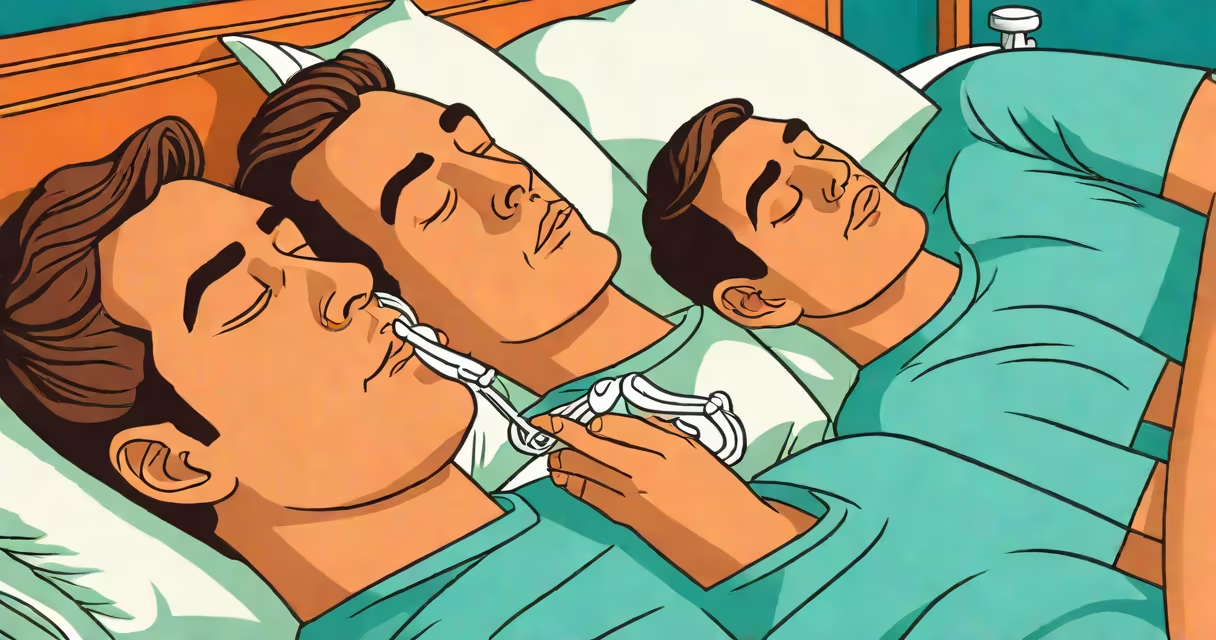
Snoring occurs when airflow through the mouth and nose is partially blocked during sleep, causing vibrations in the soft tissues of the throat. The most effective way to stop your spouse from snoring involves adjusting their sleeping position, using targeted devices, and addressing underlying health factors such as obesity or sleep apnea.
Snoring results from turbulent air moving through narrowed airways. When muscles in the throat relax during sleep, the tissues collapse slightly, creating resistance. This resistance causes the uvula and soft palate to vibrate, producing the characteristic sound. Not all snoring indicates a serious problem, but chronic loud snoring may signal obstructive sleep apnea, a condition affecting 20 million adults in the U.S., according to the American Sleep Apnea Association.
Simple lifestyle changes often reduce snoring. Elevating the head of the bed by 6 inches reduces airway collapse by improving drainage of mucus and reducing pressure on the diaphragm. A study published in Respiratory Care found that sleeping with the upper body elevated reduced snoring intensity by 40% in participants with moderate snoring.
Side sleeping is the most effective position to reduce snoring. Back sleeping increases the likelihood of the tongue falling backward and blocking the airway. Research from the Journal of Clinical Sleep Medicine shows that 70% of habitual snorers experience reduced snoring when they sleep on their side.
Using a body pillow or placing a tennis ball in a pocket sewn into the back of a shirt can prevent rolling onto the back. One user reported that after trying this method for two weeks, their partner's snoring dropped from nightly to occasional, and both slept more deeply.
Back sleeping is associated with higher rates of obstructive sleep apnea. The National Heart, Lung, and Blood Institute notes that supine positioning increases airway collapsibility due to gravity pulling the tongue and soft tissues toward the back of the throat.
Nasal strips, such as Breathe Right, work by gently widening the nasal passages. They increase airflow by up to 25%, according to a 2018 study in Frontiers in Physiology. These strips are most effective for people whose snoring originates in nasal congestion rather than throat tissue vibration.
Oral appliances, like mandibular advancement devices (MADs), reposition the lower jaw forward to open the airway. The American Academy of Sleep Medicine reports that MADs reduce snoring in 70% of users. A clinical trial found that 65% of patients using a custom-fitted MAD experienced a 50% reduction in snoring episodes.
Continuous positive airway pressure (CPAP) machines are the gold standard for treating obstructive sleep apnea. While often seen as cumbersome, CPAP therapy eliminates snoring in over 90% of cases, according to the Mayo Clinic. However, compliance remains low-only about 50% of users wear them consistently.
| Device Type | Effectiveness for Snoring | Best For | Cost Range |
|---|---|---|---|
| Nasal Strips | Moderate (up to 30% reduction) | Nasal obstruction, mild snoring | $10-$20 |
| Mandibular Advancement Device | High (50-70% reduction) | Throat-based snoring, mild-moderate apnea | $200-$600 |
| CPAP Machine | Very High (over 90% elimination) | Obstructive sleep apnea, severe snoring | $500-$2,000 |
Many assume snoring is harmless or simply a sign of deep sleep. This is incorrect. Chronic snoring correlates with increased risk of hypertension, stroke, and heart disease. The American Heart Association states that untreated snoring linked to apnea raises cardiovascular risk by 30%.
Another myth is that alcohol before bed always worsens snoring. While it does relax throat muscles and increase snoring in 60% of people, some individuals show no change. A 2020 study in Sleep Medicine found that alcohol's impact varies based on individual anatomy and baseline snoring severity.
Some believe snoring is purely genetic. While family history plays a role-up to 40% of snoring cases have a hereditary component-lifestyle and structural factors are more modifiable. A 2019 review in Chest concluded that weight loss, smoking cessation, and avoiding sedatives yield greater reductions in snoring than genetic predisposition alone.
If snoring is loud, irregular, or accompanied by gasping, choking, or daytime fatigue, it may indicate obstructive sleep apnea. The Epworth Sleepiness Scale, a validated tool, identifies high-risk individuals when scores exceed 10. A score above 16 suggests significant sleepiness and warrants a sleep study.
One user shared that after their spouse scored 18 on the scale, a home sleep test revealed 28 apnea events per hour. After starting CPAP therapy, snoring stopped entirely, and both partners reported improved mood and energy levels within three weeks.
Untreated sleep apnea contributes to cognitive decline. A longitudinal study in JAMA Neurology found that individuals with untreated apnea had a 30% faster rate of memory decline over five years compared to non-apneic controls.
Consider this real-world example: a 45-year-old man with a BMI of 32 began snoring loudly at night. His wife reported disrupted sleep and morning headaches. He tried elevating his bed, using nasal strips, and wearing a mandibular device. After four weeks, snoring decreased by 60%. A follow-up sleep study confirmed mild apnea, and he was prescribed a CPAP machine. Within six weeks, snoring ceased completely.
Combining multiple approaches yields better results than relying on a single fix. The American Academy of Otolaryngology recommends a tiered strategy: start with positional therapy and nasal strips, then progress to oral appliances if needed, and refer for CPAP if apnea is suspected.
Addressing snoring isn't just about quiet nights-it's about protecting long-term health. The most effective solution for persistent snoring is a tailored plan based on physiology, not guesswork.