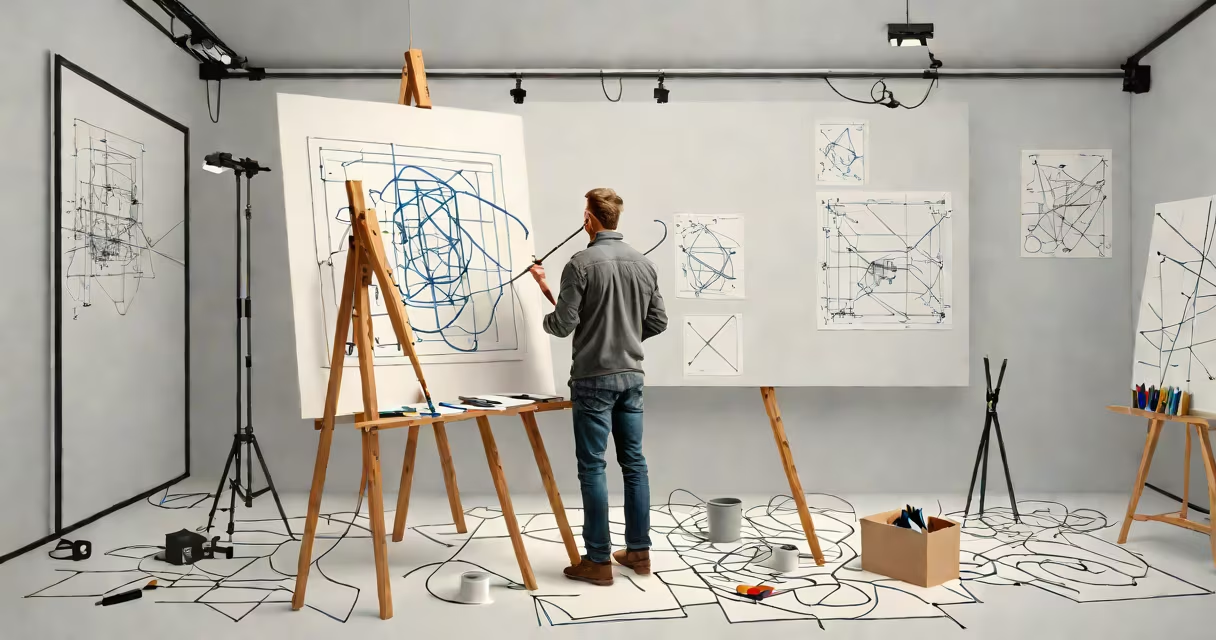
An artist statement is a concise, first-person explanation of your creative work that describes your motivation, process, materials, themes, and context. It serves as a direct communication tool between you and viewers, curators, grant reviewers, and galleries.
Unlike a resume or biography, an artist statement doesn't list exhibitions or education-it explains *why* you make what you make. It's typically 150-300 words and written in clear, accessible language. A strong statement reflects both personal insight and professional clarity.
When submitting to art competitions, residencies, or galleries, a well-crafted statement often determines whether your work gets seen. According to the College Art Association, 87% of curators consider the quality of an artist statement a key factor in selection decisions.
The statement functions as a narrative bridge between your artwork and the audience. It answers implicit questions: What am I looking at? Why did the artist make this? What does it mean?
It begins with your core idea-your artistic "why." This could be a social issue, a formal exploration, or a personal memory. From there, you connect that idea to your methods, materials, and visual choices. The goal is coherence, not complexity.
For example, a ceramic sculptor might write: "My vessels emerge from the tension between preservation and decay. I use recycled clay from local kilns and intentionally crack the surface during firing to reflect the fragility of cultural memory." This links concept, material, and aesthetic intention.
A strong artist statement follows a logical flow: intent → process → theme → context. Avoid listing techniques or tools unless they serve the idea.
Use present tense for current work. Use past tense when discussing completed projects. Avoid jargon unless it's widely understood in your field. If you must use technical terms, define them briefly.
Include specific references to your work. Instead of saying "I explore identity," say "In my series *Echoes in the Mirror*, I layered translucent resin over fragmented family photographs to examine how memory distorts self-perception."
Many artists write statements that sound academic or vague. Phrases like "I'm exploring the human condition" or "my work is about connection" lack specificity and fail to distinguish your practice from others.
Another error is overloading the statement with facts. Listing every exhibition, residency, or technique distracts from the central narrative. Keep it focused on meaning, not résumé points.
A common confusion is mixing the artist statement with the artist bio. The bio details your career path-where you studied, where you've shown, awards received. The statement explains your work's significance. They're complementary but distinct.
According to the National Endowment for the Arts, 62% of rejected grant applications included statements that were either too abstract or too technical. The most successful submissions used precise language and concrete examples.
Statements vary based on medium, audience, and purpose. Here's how to tailor them:
| Type | Focus | Length | Example Use Case |
|---|---|---|---|
| Conceptual | Philosophical or thematic inquiry | 200-300 words | Gallery submission, solo show |
| Process-driven | Emphasis on method, materials, experimentation | 150-250 words | Residency application, portfolio review |
| Personal narrative | Biographical or autobiographical roots | 100-200 words | Artist-in-residence programs, community exhibitions |
| Interdisciplinary | Blends media, performance, text, or digital elements | 250-350 words | Festival submissions, collaborative projects |
For example, a digital artist creating generative animations might emphasize algorithmic intent: "Each piece generates new forms based on real-time climate data, turning environmental change into evolving visual metaphors." This grounds the work in both technology and urgency.
Consider this statement from a textile artist who creates installations from discarded clothing:
My work investigates the emotional weight carried by everyday garments. I collect discarded clothes from thrift stores and urban waste sites, then dismantle and reweave them using hand-stitching and industrial looms. By exposing the seams and fraying edges, I show the stories embedded in fabric-loss, survival, transformation. In *Still Life with Socks*, I wove 147 pairs of mismatched socks into a wall hanging that collapses under its own weight. The piece responds to the paradox of care: we preserve objects out of love, yet discard them when they no longer serve us. My process mirrors the cycles of attachment and release inherent in human relationships.
This statement is 224 words. It opens with intent, describes materials and method, identifies a specific work, and connects the piece to broader themes of memory and impermanence. It avoids clichés and uses vivid detail.
I once submitted a photography project to a national juried exhibition. My initial draft read: "I document forgotten places and people in rural America." It was generic. After feedback, I rewrote it around a single image-a child standing in front of a boarded-up school. I added: "The silence in that frame isn't absence-it's waiting. These towns aren't dead. They're holding their breath until someone listens." The revised version won honorable mention. The difference wasn't better photos-it was clearer meaning.
Read your statement aloud. If it sounds like something you'd say in conversation, it's likely working. If it feels stiff or overly formal, simplify.
Ask a peer unfamiliar with your work to read it. Can they summarize your focus in one sentence? If not, revise.
Keep your statement updated. As your practice evolves, so should your statement. Revisit it annually or after major shifts in theme or medium.
How to write an artist statement isn't about perfection-it's about honesty. Your statement should reflect your authentic voice, not a version of yourself you think others want to see.