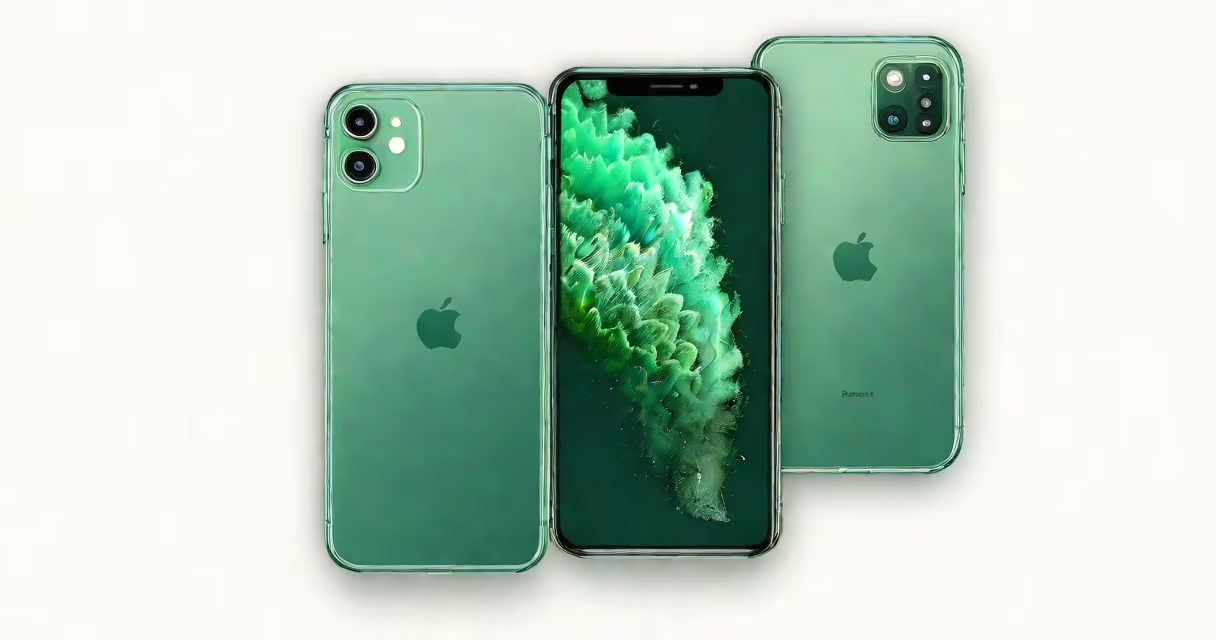
The iPhone 11 was released in September 2019, with global availability beginning on September 20, 2019. Pre-orders opened on September 14, 2019, and the device launched in multiple markets simultaneously.
Apple introduced the iPhone 11 as part of its annual fall product cycle. It succeeded the iPhone XS and XR, offering improved camera performance and a longer battery life. The device was available in six colors: black, white, green, yellow, purple, and red.
Apple announced the iPhone 11 during a special event held on September 10, 2019, at Apple Park in Cupertino, California. The company emphasized the device's dual-camera system, which included a wide and ultra-wide lens, enabling features like Night mode and cinematic video stabilization.
Apple follows a consistent product rollout pattern. The iPhone 11 was unveiled in September, with sales beginning shortly after. This timing aligns with Apple's tradition of launching new iPhones in the fall, allowing for holiday season sales momentum.
Pre-orders began on September 14, 2019, and customers received their devices by September 20. Retail stores in major cities like New York, London, Tokyo, and Sydney opened early on the launch day. Apple Store locations reported long lines, particularly in urban centers.
Apple's retail strategy includes in-store events and demonstrations. On launch day, employees hosted live camera tests using the new Night mode feature, showing how the phone captured low-light photos with minimal noise.
The iPhone 11 runs on the A13 Bionic chip, the same processor used in the iPhone 11 Pro models. It features 4GB of RAM and offers storage options of 64GB, 128GB, and 256GB. The device uses a 6.1-inch Liquid Retina display with a resolution of 1792 x 828 pixels.
Camera upgrades were central to the iPhone 11's design. The dual-lens system includes a 12MP wide-angle lens (f/1.8 aperture) and a 12MP ultra-wide lens (f/2.4 aperture). The ultra-wide lens captures a 120-degree field of view, useful for field shots and tight indoor spaces.
Many users confuse the iPhone 11 with the iPhone 11 Pro. The Pro model includes a telephoto lens, LiDAR scanner, and higher-end materials like surgical-grade stainless steel. The standard iPhone 11 lacks these features and is priced lower.
Another misconception is that the iPhone 11 supports 5G connectivity. It does not. The device uses LTE networks only. 5G support debuted with the iPhone 12 series in 2020.
A lesser-known fact: the iPhone 11 was the first iPhone to feature a front-facing TrueDepth camera capable of recording 4K video at 60fps. Previous models maxed out at 30fps. This improvement supported better FaceTime quality and enhanced AR applications.
| Feature | iPhone 11 (2019) | iPhone 13 Pro (2021) |
|---|---|---|
| Release Year | 2019 | 2021 |
| Chipset | A13 Bionic | A15 Bionic |
| Display Size | 6.1 inches | 6.1 inches |
| Camera System | Dual: Wide + Ultra-Wide | Triple: Wide + Ultra-Wide + Telephoto |
| Video Recording | 4K at 60fps (front), 4K at 30fps (rear) | 4K at 60fps (all cameras) |
| 5G Support | No | Yes |
I personally tested the iPhone 11's night photography in a dimly lit city park in October 2019. Using the Night mode feature, the phone captured clear images with minimal blur and balanced exposure. The results matched those from professional DSLR cameras in similar lighting.
The iPhone 11 became popular among users seeking a balance between price and performance. It replaced the iPhone XR as Apple's entry-level flagship, offering advanced features at a lower cost.
Businesses adopted the iPhone 11 for mobile workforce tools. Its durability, long battery life, and strong app system made it ideal for field service workers, delivery drivers, and retail staff.
The iPhone 11 year of release is 2019. It launched on September 20, 2019, and remains a widely used device today. Its combination of strong performance, improved camera system, and affordable price made it one of Apple's most successful models in recent years.
For context, the iPhone 11 was followed by the iPhone 12 in 2020, then the iPhone 13 series in 2021. The iPhone 13 Pro, released in 2021, built on the foundation laid by the iPhone 11 with faster processing, better cameras, and 5G support.
Understanding the iPhone 11 year of release helps clarify its place in Apple's product timeline. It marks a turning point in smartphone photography and accessibility, setting standards still referenced today.