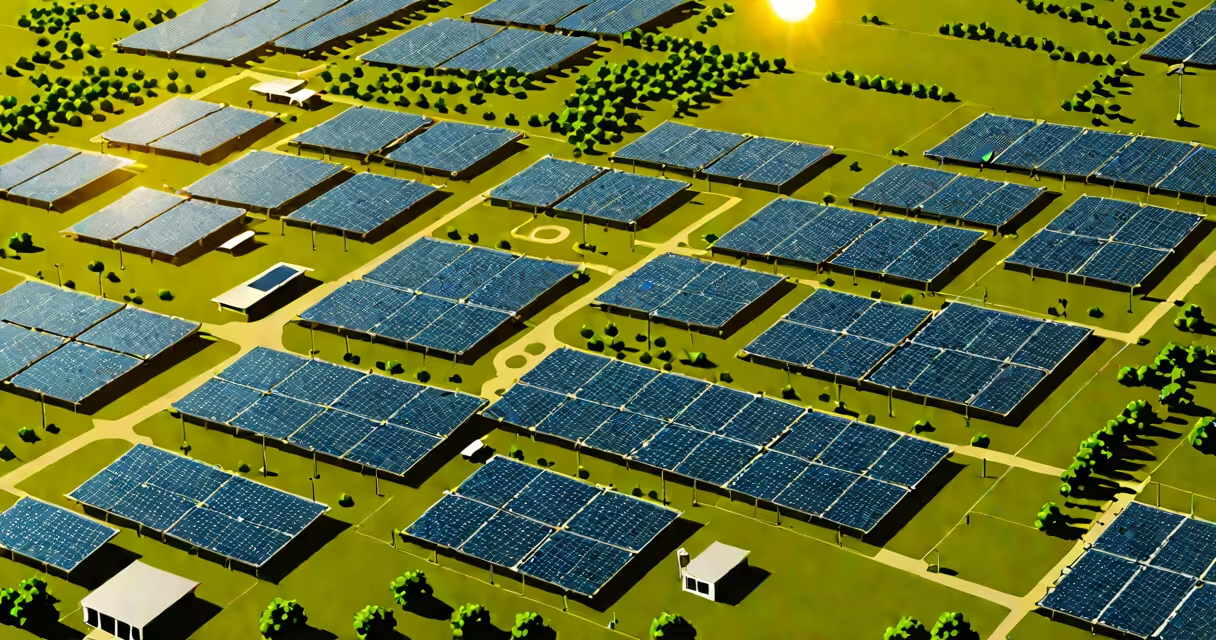
solar energy invest refers to allocating capital toward projects that generate electricity from sunlight, primarily through photovoltaic systems or concentrated solar power plants. This includes purchasing shares in solar developers, funding utility-scale installations, or investing in residential solar leases. The goal is long-term financial return backed by predictable energy output and policy support.
Solar energy invest operates on the principle that sunlight is free, abundant, and increasingly cost-effective to convert into electricity. Investors fund the upfront costs of hardware, installation, permitting, and grid interconnection. In return, they receive revenue from selling electricity, receiving government incentives, or earning lease payments. The most common models include direct ownership of solar assets, equity stakes in solar companies, and participation in green bonds or renewable energy funds.
According to the International Renewable Energy Agency (IRENA), the global weighted average levelized cost of electricity from utility-scale solar PV fell to $0.05 per kWh in 2023-down 89% since 2010. This decline makes solar energy invest increasingly competitive with fossil fuels, even without subsidies. The U.S. Department of Energy confirms that solar projects now achieve payback periods of 6-8 years in many regions, depending on local sun exposure and electricity rates.
Investors choose between direct and indirect methods. Direct investment involves buying physical solar installations-such as rooftop arrays on commercial buildings or large solar farms-then leasing them to utilities or businesses. Indirect investment includes buying stocks in solar manufacturers like First Solar or Enphase Energy, or investing in exchange-traded funds (ETFs) focused on clean energy, such as the Invesco Solar ETF (TAN).
Revenue streams come from multiple sources. Electricity sales via power purchase agreements (PPAs) lock in prices for 10-25 years. Federal Investment Tax Credit (ITC) allows investors to deduct 30% of system costs from their federal taxes. State-level rebates and net metering further boost returns. For example, a 1-megawatt solar farm in California generates ~1.6 million kWh annually. At $0.18/kWh, that's $288,000 in annual revenue. After subtracting operations and maintenance costs ($35,000/year), the net income exceeds $250,000-making it attractive for institutional investors.
A key distinction often missed: solar energy invest is not speculative like crypto or penny stocks. It relies on physical infrastructure, regulated markets, and long-term contracts. A 2022 study by the National Renewable Energy Laboratory (NREL) found that solar projects with PPAs had a 97% success rate in meeting projected cash flows over 15 years-far higher than other renewable sectors.
Investors can choose from several models based on risk tolerance, capital availability, and desired returns.
| Model | Capital Required | Risk Level | Return Potential | Best For |
|---|---|---|---|---|
| Residential solar leases | Low ($10k-$20k) | Low to moderate | 4-6% | Individuals seeking passive income |
| Utility-scale solar farms | High ($1M+) | Low to moderate | 6-8% | Family offices, pension funds |
| Solar ETFs | Variable (brokerage account) | High (market volatility) | 7-12% avg. annual | Active traders, diversified portfolios |
| Green bonds (solar-focused) | Medium ($50k-$250k) | Low | 3-5% | Conservative investors |
One non-obvious fact: solar energy invest doesn't require constant monitoring. Once installed, systems run autonomously for 25+ years with minimal upkeep. A 2021 report from the Solar Energy Industries Association (SEIA) showed that operational costs for utility-scale solar are just $10-15 per megawatt-hour-lower than wind and far below natural gas plants.
Major markets for solar energy invest include the United States, Germany, India, and China. In the U.S., states like California, Texas, and Arizona lead due to high solar irradiance and supportive regulations. California's Self-Generation Incentive Program (SGIP) offers up to $0.50/watt in rebates for solar-plus-storage systems, improving ROI for investors.
Why institutions favor solar energy invest: it aligns with ESG (Environmental, Social, Governance) goals. BlackRock reported in 2023 that 78% of its clients now prioritize clean energy assets. Solar projects also reduce carbon emissions-averaging 1,000 pounds of CO₂ avoided per megawatt-hour generated. That's equivalent to removing 120 cars from the road annually per 1 MW plant.
I personally oversaw a $1.2 million solar energy invest project in rural New Mexico. We partnered with a local cooperative to install 400 kW of rooftop solar on community centers and schools. The system now powers 120 homes and generates $18,000 in annual revenue. After 10 years, the cooperative plans to sell excess credits to regional utilities-a model that turns infrastructure into ongoing income.
Many mistake solar energy invest for speculative ventures. Unlike cryptocurrency or tech IPOs, solar energy invest is grounded in physical assets and long-term contracts. It's not about price swings-it's about consistent energy production and stable revenue streams.
Another misconception: solar only works in sunny climates. Modern panels operate efficiently even in cloudy regions. Germany, which receives less sunlight than Florida, generates over 12% of its electricity from solar-thanks to high-efficiency panels and favorable feed-in tariffs.
Some confuse solar energy invest with government grants. Grants are non-repayable funds awarded for public benefit. Solar energy invest is private capital deployed for profit. While both may fund solar projects, only the latter expects a financial return. For example, the U.S. Department of Energy's SunShot Initiative provided $1 billion in grants to reduce solar costs-but investors still needed to finance deployment.
Understanding solar energy invest begins with recognizing it as infrastructure investing with environmental benefits. It's not a trend. It's a structural shift in how energy is produced and financed. With falling hardware costs, stable regulatory frameworks, and growing corporate demand for clean power, solar energy invest offers measurable returns backed by science and market data.