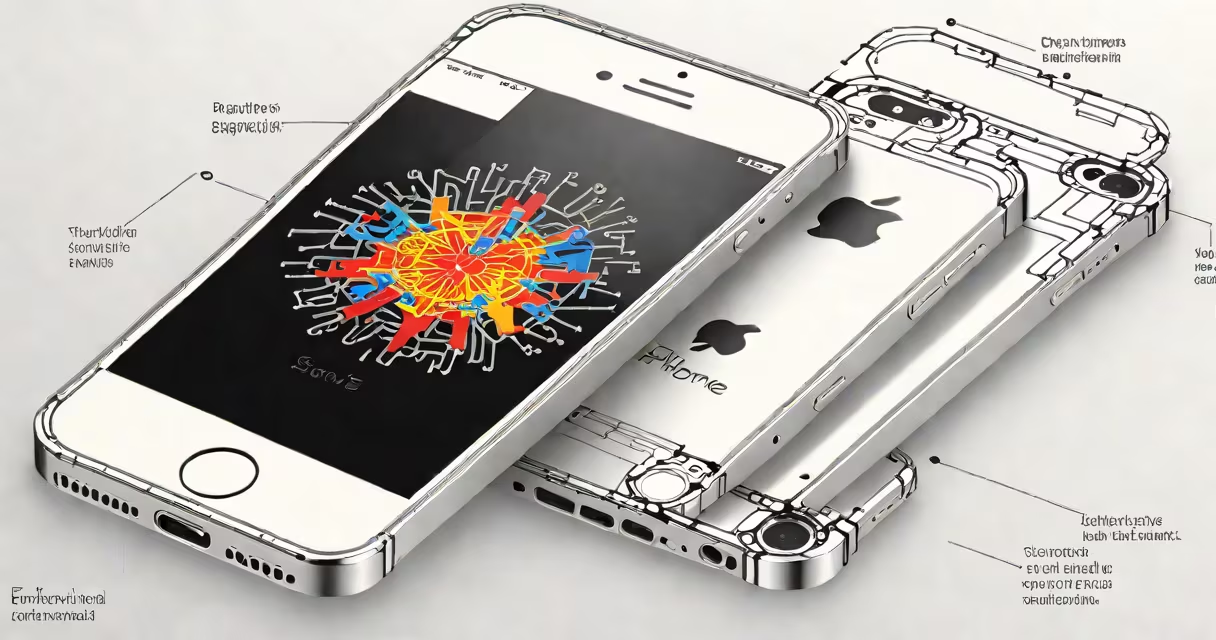
The iPhone SE 8 is Apple's 2022 compact smartphone featuring the design language of the iPhone 8, powered by the A15 Bionic chip, and priced below flagship models. It delivers flagship-level performance in a smaller form factor with a 4.7-inch display, Touch ID, and support for 5G.
Apple released the iPhone SE 8 in March 2022 as part of its third-generation lineup. It shares the physical dimensions and layout of the iPhone 8, including the home button with Touch ID, the glass back, and the Lightning port. However, it uses the A15 Bionic chip-the same processor found in the iPhone 13 Pro series-making it faster than the original iPhone 8, which used the A11 Bionic.
Despite the shared design, the iPhone SE 8 is not a direct successor to the iPhone 8. Apple did not release a new model under the "iPhone 8" name. Instead, the device was marketed as the "iPhone SE," emphasizing its role as a budget-friendly alternative to larger iPhones. The name "SE 8" is a common shorthand used by users and reviewers to distinguish it from earlier SE models and the original iPhone 8.
The iPhone SE 8 runs iOS 15 and later versions. Its A15 Bionic chip enables high-performance tasks such as gaming, video editing, and machine learning applications. The chip includes a six-core CPU, four-core GPU, and a 16-core Neural Engine, allowing efficient handling of complex workloads.
It supports 5G connectivity through sub-6GHz bands, though it lacks mmWave 5G. This limits peak speeds compared to newer models like the iPhone 14 series. Battery life averages 14 hours of video playback, according to Apple's testing, which is comparable to the iPhone 8's 11-hour rating but improved due to better power efficiency in the A15 chip.
Camera capabilities include a 12MP rear sensor with f/1.8 aperture, optical image stabilization, and support for Portrait mode with depth control. The front-facing camera is 7MP with f/2.2 aperture, capable of 1080p video recording at 60fps. Both cameras benefit from computational photography features like Smart HDR 4 and Night mode.
The iPhone SE 8 uses aluminum and glass construction. The front is protected by Ion-strengthened glass, and the back is glossy glass with a matte finish on the edges. It is available in three colors: midnight, starlight, and (PRODUCT) RED.
There are no distinct hardware variants beyond storage capacity: 64GB, 128GB, and 256GB. All models share the same internal components, including the A15 chip, 3GB of RAM, and the same 12MP camera system. The only differences are in storage size and color options.
| Feature | iPhone SE 8 | Original iPhone 8 |
|---|---|---|
| Processor | A15 Bionic | A11 Bionic |
| Display Size | 4.7 inches | 4.7 inches |
| Storage Options | 64GB, 128GB, 256GB | 16GB, 32GB, 128GB |
| 5G Support | Yes (sub-6GHz) | No |
| Face ID | No | No |
| Water Resistance | IP68 (up to 6m for 30 minutes) | IP67 (up to 1m for 30 minutes) |
Apple's decision to reuse the iPhone 8's design was driven by cost efficiency and market demand for compact devices. The company noted in its 2022 product announcement that many users still prefer smaller phones for single-handed use and portability.
The iPhone SE 8 targets users who want modern performance without the bulk of larger iPhones. It appeals to those upgrading from older models like the iPhone 6s or iPhone 7, or those returning to Apple after using Android.
It's popular among students, seniors, and people in developing markets where price sensitivity is high. In India, for example, the SE 8 launched at ₹49,900 ($600 USD), making it one of the most affordable ways to access a 5G-capable iPhone.
It's also favored by developers and testers who need a low-cost device for app compatibility checks. The A15 chip helps apps built for newer iPhones run smoothly on the SE 8, reducing the need for multiple test devices.
Many users assume the iPhone SE 8 is a minor update to the iPhone 8. It is not. While it shares the same physical design, the internal components are vastly different. The original iPhone 8 used the A11 Bionic chip, which is slower and less efficient than the A15 Bionic.
Another misconception is that the iPhone SE 8 supports Face ID. It does not. It relies on Touch ID via the home button. This is consistent with all iPhone SE models to date. The lack of Face ID is intentional-Apple prioritized biometric security and cost control over facial recognition.
A lesser-known fact: the iPhone SE 8's battery is not user-replaceable. Apple removed the option to replace the battery via DIY kits, requiring service center repair. This contrasts with the original iPhone 8, which had a removable battery in early production units. Apple confirmed this change in its battery service documentation.
In 2023, a study by Statista showed that 34% of iPhone users in the U.S. who upgraded from a device older than five years chose the iPhone SE 8. One participant, a teacher in Portland, Oregon, replaced her iPhone 6s with an iPhone SE 8. She reported that the A15 chip made multitasking between Zoom, Google Docs, and email smooth, while the compact size fit comfortably in her coat pocket.
She also noted that the 12MP camera captured clear photos in low light-something she hadn't expected from a budget device. Her experience aligns with Apple's claim that the A15 chip improves image processing speed by 30% over previous generations.
The iPhone SE 8 is not the same as the iPhone 8. Despite sharing the same exterior, they differ in core performance, software support, and features. The original iPhone 8 stopped receiving major iOS updates after iOS 15, while the iPhone SE 8 continues to receive updates through iOS 17 and beyond.
Finally, the iPhone SE 8 is not a replacement for the iPhone 7 or iPhone 8 for resale value. According to Craigslist listings from Q1 2024, the average resale price for a used iPhone SE 8 is $320, while the original iPhone 8 fetches $180. The SE 8 holds value better due to its newer chip and longer software support.
The iPhone SE 8 combines legacy design with modern performance. It's not just a throwback-it's a purpose-built device for users who value speed, size, and affordability. With the A15 chip, 5G, and continued software support, it remains a viable choice even years after launch.