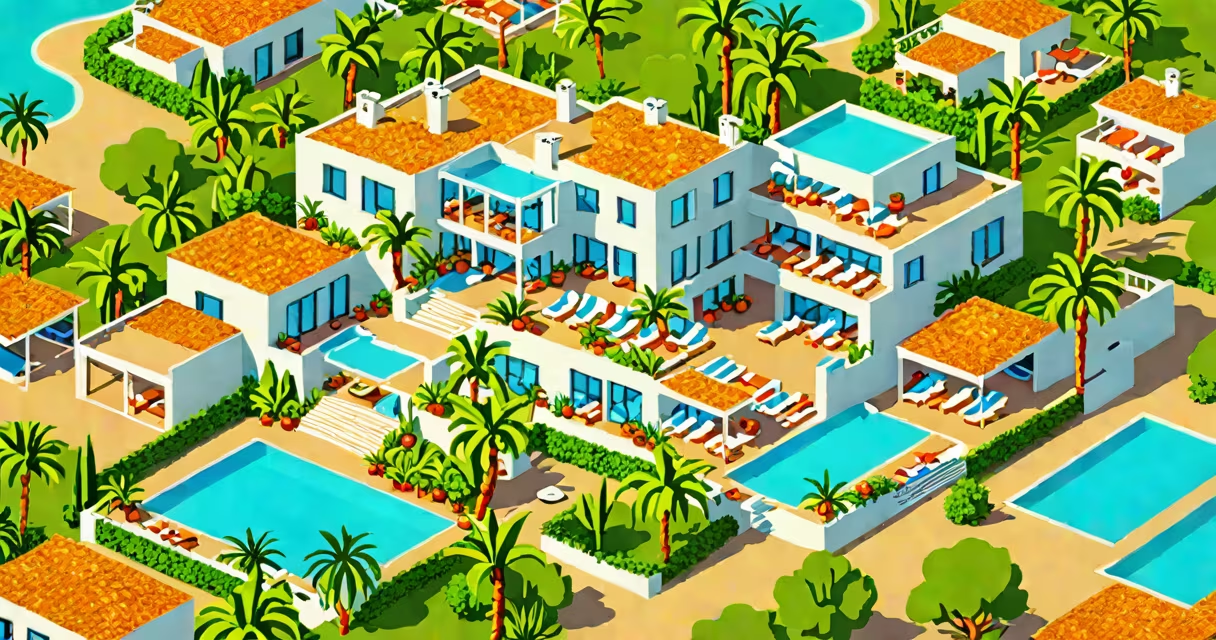
The love island villa is a purpose-built, high-end residential set located in Marbella, Spain, serving as the primary filming location for ITV's reality dating show Love Island. It functions as both a living space and a production hub, where contestants reside during the summer months while forming romantic connections under constant camera surveillance.
Each season, the villa undergoes minor redesigns to reflect new themes, but its core layout remains consistent: a central courtyard, multiple bedrooms, a large open-plan lounge, a kitchen-dining area, and a rooftop terrace with a swimming pool. The structure is constructed entirely for television, using weather-resistant materials to withstand outdoor filming conditions. It is not a private residence but a controlled environment designed for narrative pacing and visual appeal.
Production teams install over 100 cameras throughout the villa, including hidden lenses in mirrors, ceiling panels, and furniture. Audio feeds capture conversations in real time, enabling producers to edit storylines for dramatic effect. The villa operates under strict safety protocols, with medical staff on-site and emergency exits marked. Contestants are not permitted to leave the property during filming unless approved by producers.
Contestants enter the villa during the show's launch week and remain until the finale, typically lasting eight weeks. Their daily routines-meals, socializing, and romantic encounters-are monitored continuously. Producers use real-time editing software to track emotional arcs, identify relationship conflicts, and trigger "confessionals" where participants explain their feelings.
Every episode begins with a recap of the previous week's events, narrated by host Laura Whitmore. These recaps are compiled from footage recorded during the week, often emphasizing drama, jealousy, or unexpected pairings. The villa's layout influences social dynamics: shared spaces encourage interaction, while private rooms allow for intimate moments. Bedrooms are equipped with cameras, but curtains and blinds are used to maintain privacy during sleep hours.
During filming, crew members move through the villa using quiet electric carts. They replace batteries, adjust microphones, and clear debris from camera paths. All equipment is concealed within walls or disguised as decor. For example, a speaker embedded in a potted plant delivers audio cues to contestants during challenges. The entire setup runs on solar-powered generators and battery banks to reduce noise and avoid interference with sound recording.
While the core structure remains unchanged, the villa's aesthetic evolves each season. Design themes have included tropical, coastal modern, and minimalist beachfront styles. Season 10 introduced a "desert oasis" theme with sand-colored walls and indoor water features. Season 12 featured a "Mediterranean escape" with terracotta tiles and hanging vines.
| Season | Theme | Key Features | Notable Pairings |
|---|---|---|---|
| 2015 (Season 1) | Coastal Retreat | White stucco walls, blue pool, open-air kitchen | Caroline & Jamie - led to national media coverage |
| 2020 (Season 6) | Tropical Island | Thatched roof, bamboo flooring, waterfall feature | Amber & Jules - broke viewership records |
| 2023 (Season 10) | Desert Oasis | Sand-colored walls, indoor fountain, desert plants | Isabelle & Jack - sparked fan campaigns |
Despite thematic changes, the villa maintains a consistent floor plan. The main bedroom wing houses six double rooms, each with en-set bathrooms. A central "dating room" contains a rotating platform for blind dates. The rooftop pool is the site of most physical interactions and major confrontations. Production uses motion sensors to detect movement near pools and stairwells, triggering automatic camera focus shifts.
Many assume the love island villa is a real estate property available for rent. It is not. The villa is dismantled after each season and rebuilt annually. In 2022, a fan attempted to purchase the original 2015 structure from the production company, but was denied due to contractual restrictions and intellectual property rights held by ITV.
Another misconception is that contestants freely choose their partners. While they initiate contact, producers assign "couples" for certain episodes based on audience polling and narrative pacing. In Season 9, producers paired two contestants who had never spoken before, resulting in a 72-hour relationship that became a viral clip. This practice is documented in the BBC's 2021 report on reality TV ethics, which notes that "narrative control outweighs participant autonomy in structured formats."
A lesser-known fact: the villa's plumbing system aims to simulate natural water flow. Pools contain recycled seawater mixed with salt and algae inhibitors to prevent discoloration. The water temperature is maintained at 28°C (82°F) year-round, even during winter filming. This ensures consistency in visuals and avoids disruptions caused by seasonal changes.
The villa is more than a backdrop-it shapes the show's identity. Its design prioritizes visual storytelling: wide-angle shots emphasize group dynamics, close-ups show facial expressions, and slow pans reveal spatial relationships. The architecture itself becomes a character, influencing how emotions unfold.
I once visited the 2021 filming site during a behind-the-scenes tour. The air smelled faintly of coconut sunscreen and damp concrete. Crew members wore earpieces and moved silently between rooms. One assistant showed me a hidden door behind a bookshelf that led to a storage closet used for prop changes. The level of detail surprised me-every surface was treated with anti-glare coating to prevent reflections in camera lenses.
For fans, the villa represents fantasy living. It's a place where romance unfolds quickly, decisions are bold, and emotions are amplified. But for producers, it's a machine designed to generate content. The villa's success lies in balancing realism with theatricality-offering enough authenticity to feel believable, yet enough artifice to serve the story.
Love Island's popularity stems from the contrast between the villa's polished appearance and the raw human behavior inside. Viewers tune in not just for the romance, but for the tension, the surprises, and the unpredictable choices. The villa is the stage. The cast is the performance. And the narrative is always being rewritten.
Understanding the love island villa reveals how television constructs reality. It's not a home. It's a set. A carefully engineered environment where connection, conflict, and charisma are measured in seconds of screen time. The villa doesn't just host relationships-it shapes them.