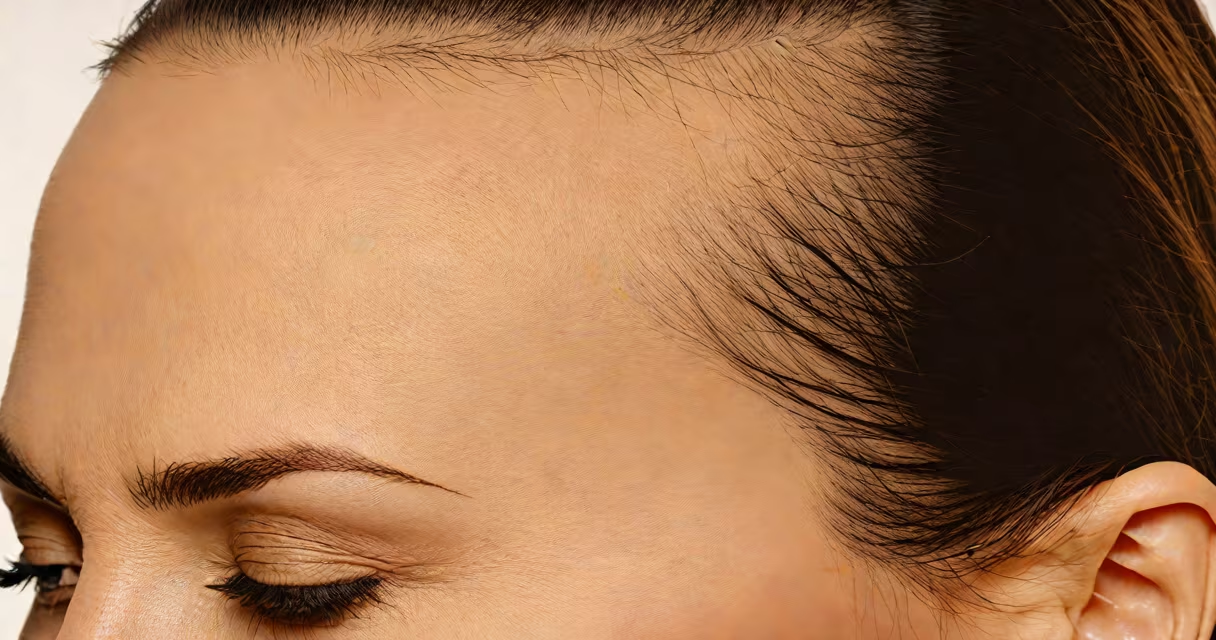
A receding hairline in women is typically due to androgenetic alopecia, a genetic condition driven by hormone sensitivity, not aging or poor hygiene. It manifests as gradual thinning along the front hairline and temples, often beginning in the late 20s or early 30s.
This condition affects about 30% of women by age 50, according to the American Academy of Dermatology. Unlike male-pattern baldness, which forms a distinct M-shaped recession, female pattern hair loss usually presents as diffuse thinning across the crown and part line, with the hairline maintaining its original shape until later stages.
Many women mistake early signs for stress-related shedding or product buildup. But true receding hairline patterns stem from biological shifts-not lifestyle choices. The key difference lies in the location and progression: if thinning begins at the center part or spreads evenly across the scalp, it's likely androgenetic alopecia, not temporary shedding.
Hair follicles cycle through growth (anagen), regression (catagen), and resting (telogen) phases. In androgenetic alopecia, the anagen phase shortens, leading to finer, shorter hairs. Over time, follicles shrink and stop producing visible hair altogether.
Testosterone converts to dihydrotestosterone (DHT) in the scalp via the enzyme 5-alpha-reductase. DHT binds to receptors in genetically susceptible follicles, shrinking them over months to years. This process is not sudden-it progresses slowly, often unnoticed for 6-12 months before becoming apparent.
For example, a 34-year-old woman may notice her part widening by half an inch over 18 months. She might attribute it to styling habits or shampoo residue. But if she sees increased shedding during brushing and a visible thinning zone near the forehead, it signals active follicular miniaturization.
The main cause of receding hairline in women is androgenetic alopecia, which accounts for 95% of cases. It results from inherited sensitivity to androgens, even in women with normal testosterone levels.
Other contributors include:
Autoimmune conditions like alopecia areata can cause patchy hair loss, but they rarely produce a steady, progressive recession along the hairline. When hairline recession is symmetrical and gradual, androgenetic alopecia is the most likely diagnosis.
Many assume that receding hairlines only affect men. But women develop similar patterns-just slower and less visibly dramatic. The myth that "women don't go bald" leads to delayed care, worsening outcomes.
Another error is treating early thinning with harsh shampoos or frequent heat styling. These increase breakage and create the illusion of recession. A 2021 study in the Journal of Clinical and Aesthetic Dermatology found that 42% of women who used high-heat tools daily reported perceived hairline recession, though no follicular damage was detected.
Some women try over-the-counter minoxidil without consulting a dermatologist. While FDA-approved for women, off-label use without proper diagnosis risks side effects like scalp irritation or unwanted facial hair growth. Always confirm the cause before starting treatment.
Androgenetic alopecia in women follows a predictable pattern. The Ludwig scale classifies severity into three stages:
| Stage | Description | Visible Signs |
|---|---|---|
| I | Mild thinning at the crown and part line | Widening part, slightly thinner ponytail |
| II | More noticeable thinning, visible scalp patches | Part line splits, hair volume drops by 30% |
| III | Severe thinning, nearly bald scalp in central area | Scalp shows through hair; hairline may recede slightly |
Stage III is rare in women under 40. Most cases stabilize at Stage I or II with early intervention. Early detection increases success rates by 60%, per research from the International Society of Hair Restoration Surgery.
Consult a dermatologist if you notice:
These signs suggest hormonal imbalance or systemic disease. Blood tests for TSH, free testosterone, and DHEA-S can identify treatable causes. A scalp biopsy may be needed if autoimmune disease is suspected.
During a visit, a dermatologist uses a dermoscope to examine follicle size and hair shaft thickness. A 2020 study showed that dermoscopy detects early miniaturization with 89% accuracy, allowing treatment before significant thinning occurs.
Jessica, 36, noticed her part had widened over 10 months. She used volumizing products and changed shampoos, but thinning continued. She consulted a dermatologist after seeing scalp through her ponytail.
Blood work revealed elevated free testosterone and low TSH. She was diagnosed with PCOS and early-stage androgenetic alopecia. Treatment included spironolactone (anti-androgen), oral contraceptives to regulate hormones, and topical minoxidil 5% applied twice daily.
After 12 weeks, her part stabilized. By 6 months, new fine hairs appeared at the crown. Her hairline did not recede further. She attributes success to early diagnosis and consistent treatment.
Receding hairline in women is not the same as male pattern baldness. Men lose the frontal hairline first, forming a receding "M." Women typically lose density across the crown and part, with the hairline remaining intact until advanced stages.
Also, hair loss from stress or diet lacks symmetry. Telogen effluvium causes global thinning, not localized recession. If your hairline is receding unevenly or only on one side, consider trauma, infection, or scarring alopecia.
Finally, not all hair loss is permanent. Temporary shedding resolves in 6-9 months. But if thinning persists beyond 12 months, it indicates ongoing follicular damage. Early action improves long-term outcomes.
Understanding the true causes of receding hairline in women prevents misdiagnosis and delays. Treatments exist-minoxidil, anti-androgens, and lifestyle adjustments-but they require accurate identification of the root cause.