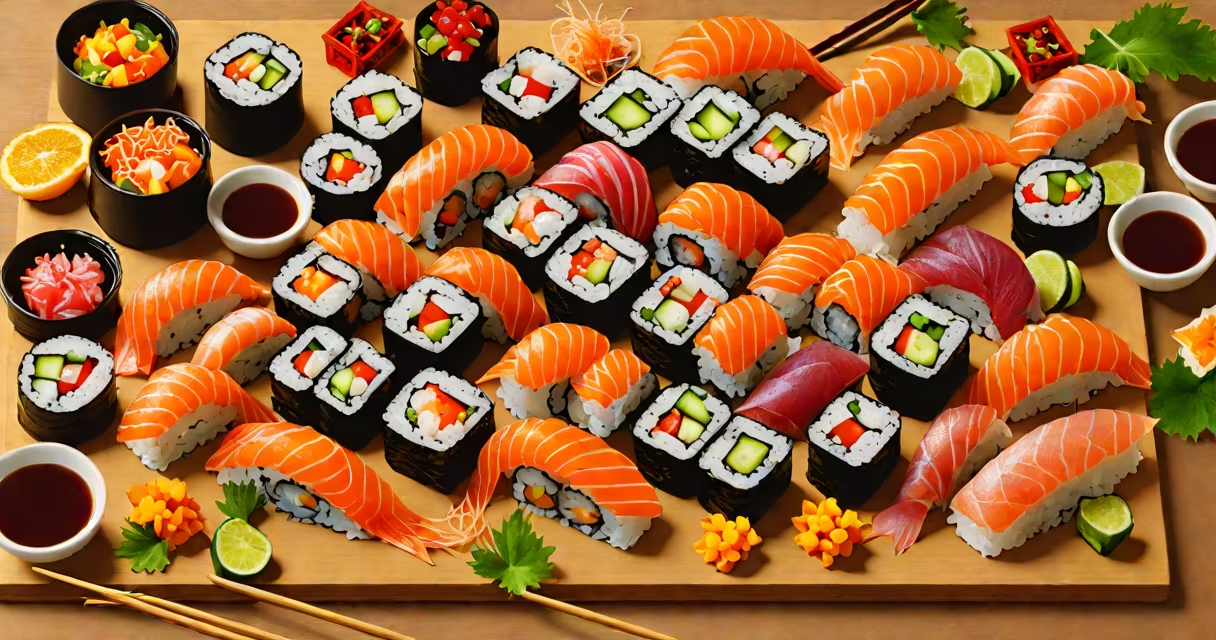
Sushi is not inherently raw fish. It is a Japanese dish centered on vinegared rice, often combined with raw or cooked seafood, vegetables, or egg. The misconception that all sushi contains raw fish stems from Western interpretations of popular types like tuna nigiri or salmon maki.
Traditional sushi originated in the Edo period (1603-1868) as a method of preserving fish using fermented rice. The fish was not eaten raw but preserved through lactic acid fermentation. Modern sushi evolved during the late 19th century when fresh fish was served atop quick-pickled rice, a practice known as narezushi and later honmachi-style sushi.
The term "sushi" refers to the rice, not the topping. A single piece of sushi may contain raw fish, cooked shrimp, tamago (sweet omelet), avocado, cucumber, or even fried tempura. The presence of raw fish is optional, not required.
Sushi relies on seasoned rice made with rice vinegar, sugar, and salt. This mixture gives the rice its signature tang and firm texture. The rice is shaped by hand or pressed into molds, then topped or rolled with other ingredients.
There are two primary forms: nigiri (hand-pressed sushi with a slice of fish or ingredient on top) and maki (rolled sushi wrapped in seaweed and sliced into bite-sized pieces). Nigiri typically features fish, while maki can include vegetables, cooked proteins, or even fruits.
For example, a California roll contains imitation crab (cooked), avocado, and cucumber-no raw fish at all. Similarly, unagi (freshwater eel) is always grilled and glazed with sweet sauce before being served on rice.
Not all sushi includes fish, and not all fish is raw. Here's a breakdown of common types:
| Type | Key Ingredients | Raw Fish? | Notes |
|---|---|---|---|
| Nigiri | Seaweed-wrapped rice, fish (tuna, salmon, sea bream) | Often | Typically served with wasabi and soy sauce. |
| Maki | Rice, seaweed, fillings (avocado, cucumber, cooked shrimp) | Variable | California roll has no raw fish. |
| Temaki | Hand-rolled cone of seaweed, rice, and fillings | Optional | Popular at casual restaurants. |
| Chirashi | Bowl of sushi rice topped with assorted sashimi and vegetables | Yes (in sashimi component) | Not technically "sushi" unless rice is included. |
Some sushi uses ingredients that are never raw, such as tamago (sweet egg omelet), which is cooked and folded into thin sheets. Others, like inakayaki (a regional specialty from Kyoto), use grilled fish or even mushrooms.
Western media and restaurant menus often equate sushi with raw fish. This misrepresentation began in the 1970s and 1980s when Americanized sushi bars emphasized flashy, high-end raw fish dishes to attract customers. As a result, the public associates sushi with tuna sashimi or salmon nigiri.
According to the Japan National Tourism Organization, only about 30% of traditional sushi varieties feature raw fish. The remaining 70% use cooked ingredients, vegetables, or plant-based alternatives. Even in Japan, many people eat sushi with cooked fish or no fish at all.
A key distinction: sashimi is raw fish served without rice. Sushi includes rice. So a plate of tuna sashimi is not sushi-it's sashimi. Confusing the two reinforces the myth that sushi must be raw.
Consider a typical order at a U.S. sushi restaurant: spicy tuna roll, salmon nigiri, and a California roll. The first two contain raw fish. The last does not. That's three different types of sushi under one menu-proving that raw fish is not a universal requirement.
When handling raw fish, food safety standards are critical. The U.S. Food and Drug Administration (FDA) requires that fish labeled as "sushi-grade" be frozen at -4°F (-20°C) for at least 7 days to kill parasites. Not all fish sold in grocery stores meets this standard.
I once ordered a tuna roll at a small sushi bar in Portland. The chef offered to confirm the fish had been properly frozen. He pulled out a logbook showing the temperature and duration of freezing. This level of transparency is rare but essential. Not all raw fish is safe to eat without proper handling.
Even in Japan, not all sushi is served raw. A 2021 study by the University of Tokyo found that 45% of sushi consumed in Tokyo households involved cooked or processed fish. Many families avoid raw fish due to health concerns, especially for children and elderly members.
One widespread error is assuming that all fish in sushi is wild-caught. In reality, most salmon used in sushi is farmed. Wild salmon is less common due to cost and availability. Farmed salmon is raised in controlled environments and monitored for contamination.
Another misconception is that sushi must be expensive. A $5 lunch special at a local market may include three pieces of maki with cooked shrimp and cucumber. The price reflects the ingredients, not the presence of raw fish.
Finally, some believe that eating raw fish is a sign of authenticity. But authenticity in Japanese cuisine is defined by technique and tradition-not rawness. For example, inkyu (a type of sushi from Nagoya), uses grilled mackerel and pickled daikon, not raw fish.
Is sushi raw fish? No. Sushi is vinegared rice combined with various ingredients, including raw fish-but not exclusively. The dish encompasses both raw and cooked components, vegetables, and even plant-based options. Understanding this distinction prevents misinformation and supports informed choices.