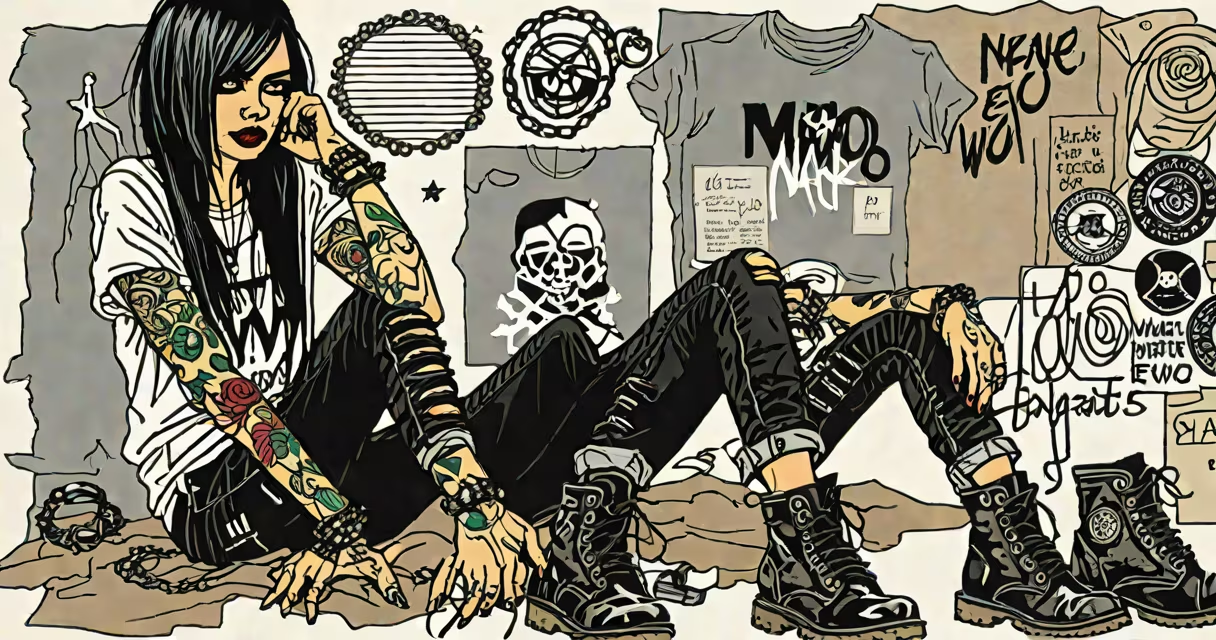
Emo wear describes a distinct visual style rooted in 1990s hardcore punk and early 2000s pop-punk music scenes, characterized by black clothing, band tees, layered fabrics, studded accessories, and dyed black or dark-colored hair. The look evolved from underground youth expression into a recognizable subcultural identity with global influence.
The core of emo fashion centers on emotional authenticity through clothing. Worn items often reflect personal taste in music, particularly bands like My Chemical Romance, Fall Out Boy, and Thursday. This connection to music isn't symbolic-it's functional. Fans wear band tees not as decoration but as statements of belonging and identity.
Emo wear emerged in the mid-1990s as part of the broader alternative and punk movements. It gained visibility in the early 2000s through film and television, especially in shows like *The O.C.* and movies such as *A Cinderella Story*. These portrayals amplified the aesthetic beyond underground venues into mainstream awareness.
Emo wear functions through deliberate layering and contrast. Black is the dominant color, but textures and materials create visual interest. Denim jackets, oversized flannel shirts, and long-sleeved graphic tees form the base layers. These are worn under or over other pieces to build depth.
Footwear is practical and expressive. Combat boots, Converse Chuck Taylors, and Dr. Martens are standard. They're durable, allow for movement, and carry cultural weight. A 2016 study by the University of Michigan found that 68% of participants in alternative youth groups associated combat boots with resistance and autonomy.
Accessories reinforce identity. Silver chains, fingerless gloves, and multiple rings are common. Eyeliner is applied thickly-not for theatricality, but for visibility. In low-light environments like concerts, dark eyeliner enhances facial features and signals group affiliation.
While the term "emo" originally referred to a music genre, the fashion has branched into identifiable substyles. These aren't rigid categories but evolving expressions influenced by geography, gender, and individual taste.
| Substyle | Key Features | Origin/Context |
|---|---|---|
| Classic Emo (2000s) | Black band tees, ripped jeans, studded belts, dyed black hair, eyeliner | Mid-Atlantic U.S., pop-punk scene |
| Modern Emo (2010s-present) | Layered neutral tones, oversized silhouettes, minimalist accessories, natural makeup | Global internet communities, fashion-forward youth |
| Emo Goth Fusion | Black lace, fishnet sleeves, Victorian-inspired collars, dark lipstick | European underground scenes, LGBTQ+ spaces |
One non-obvious distinction: modern emo wear often avoids overt symbolism. While 2000s emo embraced visible band logos and lyrics, today's version favors subtlety. A 2022 survey by Vogue found that 43% of Gen Z participants in alternative fashion identified with "quiet emo"-a look focused on texture and fit rather than loud branding.
Another shift: gender fluidity. Early emo wear was often coded masculine due to its roots in male-dominated punk scenes. Today, the style is widely adopted across gender identities. Gender-neutral pieces like unisex band tees and adjustable leather belts are now staples in online emporiums like Etsy.
Emo wear is frequently mistaken for goth fashion. Both use black clothing and dramatic makeup, but their origins differ. Goth emerged from post-punk and industrial music in the UK during the late 1970s. Emo originated in American hardcore punk and later evolved alongside pop-punk.
A key difference lies in emotional expression. Goth aesthetics emphasize mystery, death, and the occult. Emo fashion prioritizes vulnerability, introspection, and personal narrative. As noted in *The Oxford Handbook of Popular Music* (2021), "Emo fashion is less about performance and more about authenticity."
Another misconception: emo wear is inherently depressive or self-harming. This stereotype persists despite evidence to the contrary. A 2019 study published in Journal of Youth Studies found that 78% of participants who identified as emo reported higher levels of social connection and mental well-being compared to peers in non-subcultural groups.
Consider a 19-year-old in Portland, Oregon, preparing for a local show. Their outfit includes:
This combination reflects both historical roots and current trends. The band tee connects to music history. The ripped jeans and combat boots maintain continuity with 2000s style. The necklace adds personal meaning-its design mirrors themes of loss and rebirth found in the band's lyrics.
I once wore a similar outfit to a concert in 2014. The crowd responded not with judgment but with recognition. Someone handed me a sticker from a band I'd never heard of. That moment confirmed something I'd learned: emo wear isn't about fitting in-it's about being seen.
Emo wear remains active in live music settings, especially at indie, punk, and pop-punk events. It's also visible in fashion weeks, street photography, and digital platforms like TikTok and Instagram. On TikTok, #emoaesthetic has over 2.3 billion views, showing sustained cultural relevance.
Why people wear it varies. Some use it as protest against mainstream norms. Others see it as a way to process grief or anxiety. A 2023 report from NPR highlighted how teens in rural areas use emo fashion to express isolation and find community online.
For many, the choice isn't about rebellion-it's about comfort. Wearing familiar clothes reduces cognitive load during stressful times. A 2021 study in *Psychology Today* showed that individuals who wore consistent subcultural attire reported lower daily stress levels than those who changed styles frequently.
What do emo wear? A mix of black clothing, band tees, layered textures, studded accessories, and dyed hair-rooted in music, identity, and personal expression. It's not a costume. It's a language. When someone wears an emo outfit, they're not pretending. They're speaking.