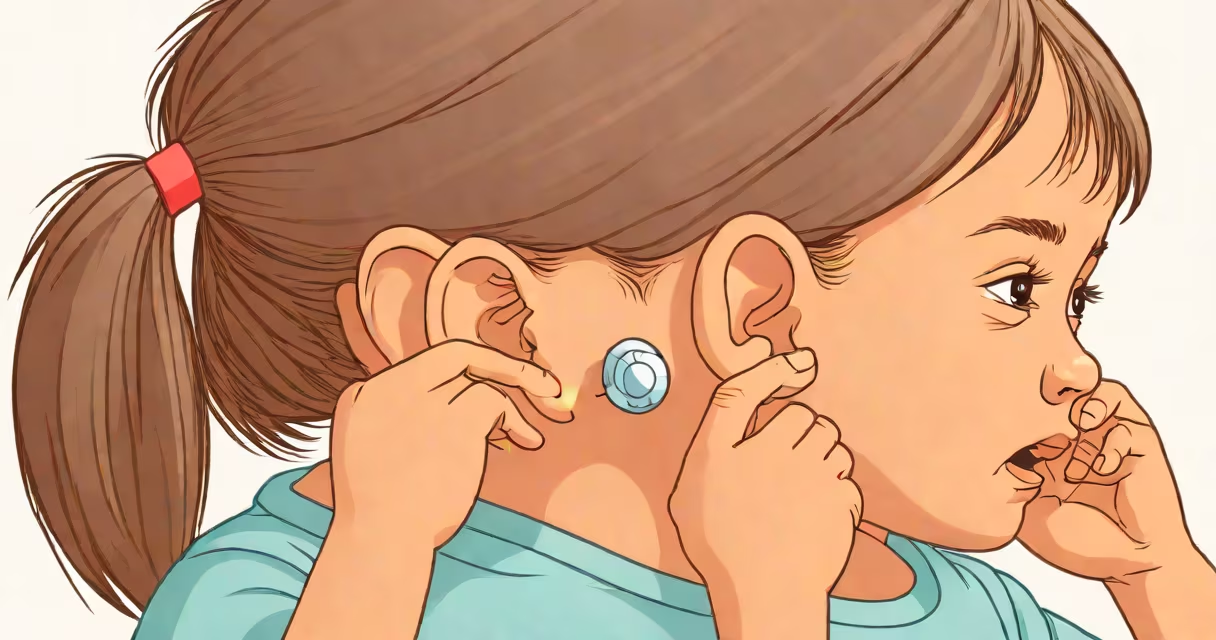
Recurrent otitis media is a condition in which a child experiences three or more episodes of acute middle ear infection within six months or four or more in a 12-month period. It occurs when fluid builds up behind the eardrum due to infection or inflammation, often following upper respiratory illnesses.
This condition primarily affects children aged 6 months to 5 years, whose Eustachian tubes are shorter, flatter, and more horizontal than adults', making drainage difficult. The buildup of fluid leads to pressure, pain, and temporary hearing loss. Repeated episodes can impair speech development and academic performance if left untreated.
According to the American Academy of Pediatrics (AAP), recurrent otitis media affects approximately 20% of children under age 5. It is more common in boys, children in daycare settings, and those with a family history of ear infections. The condition is not simply a series of colds with ear pain-it reflects a persistent dysfunction in middle ear ventilation and immune response.
The middle ear is a small air-filled space behind the eardrum. Normally, air enters through the Eustachian tube, which connects the middle ear to the back of the nose. When this tube becomes blocked-by swelling from a cold, allergies, or enlarged adenoids-air cannot flow in, and fluid accumulates. This trapped fluid creates a breeding ground for bacteria or viruses.
In recurrent otitis media, the immune system fails to clear the infection effectively. The body's inflammatory response causes increased fluid production and reduced absorption. Over time, this cycle leads to persistent effusion (fluid without infection) and structural changes in the eardrum, such as thickening or scarring.
A 2020 study published in Pediatrics found that children with recurrent otitis media had higher levels of pro-inflammatory cytokines in their middle ear fluid compared to those with single episodes. This suggests a biological predisposition beyond transient infections.
Recurrent otitis media is classified based on frequency and presence of fluid. The AAP defines it as:
| Type | Definition | Diagnostic Threshold |
|---|---|---|
| Recurrent acute otitis media (AOM) | Three or more separate episodes of AOM in six months | Acute onset, middle ear effusion, signs of inflammation |
| Chronic otitis media with effusion (COME) | Fluid persisting for more than three months | No signs of acute infection, but hearing loss present |
Diagnosis requires pneumatic otoscopy-a tool that assesses eardrum movement. A lack of mobility indicates fluid behind the drum. Audiometry may be used if hearing loss is suspected. Imaging like CT scans is rarely needed unless complications arise.
One non-obvious distinction: not all ear infections are bacterial. Viral infections account for up to 70% of initial cases. Antibiotics are ineffective against viral causes and contribute to resistance when misused. The AAP recommends watchful waiting for mild cases in children over 6 months, reserving antibiotics for confirmed bacterial infection.
Recurrent otitis media is often mistaken for "ear infections" in general. But not every earache is otitis media. Outer ear infections (otitis externa), such as swimmer's ear, affect the ear canal and cause pain with touch or movement. They require different treatment-topical antifungals or antibiotics-not oral medications.
Another confusion: ear infections do not cause long-term deafness in most cases. Temporary hearing loss from fluid resolves once the fluid drains. However, prolonged effusion-especially beyond three months-can delay language acquisition. A 2018 study in JAMA Otolaryngology-Head & Neck Surgery showed that children with untreated COME for over six months scored lower on expressive language tests at age 4.
Parents sometimes believe ear infections are caused by eating too much sugar or drinking cold liquids. These myths have no scientific basis. The real risk factors include exposure to secondhand smoke, bottle-feeding while lying down, and attending daycare with frequent respiratory infections.
Some conditions mimic recurrent otitis media. Persistent fluid may result from Eustachian tube dysfunction unrelated to infection. Allergies, enlarged adenoids, or cleft palate can obstruct the tube. In rare cases, a cholesteatoma-an abnormal skin growth in the middle ear-can cause chronic discharge and hearing loss.
Children with Down syndrome or cleft lip/palate have a higher incidence of middle ear issues due to anatomical differences. These cases require specialized care and often involve ENT specialists early.
Consider a 3-year-old boy named Mateo. He had three ear infections in five months. Each episode began with fever, irritability, and pulling at his ears. His pediatrician diagnosed acute otitis media via otoscopy-bulging, red eardrums. After a course of amoxicillin, symptoms resolved.
At his 6-week follow-up, fluid remained behind both eardrums. Audiometry showed a 25-decibel hearing loss in the right ear. The diagnosis shifted to chronic otitis media with effusion. The pediatrician referred him to an ENT specialist.
After nasal steroids and observation for two months, fluid persisted. The ENT recommended tympanostomy tubes (grommets)-small tubes inserted into the eardrums to drain fluid and equalize pressure. The procedure took 15 minutes under general anesthesia. Within two weeks, Mateo's hearing improved, and he began speaking in full sentences again.
This case illustrates that recurrent otitis media is not just about treating infections-it's about managing long-term outcomes. Delayed intervention risks developmental delays.
I once treated a 4-year-old girl who had seven ear infections in nine months. Her parents insisted on antibiotics each time. After the seventh visit, I explained that repeated antibiotic use increases the risk of resistant strains and doesn't prevent recurrence. We switched to observation with pain management and scheduled follow-ups.
Two months later, her fluid had cleared. She avoided surgery. This reinforced a key principle: not every ear infection needs medication. The goal is preventing complications, not eliminating every symptom.
Untreated recurrent otitis media can lead to permanent hearing damage, speech delays, and behavioral issues. Children with persistent fluid may struggle in school due to difficulty hearing teachers. Early recognition and coordinated care reduce long-term impacts.
For families, understanding the difference between acute infection and chronic effusion helps avoid unnecessary antibiotic use. For clinicians, accurate diagnosis prevents over-treatment and guides appropriate referrals.
Recurrent otitis media is not a minor issue. It is a treatable but potentially impactful condition affecting millions of children annually. Early evaluation and evidence-based management improve outcomes.