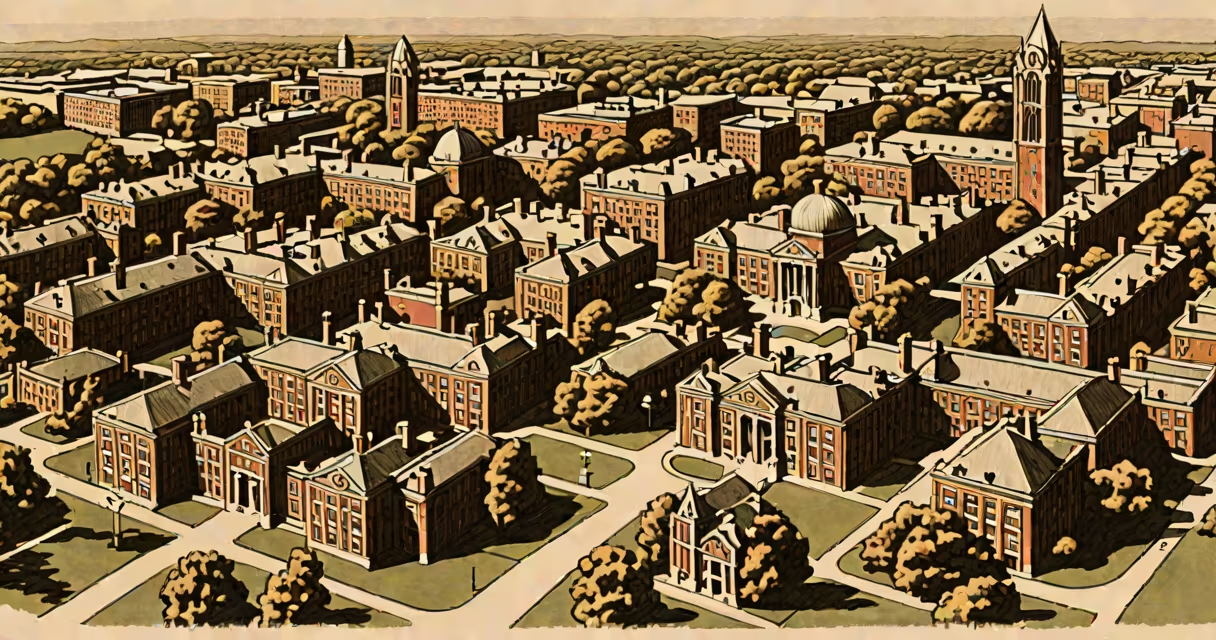
Ivy League adjacent schools are highly selective, research-intensive universities that offer academic prestige, rigorous curricula, and strong career outcomes comparable to the Ivy League, though they are not members of the Ivy League conference. These schools share similar selectivity, faculty credentials, and alumni networks, often admitting students with SAT scores above 1500 and acceptance rates under 10%. They are frequently ranked among the top 25 national universities by U.S. News & World Report.
These institutions operate with the same level of academic intensity as Ivy League schools. They emphasize undergraduate research, small class sizes, and close faculty mentorship. Students at these schools typically engage in interdisciplinary programs, publish early in their careers, and secure internships at top firms or research labs. The difference lies in institutional history and athletic conference affiliation-not academic quality.
The term "Ivy League adjacent" emerged in the early 2010s as a way to describe schools that meet or exceed the academic benchmarks of the Ivy League but lack formal membership. This includes institutions like Stanford University, Massachusetts Institute of Technology (MIT), and Duke University. These schools are not part of the Ivy League's original eight-member group but are functionally equivalent in admissions competitiveness and long-term outcomes.
Admissions at these schools rely heavily on complete review. Admissions committees assess academic performance, standardized test scores, extracurricular leadership, personal essays, and teacher recommendations. A student with a 4.0 GPA, 1550 SAT score, and leadership in a science competition may receive an offer even if their school is not nationally ranked.
Once admitted, students follow a structured curriculum with core requirements in humanities, natural sciences, and social sciences. At institutions like Northwestern University and Johns Hopkins University, undergraduates complete a minimum of four courses in each of these areas. Faculty-to-student ratios average 1:10 or better, enabling personalized attention and access to lab space, research grants, and independent study opportunities.
Graduates from these schools consistently enter top graduate programs and high-paying professions. According to the National Association of Colleges and Employers (NACE), 2023 graduates from Stanford, MIT, and Duke had median starting salaries between $85,000 and $105,000. Over 60% secured jobs within six months of graduation, with many joining Fortune 500 companies or leading startups.
These schools fall into distinct categories based on focus and structure. The most common are research powerhouses, liberal arts leaders, and STEM-focused institutions.
| Type | Examples | Key Features |
|---|---|---|
| Research Powerhouses | Stanford, MIT, Caltech | High research funding, Nobel laureates on faculty, strong industry partnerships |
| Liberal Arts Leaders | Duke, Vanderbilt, Amherst | Small classes, interdisciplinary majors, high faculty engagement |
| STEM-Focused Institutions | Georgia Tech, University of California, Berkeley, Carnegie Mellon | Top engineering and computer science programs, high placement in tech sector |
MIT and Stanford lead in innovation output. In 2022, MIT filed 1,142 patents through its Technology Licensing Office, while Stanford generated $1.3 billion in startup revenue from spinoffs. These numbers rival those of Ivy League schools, which collectively filed 1,028 patents and generated $1.1 billion in startup income during the same period.
Some schools maintain hybrid models. For example, Duke University offers a dual-degree program in engineering and public policy, allowing students to earn both a B.S. and M.P.P. in five years. This model mirrors the interdisciplinary focus seen at Harvard and Yale, but with greater flexibility and lower cost.
Many assume that "Ivy League adjacent" means "almost Ivy League." That's incorrect. These schools are not second-tier institutions-they are peers. The distinction is administrative, not academic. A student admitted to MIT or Stanford is not attending a "lesser" version of an Ivy League school. They are attending a top-tier institution with equal or superior resources in certain fields.
A frequent error is equating legacy admission with "adjacent" status. Legacy preferences exist at many elite schools, including Princeton and Columbia, but they do not define eligibility for "adjacent" status. A student from a non-legacy background can still be competitive at these schools. In 2023, 38% of admitted students at Stanford were first-generation college attendees, according to the university's annual report.
Another misconception is that these schools are unaffordable. While tuition at private institutions like Stanford ($63,000/year) is high, financial aid packages often cover full need. In 2023, 62% of Stanford undergraduates received need-based aid, with 41% receiving full-tuition scholarships. This aligns with the commitment to accessibility seen at Brown and Dartmouth, which are full members of the Ivy League.
Consider Maya Chen, a high school senior from San Diego. She maintained a 4.0 GPA, scored 1580 on the SAT, and led her robotics team to a national finals appearance. She applied to MIT, Stanford, and Duke.
At MIT, she was accepted with a full-tuition scholarship based on financial need. Her application included a research paper on neural network optimization in autonomous vehicles, co-authored with a professor at a local community college. She was invited to present at a regional AI symposium, which strengthened her profile.
She declined offers from Harvard and Yale due to higher out-of-pocket costs. Her decision was informed by a comparison of net price calculators. At MIT, her estimated annual cost after aid was $12,000. At Harvard, it was $28,000. The choice wasn't about prestige-it was about affordability and fit.
Maya's story illustrates that "ivy league adjacent schools" are not alternatives-they are equally valid paths to elite outcomes. They provide access to strong education without the historical baggage or inflated costs associated with some Ivy League institutions.
When evaluating colleges, focus on academic rigor, faculty expertise, and career placement-not just brand name. The top 5 ivy league schools remain among the most selective, but institutions like Stanford and Duke deliver comparable results with different structures and values. For students seeking excellence without exclusivity, ivy league adjacent schools represent a useful alternative.
Understanding the distinction between institutional branding and educational quality helps families make informed choices. These schools are not "close enough"-they are fully equivalent in outcome and opportunity. The rise of ivy league adjacent schools reflects a broader shift toward merit-based access and measurable impact in higher education.