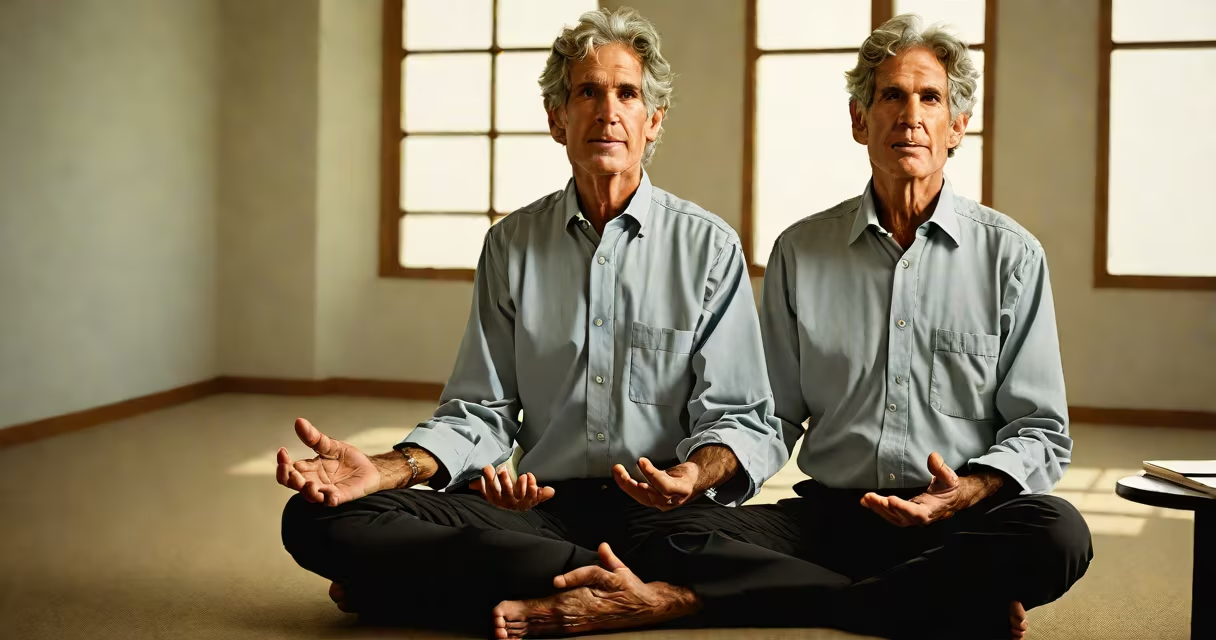
Jon Kabat-Zinn's mindfulness meditation is a secular, evidence-based practice that trains attention to the present moment without judgment. Developed in the 1970s at the University of Massachusetts Medical School, it forms the core of Mindfulness-Based Stress Reduction (MBSR), a program proven to reduce chronic pain, anxiety, and emotional reactivity.
Mindfulness meditation, as defined by Kabat-Zinn, involves paying deliberate attention to bodily sensations, thoughts, and emotions as they arise-without trying to change them. The goal is not to empty the mind but to observe experiences with curiosity and acceptance. This differs from religious meditation, which often focuses on transcending thought or achieving spiritual insight.
Research from the National Institutes of Health confirms that MBSR participants show measurable reductions in cortisol levels, blood pressure, and symptoms of depression. A 2014 meta-analysis published in *JAMA Internal Medicine* found mindfulness meditation programs had moderate effects on anxiety, depression, and pain-comparable to antidepressant medication in some cases.
The practice centers on formal sitting meditation, body scans, and gentle yoga. Each session lasts 45 minutes to an hour, typically done daily. Participants focus on breath, physical sensations, or sounds, returning attention whenever it drifts-a process called "re-focusing."
When the mind wanders-which it does repeatedly-the practitioner notices the distraction and gently returns focus to the breath or body. This cycle builds mental resilience. Over time, the brain's default mode network, linked to rumination and self-referential thinking, shows reduced activity, according to fMRI studies at Harvard Medical School.
A key principle is non-judgmental observation. Instead of labeling thoughts as "good" or "bad," practitioners acknowledge them as passing events. For example, noticing "I'm feeling tense" without reacting to the tension. This creates space between stimulus and response, reducing automatic stress reactions.
Jon Kabat-Zinn's program includes eight weekly sessions lasting two-and-a-half hours, plus a full-day retreat. The structure ensures gradual skill development. Core practices include:
Participants are instructed to sit quietly, close their eyes, and bring attention to the breath. When thoughts arise-about the past, future, or worries-they are acknowledged and released. The act of returning attention strengthens neural pathways associated with sustained attention and emotional regulation.
| Practice | Duration | Focus |
|---|---|---|
| Sitting meditation | 45 min | Breath, body, thoughts |
| Body scan | 60 min | Progressive body awareness |
| Walking meditation | 20 min | Foot contact, posture, breath |
| Informal mindfulness | Varies | Everyday activities (eating, washing dishes) |
One common misconception is that mindfulness requires stillness or silence. Kabat-Zinn's model includes mindful walking and eating-activities performed with full attention. A participant once reported noticing the texture of a grape during a meal, something they'd previously ignored while distracted by screens.
Many assume mindfulness is about relaxation or clearing the mind. It is not. The practice does not aim to eliminate thoughts or achieve calm. Instead, it teaches tolerance of discomfort. In clinical settings, patients with chronic pain report less suffering not because pain disappears, but because their relationship to pain changes.
Another misunderstanding is that mindfulness is a quick fix. It is not. Research shows benefits accumulate over six to eight weeks of consistent practice. A 2018 study in *Mindfulness* journal found that participants who practiced daily for eight weeks showed significant improvements in attention control and emotional regulation compared to controls.
Some confuse Kabat-Zinn's approach with Buddhist meditation. While he drew inspiration from Zen and Vipassana traditions, he removed religious elements. The program uses no mantras, deities, or beliefs in reincarnation. It is explicitly secular and taught in hospitals, schools, and corporate wellness programs worldwide.
In 2005, the U.S. Department of Veterans Affairs began integrating MBSR into treatment plans for PTSD. A 2017 study found veterans who completed the program reported 30% less intrusive thoughts and improved sleep quality. These results were replicated in civilian populations with generalized anxiety disorder.
I once attended a four-week MBSR course at a community health center. On day one, I struggled to stay still for five minutes. My mind raced through work emails, family concerns, and future plans. By week three, I noticed subtle shifts: I paused before responding in arguments, and I caught myself reaching for snacks out of habit. The change wasn't dramatic-but it was consistent.
For chronic pain sufferers, the impact can be major. A patient with fibromyalgia reported that after completing the program, she no longer needed to increase her pain medication. She described the difference as "not being ruled by my body's signals anymore."
Jon Kabat-Zinn's mindfulness meditation is now embedded in healthcare systems globally. The UK's National Health Service (NHS) recommends MBSR for long-term conditions like irritable bowel syndrome and chronic fatigue. In education, schools in California and New York have implemented mindfulness curricula, showing improved student focus and reduced behavioral incidents.
Corporate adoption is growing. Google offers "Search Inside Yourself," a course based on Kabat-Zinn's principles. Employees report better decision-making under pressure and reduced burnout. A 2020 internal survey found 72% of participants felt more emotionally balanced after completing the training.
Despite widespread use, not all implementations are equal. Programs lacking trained facilitators or structured curriculum may fail to deliver results. The original MBSR program requires instructors to complete a 10-day intensive training and pass certification. Without this, the fidelity of the practice diminishes.
Jon Kabat-Zinn's mindfulness meditation is not a philosophy or a lifestyle-it is a set of tools grounded in neuroscience and clinical outcomes. It teaches people to meet life's moments with presence, not avoidance. The practice is not about becoming someone else. It is about becoming more fully who you already are.