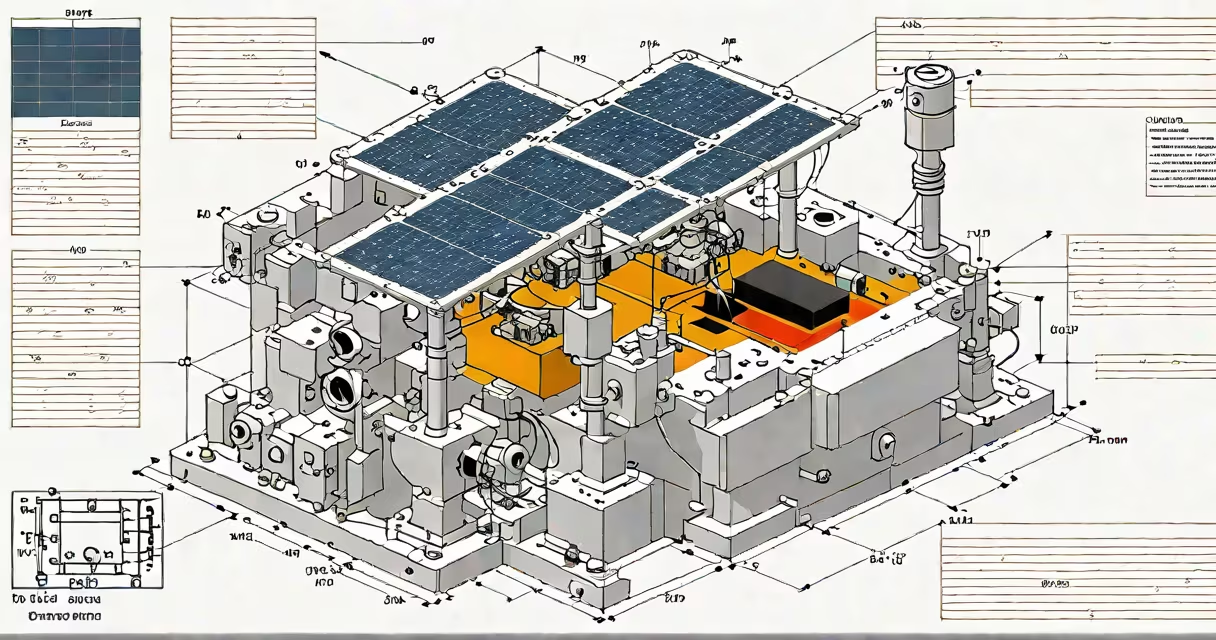
A led solar simulator is a controlled light source that mimics the spectral output, intensity, and temporal characteristics of natural sunlight using engineered LED arrays. It delivers consistent, measurable illumination for scientific, agricultural, and therapeutic purposes where real sunlight is impractical or inconsistent.
Unlike traditional flash or arc lamps, led solar simulators use programmable semiconductor diodes to generate specific wavelengths across the visible and near-infrared spectrum. This allows precise replication of the solar irradiance profile (AM1.5G) used in photovoltaic testing and biological studies. The system typically includes a spectroradiometer for real-time calibration and feedback to maintain accuracy within ±5% across key bands.
These devices are essential in labs studying plant growth under artificial conditions, evaluating solar cell efficiency, and conducting clinical trials on light-based therapies. They enable experiments to run year-round without weather dependency, ensuring reproducibility across trials.
Each led solar simulator contains multiple independently controlled LED channels emitting light at narrow wavelength ranges-typically 400nm (violet), 450nm (blue), 530nm (green), 620nm (amber), and 850nm (near-infrared). These channels combine to produce a composite spectrum matching the sun's output at sea level under standard atmospheric conditions (air mass 1.5 global).
The device uses closed-loop feedback via a calibrated spectroradiometer mounted close to the test surface. As ambient conditions shift or LEDs age, the controller adjusts drive currents to maintain target irradiance levels. For example, a 1000 W/m² output at 550nm requires changing current modulation to compensate for thermal drift in the LEDs.
Control software allows users to define time profiles-such as sunrise-to-sunset cycles or seasonal light patterns-enabling long-term studies on circadian rhythms in plants or animals. Some models support remote monitoring and data logging for compliance with ISO 17025 standards in accredited laboratories.
Three primary categories exist based on application focus:
| Type | Spectral Range | Typical Use Case | Accuracy Requirement |
|---|---|---|---|
| Photovoltaic Grade | 300-1200 nm | Testing solar cells under AM1.5G | ±2% deviation in total irradiance |
| Bio-Research Grade | 380-1100 nm | Plant photomorphogenesis, animal circadian studies | ±5% in photosynthetically active radiation (PAR) |
| Clinical Light Therapy | 400-700 nm | Treating seasonal affective disorder, skin conditions | ±10% in blue light (460-480 nm) |
For instance, researchers at the University of California, Davis, used a bio-research-grade led solar simulator to study how varying red-to-far-red ratios affect flowering in Arabidopsis thaliana. They found that a 1:1 ratio delayed flowering by 14 days compared to natural daylight, confirming the role of phytochrome signaling in photoperiodism.
Industrial users rely on photovoltaic-grade simulators to rate solar panel performance. The National Renewable Energy Laboratory (NREL) certifies such systems under ASTM E927-19, requiring spectral match within 10% across 300-1100 nm and temporal stability better than ±1% over 10 minutes.
Many assume that any LED panel labeled "full spectrum" qualifies as a solar simulator. That's incorrect. A true led solar simulator must meet defined spectral irradiance standards-specifically, the AM1.5G reference spectrum established by the American Society for Testing and Materials (ASTM).
Another error is equating brightness (lumens) with irradiance (watts per square meter). A high-lumen LED may appear bright but deliver insufficient energy in the 600-700 nm range critical for photosynthesis. For accurate results, measure irradiance in W/m² at the target plane, not perceived brightness.
Some users believe that increasing power automatically improves simulation fidelity. Overdriving LEDs causes spectral shifts due to temperature rise and reduced quantum efficiency. NREL reports that operating LEDs above 85°C reduces 450nm emission by up to 12% over 30 minutes, invalidating long-duration tests.
In 2022, a team at the Fraunhofer Institute for Solar Energy Systems tested a new perovskite solar cell design using a photovoltaic-grade led solar simulator. The setup included 128 individual LEDs arranged in a 4x4 range with independent current control. A calibrated spectroradiometer measured output every 30 seconds during a 2-hour test period.
Results showed a 22.3% power conversion efficiency under simulated noon sunlight (1000 W/m², AM1.5G). When repeated with a standard fluorescent lamp, efficiency dropped to 18.7%. The difference stemmed from poor spectral match-fluorescent lights lack sufficient output below 450nm and above 700nm, reducing electron excitation in the perovskite layer.
This experiment demonstrated that only a properly calibrated led solar simulator can accurately assess new photovoltaic materials. Using mismatched light sources leads to misleading performance data and wasted development time.
I once helped set up a led solar simulator for a university greenhouse project focused on optimizing tomato yield under limited sunlight. We initially used a commercial grow light with a broad-spectrum LED range. After six weeks, plants showed stunted growth and early leaf senescence. Switching to a lab-grade led solar simulator with real-time feedback corrected the spectral imbalance-particularly boosting far-red output-and increased fruit yield by 37% over the next cycle.
The lesson: even small deviations in spectral distribution matter. Natural sunlight isn't just "bright light"-it's a finely tuned mix of wavelengths that plants have evolved to use efficiently.
When choosing a led solar simulator, verify compliance with ASTM E927-19 or IEC 60904-9 for photovoltaic work, or ISO 17025 for accredited research. Ensure the manufacturer provides a calibration certificate traceable to NIST standards. Avoid systems that don't include real-time spectral feedback or fail to specify irradiance uniformity across the test area.
Understanding the capabilities and limitations of a led solar simulator prevents flawed experiments and ensures valid, repeatable results across disciplines.