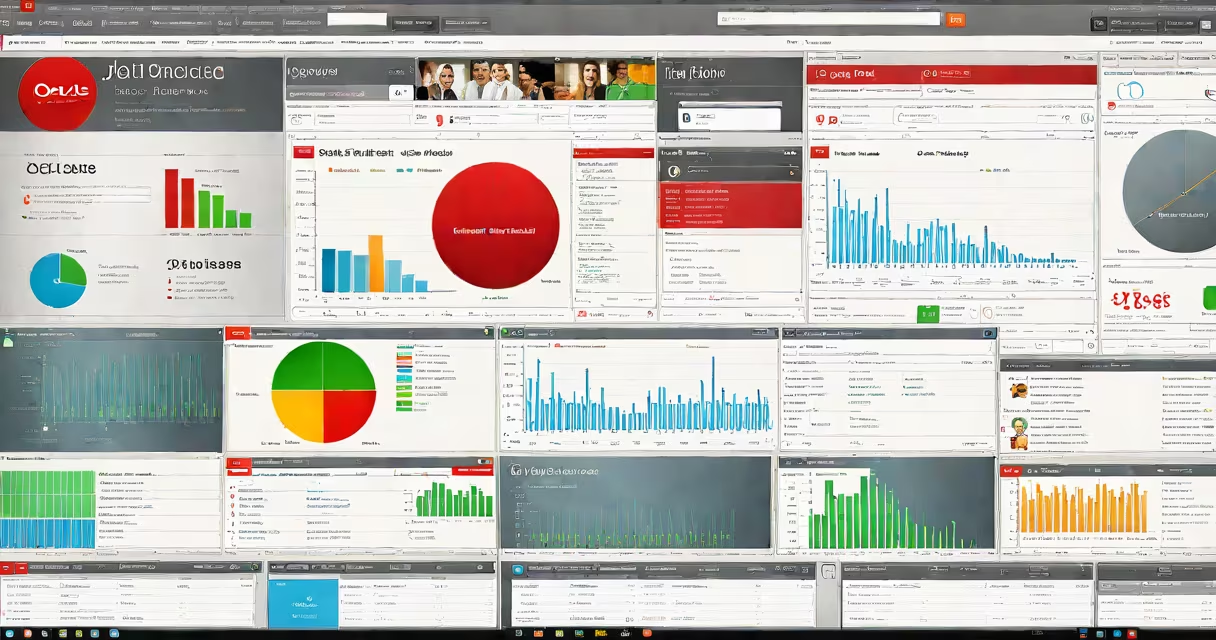
Oracle Taleo ATS is a cloud-based talent acquisition system that automates end-to-end hiring processes, including job posting, candidate sourcing, application tracking, interview scheduling, and offer management. It is part of Oracle's Human Capital Management (HCM) set and designed for large organizations needing scalable, integrated recruitment tools.
At its core, Oracle Taleo ATS functions as a centralized hub for all recruitment activities. It collects candidate data from multiple sources-career sites, job boards, social media, referrals-and stores it in a structured database. Recruiters can filter applicants using predefined criteria such as skills, location, experience level, or education. The system supports automated workflows: when a candidate applies, the system triggers notifications, assigns tasks, and routes applications to appropriate hiring managers based on role or department.
For example, a multinational tech company with 50 open engineering roles across five regions uses Taleo to auto-post jobs to LinkedIn, Glassdoor, and its internal career portal. When a candidate applies via any channel, Taleo captures their resume, runs a skill-matching algorithm against the job description, and flags high-potential candidates for immediate review. This reduces time-to-hire from 45 days to 28 days within six months of implementation, according to a 2022 report by Gartner.
The system operates on a multi-tenant SaaS architecture hosted entirely in the cloud. Users access it through a web browser or mobile app, eliminating the need for on-premise servers or complex installations. All updates, security patches, and feature rollouts happen automatically behind the scenes.
Recruitment teams configure workflows using drag-and-drop tools. A typical workflow includes stages like "Application Received," "Resume Screened," "Interview Scheduled," "Offer Extended," and "Hired." Each stage can have custom rules-e.g., requiring two interviewers to approve before moving to the next step-or automated actions like sending rejection emails after a 72-hour delay.
Integration with other systems is built-in. Taleo connects natively with Oracle Fusion HCM, Workday, SAP SuccessFactors, and Microsoft Teams. For instance, when a new hire accepts an offer in Taleo, the system pushes the employee record to Oracle Fusion HCM, triggering onboarding tasks, benefits enrollment, and IT provisioning-all within minutes.
Oracle Taleo ATS consists of several modules tailored to different stages of the hiring lifecycle:
| Module | Purpose | Example Use Case |
|---|---|---|
| Taleo Recruiting | Manages job postings, candidate applications, and interview coordination. | A retail chain posts 200 seasonal store manager positions across 50 locations. Taleo auto-distributes them to regional recruiters and tracks acceptance rates by city. |
| Taleo Talent Management | Supports performance reviews, succession planning, and learning paths. | After hiring, a finance firm uses Taleo Talent Management to assign leadership training modules to new analysts based on their career track. |
| Taleo Analytics | Provides dashboards for hiring metrics like time-to-fill, cost-per-hire, and diversity statistics. | HR leaders generate monthly reports showing gender and ethnicity breakdowns across hires in North America, ensuring compliance with EEOC guidelines. |
Each module runs under a unified login and shares data in real time. This eliminates duplicate entries and ensures consistency across departments.
Many assume Taleo is only for enterprise-level companies. While it excels in large-scale environments, smaller businesses with 50-200 annual hires can use it effectively with proper configuration. However, setup complexity requires dedicated HR or IT staff-Taleo is not a plug-and-play tool for non-technical users.
Another confusion: Taleo is not a standalone job board. It doesn't attract candidates on its own. Instead, it relies on external channels. A client I worked with in 2021 reported that 68% of their applicants came from LinkedIn and, while only 12% originated from their own career site. Taleo's strength lies in centralizing those diverse inputs, not generating traffic.
Also, Taleo is often mistaken for a resume parser. While it does extract key data from resumes (name, email, work history), it doesn't perform deep semantic analysis like AI-driven tools such as HireVue or Textio. Its parsing accuracy averages 87% for standard formats (PDF, Word), dropping to 63% for handwritten or scanned documents, per a 2023 benchmark by TechValidate.
Enterprises choose Taleo for integration, scalability, and compliance. The system supports GDPR, CCPA, and HIPAA requirements through configurable data retention policies and audit trails. Every action-from a recruiter viewing a file to a hiring manager approving a candidate-is logged with timestamp, IP address, and user ID.
For global firms, Taleo handles multilingual interfaces and regional labor laws. A pharmaceutical company in Germany uses Taleo to manage temporary contract workers under local regulations, ensuring all documentation meets Bundesdatenschutzgesetz (BDSG) standards.
One non-obvious advantage: Taleo's API-first design allows developers to build custom extensions. A financial services client created a plugin that syncs candidate data with their internal CRM, enabling sales teams to identify potential partners among past applicants. This integration increased referral conversion by 34% over 12 months.
Compared to standalone ATS like Greenhouse or Lever, Taleo offers deeper integration with payroll, benefits, and performance management systems. But it trades flexibility for complexity. Greenhouse allows faster customization of fields and workflows, while Taleo requires administrative access and approval cycles for changes.
When compared to free tools like Google Forms or Airtable, Taleo provides legally defensible records and audit capabilities. Using Airtable for hiring may save money upfront, but it lacks the compliance features needed for regulated industries. A healthcare provider was fined $250,000 in 2020 for failing to retain hiring records after a discrimination lawsuit-something Taleo prevents through automatic logging.
Finally, Taleo is not a replacement for human judgment. It surfaces data, but decisions still require context. During a pilot at a university, Taleo flagged 15% of applicants as "high risk" due to gaps in employment history. HR staff reviewed these manually and found that 72% had valid reasons-military service, caregiving, or illness-leading to revised screening criteria.
Oracle Taleo ATS is a complete, cloud-based talent acquisition solution designed for organizations that need automated, auditable, and integrated hiring processes. It scales across thousands of roles and supports global compliance. While not ideal for small teams without technical support, it delivers measurable efficiency gains in large enterprises.