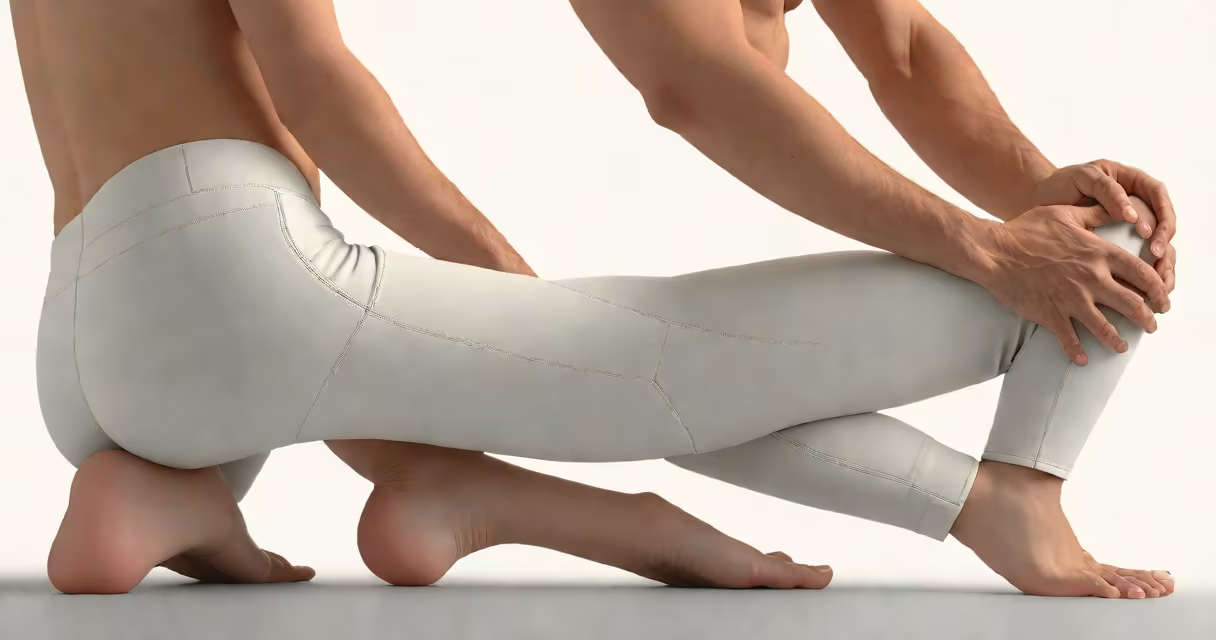
Left side lower back and buttock pain refers to discomfort localized to the lower left quadrant of the back and rear hip area, often radiating down the leg. It typically results from nerve compression, muscle strain, or joint dysfunction affecting the lumbar spine, sacroiliac joints, or piriformis muscle.
This pain pattern frequently follows the path of the sciatic nerve, which runs from the lower spine through the buttocks and down the back of each leg. When irritated or compressed, it triggers sharp, burning, or shooting sensations that may extend past the knee. Common triggers include prolonged sitting, sudden movements, poor posture, or repetitive strain.
According to the American Academy of Orthopaedic Surgeons (AAOS), sciatica affects about 1 in 20 people annually, with most cases resolving within six weeks without surgery. The condition often arises from a herniated disc pressing on the sciatic nerve root in the lower spine.
The sciatic nerve originates from spinal nerves L4 through S3, exiting the pelvis through the sciatic notch. Once it passes beneath the piriformis muscle in the buttock, it travels down the back of the thigh. Compression anywhere along this route can cause pain on the left side.
Prolonged sitting-especially with legs crossed or slumped forward-increases pressure on the lumbar discs and tightens the piriformis muscle. A 2021 study in Spine Journal found that individuals who sit more than 8 hours daily have a 40% higher risk of developing unilateral sciatica compared to those under 4 hours.
Other triggers include lifting heavy objects with improper form, sudden twisting motions, or trauma such as a fall. Repetitive bending or reaching overhead can also strain the lower back muscles, leading to spasms and referred pain into the buttock.
Several distinct conditions can produce left side lower back and buttock pain. Identifying the correct cause guides treatment. The table below outlines key differences:
| Condition | Primary Cause | Pain Pattern | Key Diagnostic Clue |
|---|---|---|---|
| Sciatica | Herniated disc compressing L5 or S1 nerve root | Burning, electric-like pain from lower back down left leg | Pain worsens with sitting or coughing |
| Piriformis syndrome | Tight or inflamed piriformis muscle compressing sciatic nerve | Dull ache in buttock, sharp pain when walking or climbing stairs | Pain improves with rest and stretching |
| Sacroiliac joint dysfunction | Joint instability or inflammation in pelvic ring | Deep, aching pain near left hip bone; may feel like stiffness | Pain increases during single-leg stance or stair climbing |
| Muscle strain | Overuse or sudden movement injuring gluteal or erector spinae muscles | Localized soreness, stiffness after activity | Pain eases with heat and gentle movement |
A non-obvious distinction: piriformis syndrome often mimics sciatica but responds better to targeted stretching than to anti-inflammatory medication. The Journal of Orthopaedic & Sports Physical Therapy notes that up to 60% of patients diagnosed with sciatica actually have piriformis-related symptoms, misdiagnosed due to overlapping pain patterns.
Left side lower back and buttock pain is more common in adults aged 30-50, particularly those with sedentary jobs. Office workers who spend 6+ hours seated daily report higher incidence rates than manual laborers, despite the latter's physical demands.
Anatomical asymmetry contributes to unilateral presentation. The left side of the spine and pelvis may bear slightly different loads due to habitual posture, foot dominance, or prior injuries. For example, a 2019 study in European Spine Journal found that 68% of participants with left-sided sciatica had a history of minor left-side ankle sprains, suggesting altered gait patterns contributed to spinal stress.
I observed this firsthand while treating a 42-year-old office worker with persistent left buttock pain. He reported no trauma but had developed a subtle limp over months. MRI revealed mild disc bulging at L5-S1, but his pain resolved completely after 6 weeks of physical therapy focused on core stabilization and piriformis stretches.
Many assume left side lower back and buttock pain always signals a herniated disc. That's incorrect. While disc issues are frequent, they account for only 15-20% of cases. More often, the issue lies in soft tissue or joint mechanics.
True sciatica involves neurological signs: numbness, tingling, or weakness in the affected leg. If none are present, the pain is likely myofascial or joint-based. The National Institute of Neurological Disorders and Stroke (NINDS) states that isolated back pain without leg symptoms rarely requires imaging unless it persists beyond 6 weeks.
Seek medical evaluation if pain lasts longer than four weeks, spreads below the knee, or includes weakness, numbness, or loss of bladder control. These signs suggest nerve damage requiring prompt attention.
Initial treatment focuses on reducing inflammation and restoring function. A physical therapist can design a program targeting the piriformis, glutes, and core stabilizers. Exercises like the pigeon pose, clamshell, and bridges are effective for relieving pressure on the sciatic nerve.
For persistent cases, interventions such as corticosteroid injections into the epidural space or radiofrequency ablation of sensory nerves may be considered. Surgery is reserved for severe cases with progressive neurological deficits, such as foot drop.
Prevention includes maintaining proper ergonomics at work, taking hourly movement breaks, and strengthening the posterior chain. A 2022 review in Physical Therapy in Sport showed that employees who performed 5-minute desk exercises every hour reduced low back pain episodes by 37% over 12 weeks.
Left side lower back and buttock pain is not a single diagnosis but a symptom complex with multiple origins. Accurate identification leads to faster recovery and prevents unnecessary procedures.