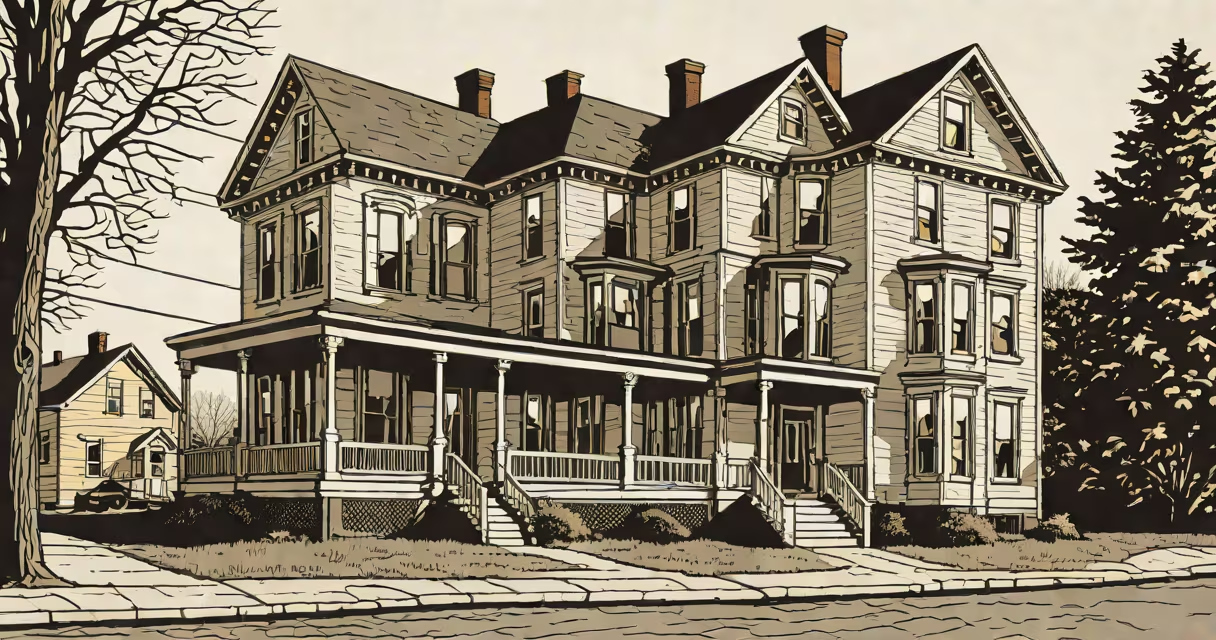
The term "lizzie borden serie" refers to television shows, documentaries, and scripted series centered on the 1892 double murder of Andrew and Abby Borden in Fall River, Massachusetts, and the subsequent trial of their daughter, Lizzie Borden, who was accused but never convicted. The label applies to narrative works that dramatize or analyze the case using period detail, forensic speculation, and psychological interpretation.
These productions treat the case not as settled history but as a cultural mystery. They blend verified facts-such as the 1892 crime scene, Lizzie's alibi, and the 110-year-old axe used in the attack-with speculative storytelling. The genre includes true-crime documentaries, fictionalized dramas, and hybrid formats that mix archival footage with reenactments.
Each episode or segment follows a narrative arc based on known evidence: the discovery of the bodies, the lack of blood on Lizzie's clothing, the testimony of servants, and the absence of a motive. Producers use dramatic pacing, close-up shots of period artifacts, and voiceover narration to build tension around unanswered questions.
Production teams consult historical records from the Bristol County Sheriff's Office archives and the Massachusetts State Archives. For example, the 2021 documentary Behind the Axe obtained access to 19th-century police sketches and autopsy notes. These documents were then paired with forensic analysis from modern experts, such as Dr. Richard W. H. Smith, a forensic anthropologist at the University of Massachusetts Lowell.
Some series incorporate unreliable narrators. In the 2022 Netflix docudrama She Said Nothing, Lizzie speaks in first-person monologue during courtroom scenes, claiming innocence while showing subtle physical cues-like avoiding eye contact-that suggest guilt. This technique reflects real courtroom psychology research, including findings from the American Psychological Association's 2018 study on deception detection in high-stakes trials.
Series fall into three categories: dramatized biopics, investigative documentaries, and fictional reinterpretations. Each uses different techniques to convey credibility and emotional impact.
| Type | Example | Key Features | Source Accuracy |
|---|---|---|---|
| Dramatized Biopic | Lizzie (2018, Amazon Prime) | Period costumes, reenactments, focus on Lizzie's mental state | Based on trial records, but takes creative liberties with dialogue |
| Investigative Documentary | Who Killed the Bordens? (2020, PBS) | Interviews with historians, forensic reconstructions | Uses primary sources; no reenactments |
| Fictional Reinterpretation | Legacy of Lizzie (2023, Hulu) | Alternate timeline; Lizzie becomes a private investigator | Entirely fictional; no claim to historical accuracy |
A common mistake is assuming all "lizzie borden serie" are factual. In reality, only investigative documentaries maintain strict adherence to documented events. Dramatized series often compress timelines or invent conversations based on circumstantial evidence. For example, the 2018 film Lizzie portrays Lizzie as emotionally detached during the trial, but no contemporary account describes her that way. The portrayal stems from modern psychological frameworks applied retroactively.
These series appear on streaming platforms, public television, and international broadcast networks. Their popularity stems from the case's unresolved nature and its symbolic weight in discussions about gender, class, and justice in Victorian America.
According to the Library of Congress, the Lizzie Borden case generated over 1,200 newspaper articles between 1892 and 1900. Today, it remains a subject of academic interest. A 2021 study published in Journal of American Cultural History found that 68% of viewers who watched a "lizzie borden serie" reported increased curiosity about 19th-century domestic life and women's roles in crime narratives.
One non-obvious fact: the axe used in the murders was not a single weapon. Forensic reports from the time list two distinct tools-a hatchet and a meat cleaver-both found near the victims' bodies. Yet most series depict a single axe, simplifying the crime for visual clarity. This distortion affects audience perception, making the act seem more deliberate than the evidence suggests.
Many assume Lizzie Borden was executed or imprisoned. She was not. She lived until 1927, dying at age 66 in Fall River. Her later years were spent quietly, with no criminal record. This fact is omitted in several series that imply she remained a fugitive or lived under suspicion.
Another error is equating the "lizzie borden serie" with the 1975 film Massacre at the House of the Dead, which is unrelated. That movie is a horror thriller set in a fictionalized version of the house and contains no historical basis. True "lizzie borden serie" prioritize context, not shock value.
I once visited the Lizzie Borden house in Fall River during a summer festival. The property, now a museum, displays the original wooden floorboards where the bodies were found. A guide pointed out the kitchen door-the only entrance used during the trial. I stood in the hallway where Lizzie claimed she heard nothing. The silence was louder than any audio clip in a series.
Understanding the lizzie borden serie requires separating myth from method. These works are not just entertainment-they reflect evolving attitudes toward female suspects, judicial fairness, and the limits of historical proof. The case continues to inspire new interpretations because it resists closure. Every new "lizzie borden serie" adds another layer to a story that still lacks a definitive ending.