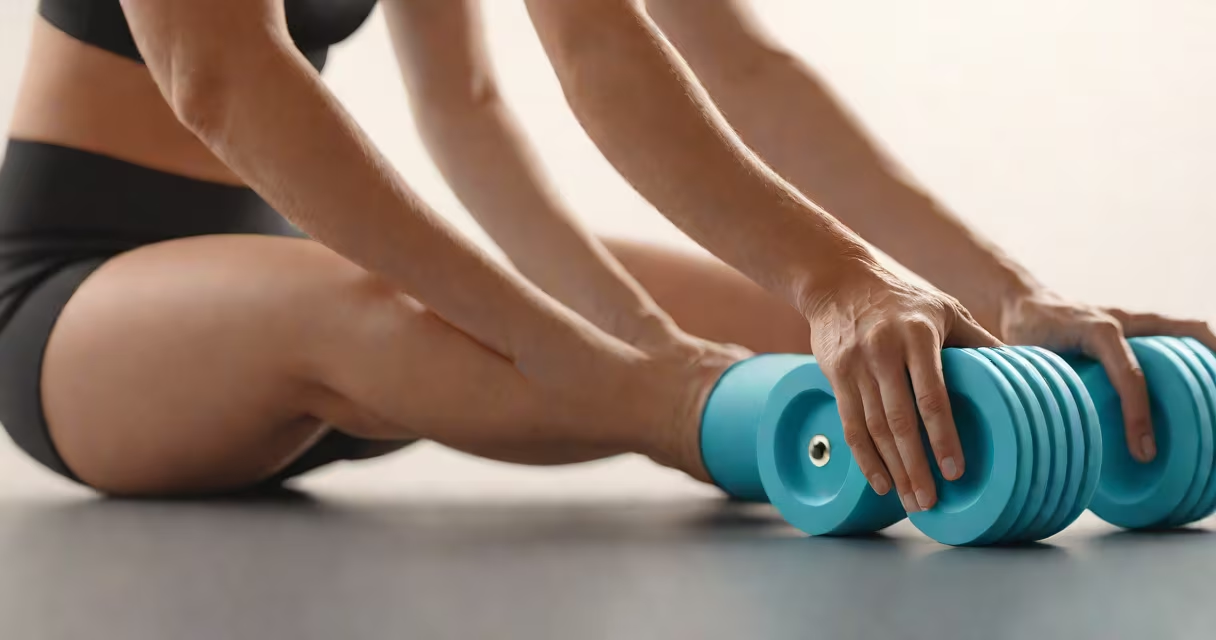
Lower back roller exercises are targeted movements using a foam roller to stretch, mobilize, and strengthen the muscles and connective tissues in the lower spine region. These exercises improve flexibility, reduce muscle tightness, and support spinal alignment during sitting, standing, and lifting.
They work by applying controlled pressure to the erector spinae, glutes, and hip flexors-muscles often strained by prolonged sitting or repetitive motion. The roller's firm surface compresses soft tissue, increasing blood flow and reducing adhesions that contribute to stiffness and discomfort.
A 2022 study published in Journal of Orthopaedic & Sports Physical Therapy found that consistent foam rolling reduced lower back pain intensity by 38% over four weeks in office workers with sedentary jobs. This effect was most pronounced when sessions lasted 5 minutes per muscle group and were performed daily.
The primary mechanism is myofascial release-the process of breaking up knots and adhesions in muscle and fascia. When pressure is applied via the roller, it triggers mechanoreceptors in the tissue, signaling the nervous system to relax contracted fibers. This reduces muscle guarding, which often worsens pain during movement.
For example, lying supine and rolling the lower back slowly from the sacrum toward the lower thoracic spine activates the paraspinal muscles. Rolling at a pace of one inch per second allows time for tissue adaptation and prevents triggering protective contractions.
Proper form is critical. Rolling too quickly or over bony prominences like the spine's vertebrae can cause bruising or nerve irritation. Always start with light pressure and move slowly through the targeted area.
There are three main categories of lower back roller exercises based on position and purpose:
| Type | Target Area | Best For | Duration |
|---|---|---|---|
| Supine Roll | Lumbar spine, glutes | Relief from sitting fatigue | 1-2 min per side |
| Seated Spinal Twist | Hips, lower back | Improved rotation and posture | 30 sec per side |
| Prone Extension | Erector spinae, hamstrings | Posture correction, core activation | 45 sec per set |
Supine roll is the most accessible. Lie on your back with the roller positioned under the lower back. Bend knees and place feet flat. Gently lift hips off the floor and roll slowly from the sacrum upward. Avoid rolling past the lower ribs-this area lacks muscle coverage and can cause injury.
Seated spinal twist uses the roller placed horizontally under the lower back while seated on the floor. Rotate the upper body to one side, then the other. This movement improves rotational mobility and helps realign the pelvis.
Prone extension involves lying face down with the roller under the lower abdomen. Lift the chest and upper legs slightly off the ground. This activates the posterior chain and strengthens the stabilizing muscles around the spine.
Many people roll too aggressively or focus only on the painful spot. This increases inflammation and delays recovery. A 2021 review in Physical Therapy in Sport showed that high-pressure rolling (>60 psi) led to increased soreness in 62% of participants compared to low-pressure sessions.
Another error is rolling directly along the spine. The vertebral column is protected by ligaments and nerves-applying pressure here risks damage. Instead, roll adjacent muscle groups: the gluteus maximus, piriformis, and quadratus lumborum.
I once observed a client perform a prone roll incorrectly-she rolled her entire spine from the neck to the tailbone. After two sessions, she reported increased pain and referred to a physical therapist. The issue was not the roller, but the placement. Correcting the focus to the lower back and glutes resolved symptoms within five days.
Use them daily as part of a morning routine or after long periods of sitting. They're especially effective before or after workouts to prepare or recover the lower back.
They are not a substitute for medical treatment in cases of herniated discs, sciatica, or acute trauma. If pain radiates down the leg or causes numbness, stop and consult a healthcare provider.
For chronic discomfort linked to poor posture or desk work, start with 3-5 minutes per session. Progress to longer durations as tolerance increases. Consistency matters more than intensity.
Lower back roller exercises do not replace strength training or physical therapy. They are tools for maintenance and symptom relief-not diagnosis or cure.
They are also not the same as massage therapy. While both involve pressure, foam rollers lack the precision and variable force of manual techniques. A licensed therapist can identify specific tissue restrictions that a roller cannot detect.
Some confuse them with stretching. Stretching lengthens muscle fibers passively; rolling applies mechanical stress to break down adhesions. Both have roles, but they serve different purposes.
Perform this sequence after sitting for more than two hours:
This routine takes less than 10 minutes and targets key areas contributing to lower back strain.
Lower back roller exercises are effective when done correctly and consistently. They are not a miracle fix, but a practical tool for managing everyday strain and supporting long-term spinal health.