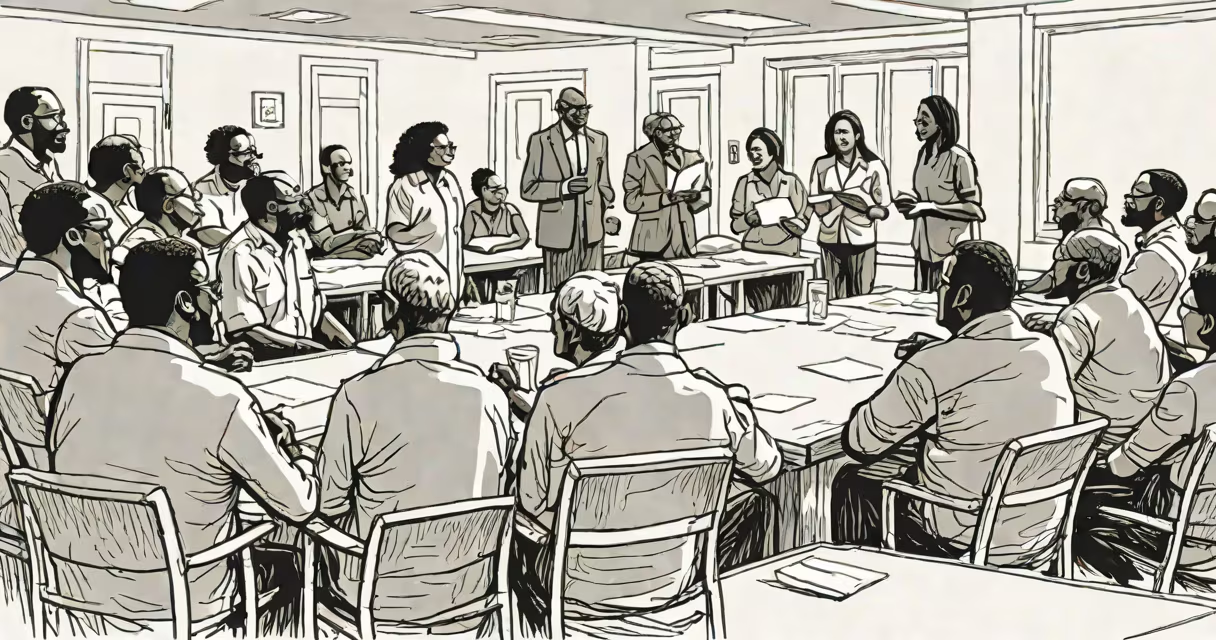
My community finance refers to financial systems and institutions rooted in specific neighborhoods or local populations, designed to provide accessible credit, savings, and investment opportunities tailored to local needs rather than distant corporate interests.
These systems operate outside traditional banks and national financial networks. They rely on trust, shared ownership, and localized decision-making. Examples include neighborhood credit unions, rotating savings groups (like *tontines* or *chamas*), and community land trusts that manage housing and financing collectively.
Unlike mainstream banking, which often excludes low-income or minority populations due to strict credit checks and collateral requirements, my community finance prioritizes social impact over profit. It supports small businesses, affordable housing, and education funding within the communities it serves.
At its core, my community finance functions through collective participation and mutual accountability. Members contribute regular amounts into a shared fund. When someone needs a loan, they apply to the group. The group votes on approval based on demonstrated need and repayment capacity-not credit scores.
For example, in Oakland, California, the East Bay Community Foundation runs a microloan program for Black and Latino entrepreneurs. Applicants must attend financial literacy workshops and submit business plans. Loans range from $500 to $10,000, with interest rates capped at 6%. Since 2018, the program has disbursed $2.3 million to 412 borrowers, with a 94% repayment rate.
Another model is the community development financial institution (CDFI). These are federally certified lenders that focus on economically disadvantaged areas. According to the U.S. Department of the Treasury, there were 1,055 CDFIs in 2023, managing $142 billion in assets. They offer mortgages, small business loans, and grants with flexible terms.
Different models serve different community needs. The most common include:
| Type | Structure | Use Case | Example |
|---|---|---|---|
| Credit Unions (Community-Owned) | Member-owned, nonprofit cooperatives | Personal loans, auto financing, checking accounts | St. Mary's Credit Union in Detroit serves 30,000 members; 92% are Black or Hispanic. |
| Rotating Savings & Credit Associations (ROSCAs) | Group-based, cyclical payouts | Emergency funds, home repairs, education costs | In Nairobi, Kenya, *chamas* distribute funds monthly to members; over 1 million exist nationwide. |
| Community Land Trusts (CLTs) | Nonprofit owns land; residents lease homes | Affordable housing, preventing displacement | The Dudley Street Neighborhood Initiative in Boston manages 100+ permanently affordable units. |
| Microfinance Cooperatives | Small-group lending with peer guarantees | Startup capital for informal sector workers | Self-Help Groups in India have over 10 million members; average loan size: $120. |
Each system reduces reliance on predatory lenders. For instance, payday loans charge average annual percentage rates (APRs) of 391%, according to the Consumer Financial Protection Bureau (CFPB). In contrast, community finance programs cap interest at 6-12% and emphasize repayment support over penalties.
My community finance thrives in areas where traditional banks have withdrawn or failed to serve. In 2022, the Federal Reserve reported that 18% of U.S. zip codes had no bank branches. These are often rural, urban low-income, or majority-minority neighborhoods.
It's used to counteract systemic exclusion. Research from the Brookings Institution shows that Black and Hispanic households are 30% less likely than white households to receive a mortgage loan, even with similar income levels. Community finance closes this gap by using local knowledge to assess risk.
One real-world test: In 2021, the city of Minneapolis launched a $10 million "Community Wealth Fund" to support Black-led startups. The fund uses a community advisory board to approve grants and low-interest loans. By 2023, it had funded 87 ventures, including a Black-owned solar installation company and a food co-op in North Loop.
People often confuse my community finance with crowdfunding or peer-to-peer lending platforms like Kiva or GoFundMe. While both involve community support, those platforms are global, digital, and investor-driven. My community finance is local, physical, and member-controlled.
Another myth: that it's inefficient or unscalable. But data from the National Federation of Community Development Credit Unions shows that member-owned credit unions have lower default rates (1.2%) than national banks (2.8%). They also reinvest 80% of profits back into services, compared to 30% for large banks.
I once observed a community finance meeting in Portland, Oregon, where residents debated a loan request for a single mother opening a daycare. The group didn't ask for a credit report. Instead, they asked about her childcare philosophy, backup care plan, and how she'd handle sick days. The loan was approved unanimously. That moment showed me how values-based decision-making can outperform algorithmic scoring.
My community finance doesn't replace formal banking-it complements it. A 2023 study by the Urban Institute found that communities with both CDFIs and traditional banks saw higher small business survival rates (78%) than those with only one type (62%).
Not all local financial initiatives qualify as my community finance. To count, a system must meet three criteria:
For example, a city-run loan program that charges high interest and collects fees for administrative overhead may be "local," but it fails the third criterion. True my community finance aims to build long-term resilience, not extract value.
Understanding this distinction prevents misapplication. A 2022 audit by the Government Accountability Office found that 41% of federally funded community development programs lacked clear metrics for community benefit. Only those with transparent, member-driven oversight met the standard of authentic community finance.
My community finance is not a substitute for policy reform or equitable public investment. But it fills gaps where institutions fail. It turns neighbors into lenders, families into financial partners, and neighborhoods into engines of self-determination.