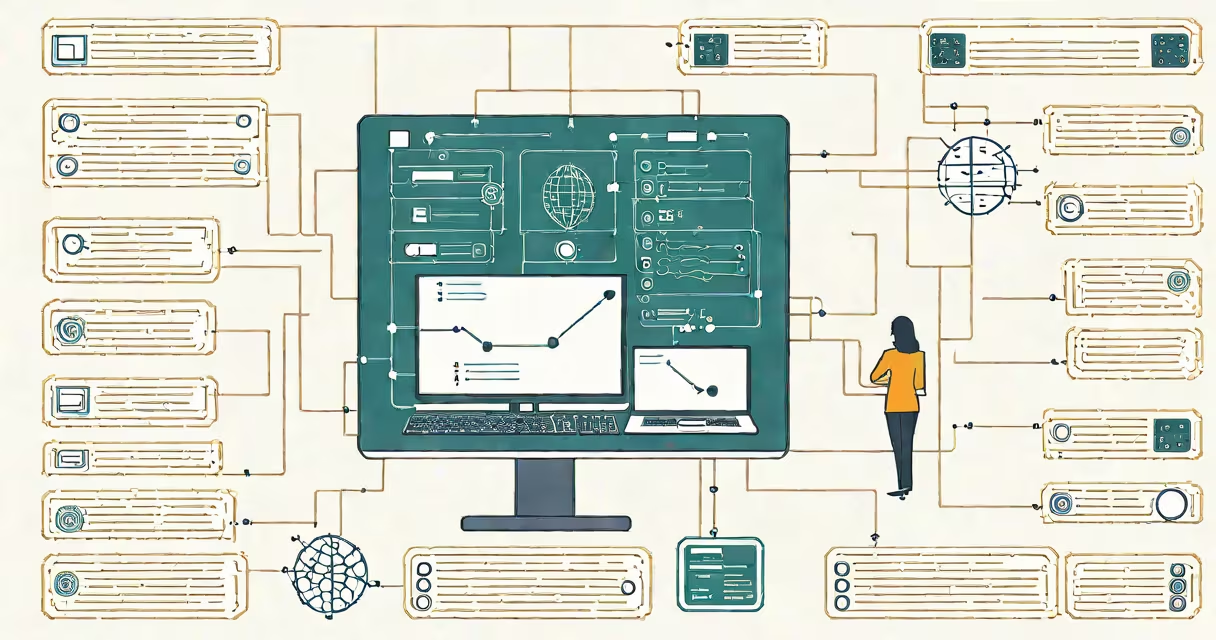
Dbs stands for database system-a software platform that organizes, stores, retrieves, and manages structured data. It enables consistent access to large volumes of information across applications, servers, and users.
A database system handles everything from storing customer records in a retail app to tracking inventory levels in a warehouse. It ensures data remains accurate, secure, and available under heavy load. Without a database system, digital services would rely on scattered files, leading to duplication, errors, and slow performance.
Modern database systems support complex queries, transaction processing, and concurrent access. They form the core of websites, mobile apps, financial systems, and cloud platforms. The term "dbs" appears in technical documentation, job titles, and product descriptions as shorthand for database systems.
At its core, a database system uses a structured format-typically tables-to store data. Each table holds rows (records) and columns (fields). For example, a customer table may have columns for name, email, address, and purchase history.
When an application needs data, it sends a request using SQL (Structured Query Language). The database system processes the query, locates the relevant data, and returns it quickly. This happens in milliseconds even with millions of records.
Database systems enforce rules to maintain data integrity. For instance, they prevent duplicate entries, ensure required fields are filled, and handle failed transactions by rolling back changes. These features are critical in banking systems where a $100 transfer must either complete fully or not at all.
Database systems vary based on structure, scale, and use case. The most common types are relational, document-oriented, key-value, and graph databases.
| Type | Structure | Use Case Example | Common Tools |
|---|---|---|---|
| Relational (SQL) | Tables with rows and columns | Banking transactions, payroll systems | PostgreSQL, MySQL, Oracle |
| Document-Oriented | JSON-like documents | User profiles, content management | MongoDB, CouchDB |
| Key-Value | Simple key-to-value pairs | Caching, session storage | Redis, DynamoDB |
| Graph | Nodes and edges (relationships) | Social networks, fraud detection | Neo4j, Amazon Neptune |
Relational databases dominate enterprise environments due to their strict consistency and support for complex queries. Document databases offer flexibility for unstructured or evolving data, such as user preferences or device logs. Key-value stores prioritize speed and scalability, ideal for real-time applications like live chat or ad serving.
Graph databases model relationships explicitly. A social network might store users as nodes and friendships as edges. This allows efficient traversal-finding mutual friends across multiple layers-without expensive joins.
Every major online service relies on a database system. When you log into your bank's website, the system checks your credentials against a database. When you order food through an app, the system updates inventory and creates a new order record.
E-commerce platforms use database systems to manage product catalogs, process payments, and track shipments. Healthcare providers depend on them to store patient records securely and comply with HIPAA regulations. Cloud providers like AWS and Google Cloud offer managed database services-such as Amazon RDS or Google Cloud SQL-that automate backups, scaling, and failover.
Even offline systems use database systems. A hospital's appointment scheduler might run on SQLite, a lightweight, file-based database. It doesn't require a server and works reliably on embedded devices.
"Dbs" is often mistaken for "dbms," which stands for database management system. While related, they're not interchangeable. A database system includes both the underlying data engine and the tools to administer it. A dbms is the software layer that controls access, security, backup, and optimization.
For example, PostgreSQL is a database system. The tools that allow administrators to monitor performance, restore backups, or set user permissions are part of the dbms component. Some products bundle both-like Microsoft SQL Server-but they remain distinct concepts.
Another misconception is that all databases are centralized. Modern systems often use distributed architectures. A global e-commerce site might replicate data across regions to reduce latency. Changes made in Tokyo appear instantly in São Paulo because the database system synchronizes across clusters.
One non-obvious fact: many database systems use B-trees or similar index structures internally. These data structures allow searches to find records in logarithmic time-O(log n)-even with billions of entries. Without them, querying a large dataset would take minutes instead of milliseconds.
Consider a customer placing an order on an online store:
This entire flow happens within 1.2 seconds. Behind the scenes, the database system manages locks, indexes, and replication to ensure consistency across services. If the database were unavailable, the entire checkout process would halt.
I once observed a production outage during a holiday sale caused by a misconfigured database connection pool. The system hit a limit on concurrent connections, causing timeouts and dropped orders. After increasing the pool size and adding retry logic, the system handled 3,000 requests per second without failure. That experience reinforced how deeply applications depend on database system reliability.
What does dbs stand for? Database system. It's the foundation of data-driven operations across industries. From small apps to global enterprises, database systems enable fast, consistent, and secure data handling. Understanding this term clarifies how digital services function behind the scenes.