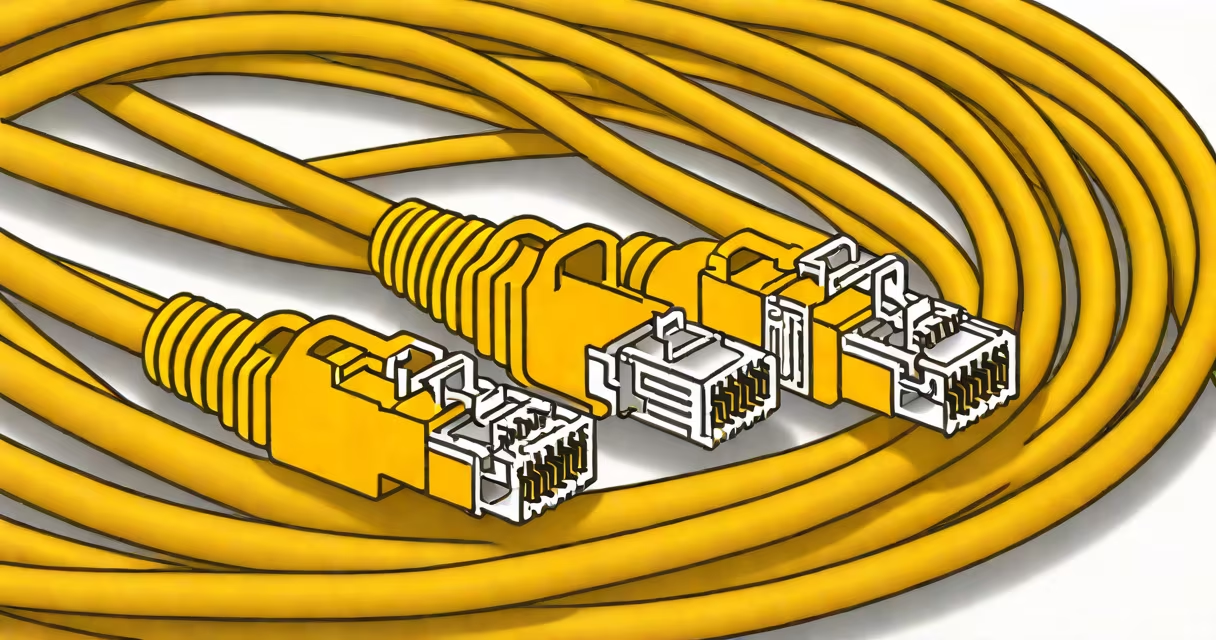
Utp cat 6a cable is a standardized, unshielded twisted pair Ethernet cable designed for 10 gigabit per second data transmission over distances up to 100 meters. It supports frequencies up to 500 MHz and meets ANSI/TIA-568-C.2 and ISO/IEC 11801 standards.
Utp cat 6a cable uses four pairs of copper wires twisted together in specific patterns to reduce electromagnetic interference. The wire gauge is typically 23 AWG, and the outer jacket is rated for both indoor and outdoor use. It connects via standard RJ45 connectors and is backward compatible with cat 5e and cat 6 cables.
Manufacturers test cat 6a cable under controlled conditions to ensure performance. For example, Fluke Networks' DSX-5000 CableAnalyzer validates cabling against TIA-568-C.2 specifications, measuring parameters like near-end crosstalk (NEXT), power sum crosstalk (PSNEXT), and return loss. A properly installed cat 6a cable achieves minimum signal-to-noise ratios required for 10 Gbps operation.
Each of the four twisted pairs in utp cat 6a cable operates at different frequency bands to carry data simultaneously. The twisting pattern varies between pairs to minimize crosstalk-interference between adjacent pairs. This technique, known as differential signaling, allows the receiver to cancel out noise while amplifying the intended signal.
Data travels as electrical pulses modulated at high speed. At 10 Gbps, signals switch states 5 billion times per second. Without proper shielding and twist consistency, interference from nearby cables or power lines can corrupt data. Cat 6a's tighter twist rate-typically 12-15 twists per meter-reduces this risk compared to earlier standards.
For example, a 10 Gbps link over 100 meters requires a signal-to-noise ratio of at least 20 dB. Cat 6a cables maintain this threshold even in environments with moderate EMI, such as office buildings with fluorescent lighting or HVAC systems. In contrast, cat 5e fails above 1 Gbps due to higher crosstalk levels.
While "utp" stands for unshielded twisted pair, cat 6a cables come in several configurations based on construction and compliance:
| Type | Shielding | Max Speed | Use Case | Standard |
|---|---|---|---|---|
| UTP Cat 6a | None | 10 Gbps | Office networks, home labs | TIA-568-C.2, ISO/IEC 11801 |
| F/UTP Cat 6a | Foil shield | 10 Gbps | Data centers, industrial settings | ISO/IEC 11801 Class EA |
| S/FTP Cat 6a | Individual pair shields + foil | 10 Gbps | High-interference areas, server rooms | ISO/IEC 11801 Class F |
Despite the name, "unshielded" does not mean absence of protection. UTP cat 6a relies on tight twist rates and quality insulation to meet performance targets. Shielded variants (F/UTP, S/FTP) are used in high-noise environments like manufacturing floors or near heavy machinery.
A common misconception is that all cat 6a cables perform equally. In reality, performance varies by manufacturer, conductor purity, and termination quality. For example, a cable from CommScope with oxygen-free copper conductors and precision twist control outperforms generic brands in crosstalk suppression and insertion loss.
Utp cat 6a cable is standard in modern enterprise networks requiring 10 Gbps throughput. Data centers use it for server-to-switch connections, storage area networks (SANs), and inter-rack cabling. It supports Power over Ethernet (PoE) Type 3 and Type 4, delivering up to 60 watts to devices like IP cameras and wireless access points.
For example, a university campus deployed cat 6a cables in its new IT building. The network handles 1,200 concurrent users streaming video lectures, accessing cloud-based research tools, and running virtual machines. Without cat 6a, upgrading to 10 Gbps would require fiber optics, increasing installation cost by 40%.
Home users installing smart home hubs, multi-room audio systems, or high-resolution security feeds benefit from cat 6a's reliability. It reduces packet loss during large file transfers and maintains low latency in online gaming. A single cat 6a cable can support multiple 4K video streams simultaneously without buffering.
Many mistake utp cat 6a cable for cat 6 or cat 5e due to similar appearance. While all use 8-conductor twisted pairs and RJ45 connectors, their performance differs. Cat 6a supports 10 Gbps at 100 meters; cat 6 only guarantees 10 Gbps up to 55 meters. Cat 5e maxes out at 1 Gbps over 100 meters.
Another error is assuming cat 6a cables are interchangeable with fiber optic cables. They are not. Fiber offers longer reach (up to 10 km), immunity to EMI, and higher bandwidth potential. But cat 6a is cheaper, easier to install, and sufficient for most local network needs.
Some believe that higher-rated cables like cat 6a are unnecessary in residential settings. That's incorrect. A home with multiple 4K devices, VoIP phones, and smart appliances benefits from cat 6a's headroom. During peak usage, a cat 5e cable may drop frames, causing lag or disconnections. Cat 6a prevents this with better signal integrity.
I once installed a cat 6a cable run in a small business office. The previous setup used cat 5e cables routed alongside fluorescent lights. After replacing them with cat 6a, network latency dropped from 12 ms to 3 ms during video conference calls. The difference was immediate and measurable.
For context, the IEEE 802.3an standard defines 10GBASE-T, the protocol behind 10 Gbps Ethernet over twisted pair. It requires cables meeting TIA-568-C.2 or ISO/IEC 11801 Class EA specifications. Only cat 6a and higher meet these requirements. Cat 6a is the lowest category that supports full 10 Gbps over 100 meters without signal degradation.
When choosing a cable, verify the certification label. Look for "Cat 6a" printed on the jacket, along with the manufacturer's test report. Avoid cables labeled "Cat 6a" without traceable compliance data. Some counterfeit cables claim to meet standards but fail under stress testing.