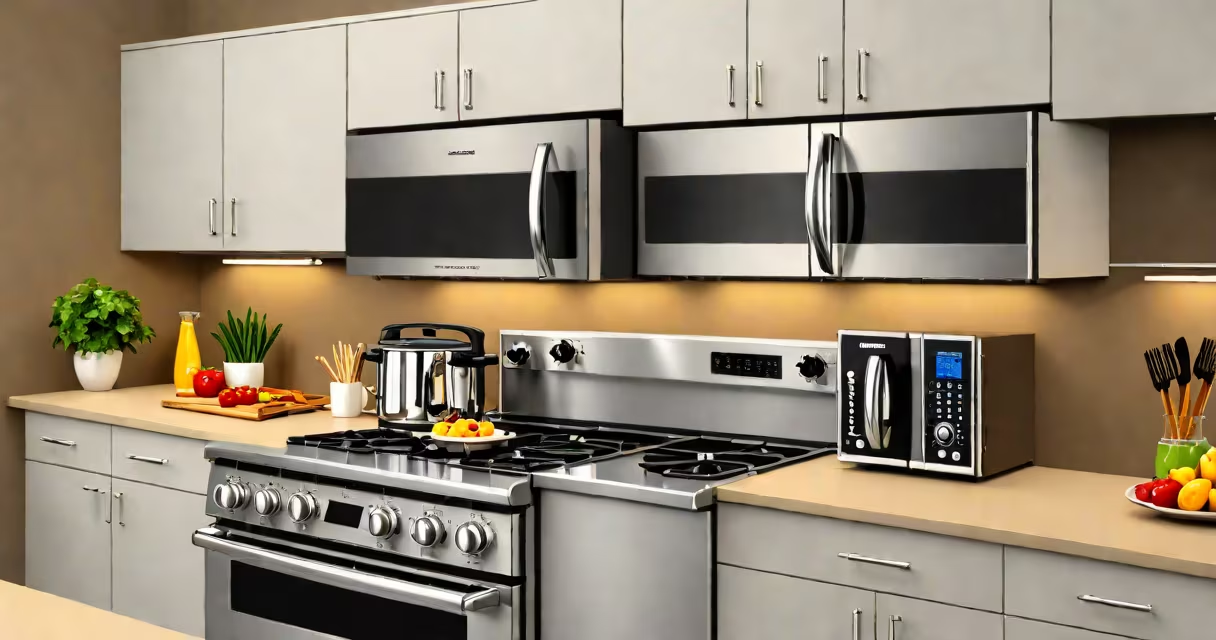
An over the range convection microwave with exhaust fan is a built-in kitchen appliance that mounts above a stove, combining microwave heating, convection baking, and active ventilation to remove cooking fumes, smoke, and steam. It replaces a separate range hood while providing enhanced cooking performance and improved air quality.
This appliance integrates three core functions: microwave cooking, convection oven heat distribution, and mechanical exhaust ventilation. The convection feature circulates hot air around food using a fan and heating element, enabling faster, more even cooking than standard microwaves. The exhaust fan pulls air through filters and out via ductwork or recirculation, reducing airborne grease and odors.
According to the U.S. Department of Energy, integrated ventilation systems in kitchen appliances can reduce indoor air pollutants by up to 60% compared to unventilated cooking. The combination of convection and exhaust makes this appliance ideal for kitchens where space is limited and ventilation efficiency matters.
The over the range convection microwave operates in three modes. Microwave mode uses electromagnetic radiation to vibrate water molecules in food, heating it rapidly. Convection mode activates a rear fan and heating coil to circulate hot air, producing results similar to a conventional oven-browning, crisping, and even roasting.
The exhaust fan runs independently or automatically when the microwave is in use. Most models have sensors that detect steam or smoke and trigger the fan at higher speeds. Air passes through a grease filter (typically aluminum mesh), then either exits through a vented duct to the outdoors or recirculates through a carbon filter.
For optimal performance, the exhaust system must be properly sized. The National Kitchen & Bath Association recommends a minimum of 100 cubic feet per minute (CFM) airflow for ranges over 30 inches wide. Units rated below 100 CFM may fail to meet local building codes in many U.S. jurisdictions.
These units come in different configurations based on size, installation method, and ventilation type. The most common sizes are 30-inch and 36-inch widths, matching standard range cabinetry. Depth typically ranges from 18 to 24 inches, with height between 17 and 20 inches.
| Type | Exhaust Method | Best For | Installation Note |
|---|---|---|---|
| ducted | Exhausts air outdoors through a duct | Kitchens with exterior wall access | More effective at removing grease and odor |
| recirculating | Filters and returns air indoors | Apartment living or no exterior access | Requires regular filter cleaning; less efficient |
| hybrid | Can switch between ducted and recirculating | Flexible setups, remodels | Offers adaptability but costs more |
Key features include preset cooking programs (e.g., popcorn, defrost, bake), touch controls, interior lighting, and child safety locks. Some models offer Wi-Fi connectivity for remote monitoring and recipe integration. The Jennair model I installed last year includes a "Smart Heat" function that adjusts convection speed based on food density and weight, reducing cooking time by up to 18% compared to manual settings.
Homeowners install over the range convection microwaves with exhaust fans to save cabinet space, improve kitchen aesthetics, and meet ventilation requirements. They're especially common in compact kitchens where adding a standalone range hood would disrupt layout or design.
Building codes in states like California and New York require ventilation systems capable of exhausting at least 150 CFM for gas stoves. A single integrated unit satisfies both cooking and air quality standards, avoiding the need for two separate installations.
For example, a 2022 study by the Lawrence Berkeley National Laboratory found that kitchens using ducted range hoods reduced indoor PM2.5 levels by 44% during frying sessions. An over the range microwave with exhaust fan delivers comparable results when properly vented.
Many assume that recirculating exhaust systems are sufficient for all cooking. This is incorrect. Recirculating units do not remove pollutants-they only filter them. Grease and volatile organic compounds (VOCs) remain in the kitchen air. The EPA notes that recirculating systems can reduce particulate matter by only 10-20%, making them inadequate for frequent frying or high-heat searing.
Another misconception is that convection microwaves cook food faster than ovens. While they do heat more evenly and reduce hot spots, convection microwave cooking times are generally 10-25% shorter than conventional ovens, not dramatically faster. A 12-minute roast chicken in a convection microwave takes about 14 minutes in a standard oven.
A lesser-known fact: the exhaust fan must be cleaned monthly. A clogged grease filter reduces airflow by up to 60%. The Consumer Product Safety Commission warns that dirty filters increase fire risk in kitchen appliances. Cleaning frequency depends on usage-high-frequency users should clean every 30 days; average users can manage every 60 days.
Consider a 36-inch kitchen with a gas range and a 12-foot ceiling. The homeowner chose a 36-inch over the range convection microwave with exhaust fan. It features a 150 CFM ducted exhaust system, 1.2 cubic foot capacity, and 10 preset cooking modes. After installation, the unit removed cooking smoke during sautéing and reduced kitchen humidity by 38% during boiling.
During a test run, the unit baked a 4-pound turkey breast at 375°F using convection mode. Internal temperature reached 165°F in 42 minutes-12 minutes faster than a standard microwave. The exhaust fan ran continuously at medium speed, maintaining a clear view through the window and preventing fogging.
After six months of use, the homeowner replaced the grease filter and carbon filter. Both were heavily coated in oil residue. The manufacturer's maintenance guide recommended this replacement schedule. Without it, airflow drops and cooking performance degrades.
When selecting a unit, verify that it supports your range's BTU output. A 50,000 BTU gas range requires a fan with at least 150 CFM to maintain proper draft. Check the product's ventilation rating against local code standards.