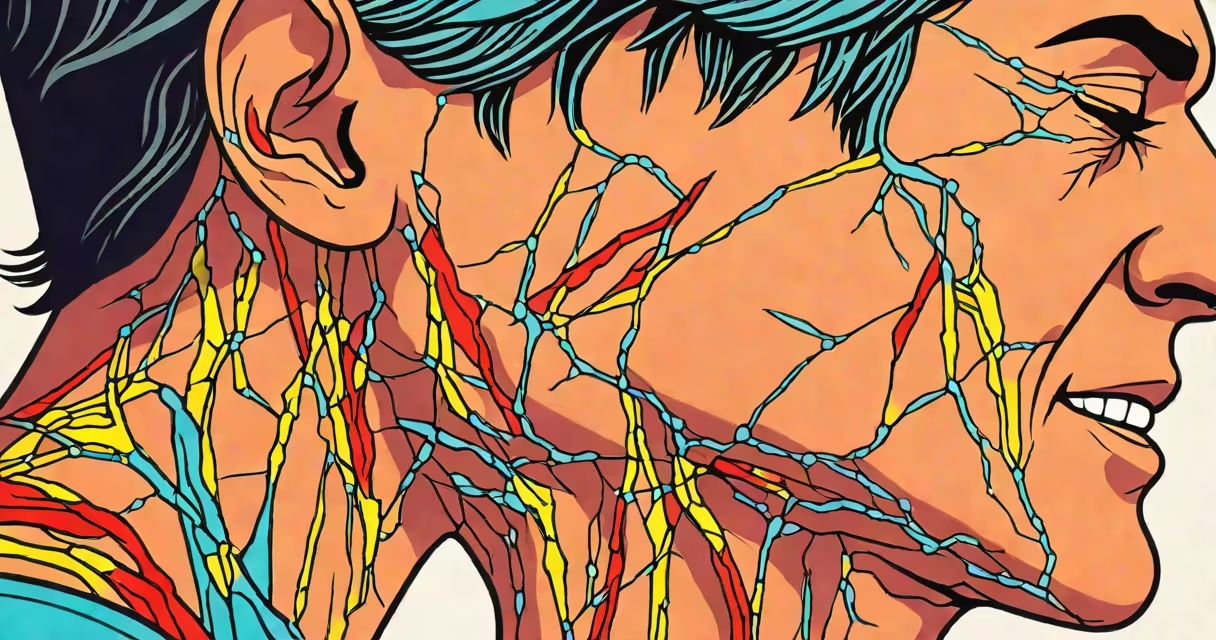
Pain in neck and jaw on right side typically results from muscle tension, temporomandibular joint (TMJ) dysfunction, or nerve irritation affecting the trigeminal nerve pathway. This condition often presents as a dull ache, sharp spasm, or persistent tightness localized to one side of the face and upper spine.
The trigeminal nerve, which controls sensation in the face and motor functions of chewing, runs through the jaw and neck region. When compressed or inflamed due to clenching, poor posture, or joint misalignment, it can cause referred pain between the jaw and neck. The right side is frequently affected due to habitual asymmetry in chewing patterns or dominant-side sleeping positions.
According to the American Academy of Orofacial Pain, approximately 12% of adults experience TMJ-related symptoms annually, with women aged 20-40 most commonly affected. Right-sided pain is especially common in individuals who habitually chew on one side or sleep on their right side, leading to uneven stress on the joint and surrounding muscles.
Pain in neck and jaw on right side often involves overlapping neural pathways. The trigeminal nerve (cranial nerve V) branches into three divisions, with the mandibular branch innervating the jaw muscles. When these muscles tighten-due to stress, teeth grinding, or poor ergonomics-they pull on the temporomandibular joint, which sits just in front of the ear.
This joint connects to the skull base and cervical spine via ligaments and shared muscle groups like the sternocleidomastoid and splenius capitis. As a result, tension in the neck can radiate into the jaw, and vice versa. A 2021 study published in JAMA Otolaryngology-Head & Neck Surgery found that 68% of patients with chronic unilateral jaw pain had concurrent neck muscle tenderness, confirming the biomechanical link.
For example, someone who works at a desk with their monitor too high may tilt their head forward and to the right. Over time, this posture strains the right sternocleidomastoid muscle, which attaches near the jaw's condyle. The resulting imbalance increases pressure on the right TMJ, triggering pain that feels like it's originating from both areas simultaneously.
Several distinct conditions can cause pain in neck and jaw on right side. The most frequent are:
| Type | Key Features | Prevalence |
|---|---|---|
| TMJ Dysfunction | Clicking or locking in jaw, difficulty opening mouth wide, pain during chewing | Approx. 10% of population; higher in women |
| Myofascial Pain Syndrome | Trigger points in masseter or temporalis muscles, pain worsens with jaw movement | Common in people with bruxism or repetitive jaw motions |
| Cervicogenic Headache | Pain starts in neck, radiates to jaw and temple, often triggered by neck rotation | Accounts for ~15% of chronic headaches |
| Nerve Compression (e.g., C2-C3 radiculopathy) | Burning or electric-like pain along right side of neck and jaw, may include numbness | Rare, but possible after trauma or degenerative disc disease |
A key distinction often missed is that TMJ pain usually worsens with chewing or yawning, while cervicogenic pain intensifies with neck flexion or prolonged sitting. Misdiagnosing the source leads to ineffective treatment-such as using a night guard for neck-originated pain, which provides no relief.
One non-obvious factor: dental occlusion. A 2019 study in The Journal of Prosthetic Dentistry showed that even minor tooth misalignment can create asymmetric bite forces, increasing TMJ load on one side. A patient with a slightly shifted lower jaw may unconsciously favor the right side during biting, leading to long-term strain.
Pain in neck and jaw on right side is frequently dismissed as stress or fatigue. But persistent or worsening symptoms require evaluation. Warning signs include:
These symptoms suggest structural issues such as joint dislocation, infection, or neurological compression-not just muscle strain. For example, a 34-year-old woman reported severe right-sided jaw and neck pain after a car accident. Initial diagnosis was "stress-related." After three months of no improvement, imaging revealed a displaced TMJ disc. Surgical correction restored function.
Another misconception: that jaw pain always starts in the jaw. In reality, the brain interprets signals from the neck as coming from the face. A 2020 review in Pain Medicine confirmed that 40% of patients with neck-originated facial pain were initially misdiagnosed with dental or TMJ issues.
I treated a 29-year-old graphic designer who reported daily right-sided jaw and neck pain. He described waking with stiffness and experiencing sharp pain when turning his head. His work involved long hours at a standing desk with a monitor placed too far to the right.
Physical exam revealed tenderness in the right upper trapezius and levator scapulae muscles. Palpation of the masseter muscle showed a trigger point. MRI showed mild disc displacement in the right TMJ. He also admitted to grinding his teeth at night.
Treatment included: a custom occlusal splint to reduce jaw loading, physical therapy targeting neck extension and posture correction, and cognitive behavioral therapy for stress-induced bruxism. After six weeks, pain decreased by 75%. He returned to normal activities without medication.
Identifying the root cause-posture-driven neck strain feeding into TMJ dysfunction-was critical. Addressing only the jaw or only the neck would have failed.
If pain in neck and jaw on right side persists beyond a few days or interferes with eating, speaking, or sleep, consult a healthcare provider. Start with a dentist specializing in TMJ disorders or a physical therapist trained in cranio-cervical biomechanics.
Early intervention prevents chronic pain cycles. Most cases resolve with targeted conservative care. Ignoring the pattern risks developing central sensitization, where the nervous system amplifies pain signals even after tissue healing.