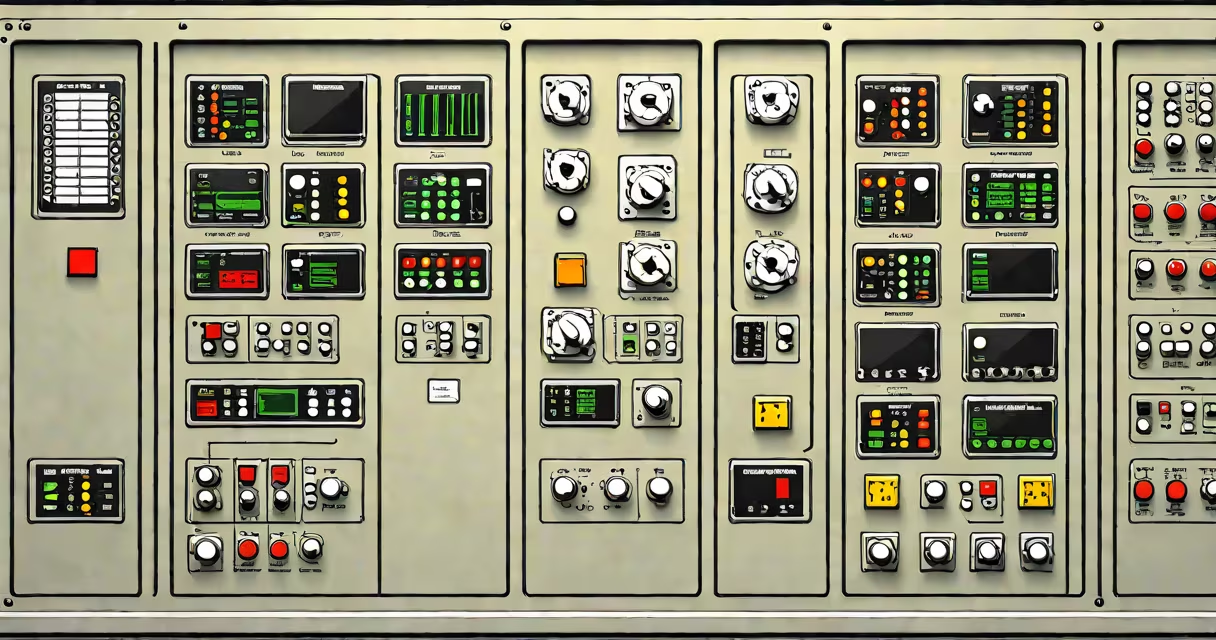
PT OT ST stands for Process, Technology, and Safety Instrumented Systems-a structure used in industrial environments to manage operational integrity, automate processes, and enforce safety protocols. These systems work together to monitor equipment, respond to anomalies, and prevent hazardous events.
Process systems handle the continuous flow of materials in industries like oil refining, chemical production, and power generation. They regulate temperature, pressure, flow rates, and other variables using sensors and automated controls. For example, in a petrochemical plant, a process system maintains precise conditions during distillation to avoid overheating or pressure buildup.
Technology systems refer to the underlying infrastructure that enables communication, data collection, and control. This includes programmable logic controllers (PLCs), human-machine interfaces (HMIs), supervisory control and data acquisition (SCADA) systems, and networked devices. These components collect real-time data and allow operators to adjust settings remotely. A typical SCADA system in a water treatment facility displays pump status, filter pressure, and chlorine levels across multiple sites.
Safety Instrumented Systems (SIS)-often called ST for Safety Instrumented Technology-are independent systems designed to bring a process to a safe state when predefined thresholds are exceeded. Unlike regular control systems, SIS operates independently and prioritizes safety over efficiency. For instance, if a reactor's temperature exceeds 300°C, the SIS triggers an emergency shutdown, closes valves, and vents excess pressure-all within seconds.
The integration of PT OT ST helps industrial operations run efficiently while minimizing risks. When properly implemented, these systems reduce unplanned downtime, prevent environmental incidents, and meet regulatory standards such as those set by the International Electrotechnical Commission (IEC) 61511 for functional safety.
Each component plays a distinct role, yet they function as a coordinated unit. The process layer defines what needs to be controlled. The technology layer collects data and executes commands. The safety layer monitors for deviations and intervenes when necessary.
Consider a natural gas processing plant. The process system regulates the flow of gas through compressors and separation units. The technology system uses PLCs and HMIs to display pressure readings and adjust compressor speed based on demand. If the pressure in a pipeline exceeds safe limits, the SIS activates a relief valve and shuts down the compressor-even if the main control system fails.
This layered approach prevents cascading failures. According to the U.S. Department of Homeland Security's Cybersecurity and Infrastructure Security Agency (CISA), over 70% of industrial cyber incidents involve compromised control systems. By isolating safety functions from routine operations, PT OT ST reduces the attack surface and ensures critical safety actions remain available even during a breach.
Understanding the differences between these layers helps clarify their roles and responsibilities.
| Component | Primary Function | Example Application | Standards |
|---|---|---|---|
| Process (P) | Continuous monitoring and regulation of physical parameters | Regulating pH in a wastewater treatment plant | ISA-88, ISO 13849 |
| Technology (T) | Data acquisition, control execution, and system communication | Using a PLC to start a conveyor belt when a sensor detects material | IEC 61131-3, Modbus protocol |
| Safety Instrumented (S) | Automatic intervention to maintain safe operating conditions | Shutting down a boiler if oxygen levels drop below 10% | IEC 61511, IEC 61508 |
A common misconception is that safety systems are redundant or unnecessary in well-managed plants. But in reality, even minor deviations can lead to major incidents. The 2010 Deepwater Horizon disaster was partly attributed to failure in safety instrumentation-specifically, the blowout preventer's inability to activate due to design flaws and lack of testing.
Another key distinction: process and technology systems prioritize performance and efficiency. Safety systems prioritize reliability and fail-safe behavior. An SIS must operate correctly under fault conditions, whereas a PLC may be optimized for response time rather than absolute reliability.
PT OT ST is standard in high-hazard industries such as oil and gas, chemicals, pharmaceuticals, and power generation. These sectors face strict regulations because of the potential for catastrophic outcomes-fires, explosions, toxic releases.
For example, in a nuclear power plant, the process system manages coolant flow and reactor core temperature. The technology system collects data from hundreds of sensors and displays it on central control screens. The safety system automatically initiates emergency cooling if the core temperature rises above 350°C-regardless of operator input.
Even in less obvious applications, such as food and beverage manufacturing, PT OT ST prevents contamination and spoilage. A bottling line uses process controls to maintain fill volume. Technology systems track machine uptime and detect jams. If a sensor detects a foreign object in a bottle, the safety system stops the line and triggers an alarm.
One non-obvious fact: safety systems often use simpler, older technologies. Many SIS systems still rely on hardwired relays or dedicated safety PLCs-not cloud-connected devices. This is intentional. Simpler systems have fewer points of failure and are easier to test and certify. The IEC 61508 standard explicitly recommends minimizing complexity in safety-critical systems to improve predictability.
People often confuse PT OT ST with general automation or IT systems. But unlike typical IT networks, which focus on data storage and user access, PT OT ST systems are real-time, physically connected to machinery and environment. A server running a database is not part of PT OT ST unless it directly affects process control or safety decisions.
Another frequent error is assuming that cybersecurity measures applied to IT systems apply equally to OT. In practice, OT systems often run on legacy software with limited update capabilities. A 2022 report by the Industrial Internet Consortium found that 64% of surveyed manufacturers had at least one OT device unable to receive security patches. This creates unique vulnerabilities that require specialized protection strategies.
I once observed a small chemical plant where engineers installed a new SCADA interface without isolating it from the main network. Within hours, a malware infection spread through the system, causing a false alarm that triggered an emergency shutdown. The root cause wasn't the software-it was the lack of segmentation between IT and OT environments. Afterward, the plant adopted a hybrid model: IT systems managed data analytics, while OT systems ran on isolated, air-gapped networks.
These incidents show why PT OT ST must be treated as a distinct domain. The failure of one layer can cascade into others. A malfunctioning sensor in the process layer may trigger a false alarm in the safety system, leading to unnecessary downtime. Proper design requires clear boundaries between functions and rigorous testing protocols.
PT OT ST is a foundational structure for managing industrial operations safely and reliably. It combines process control, technological infrastructure, and safety instrumentation to prevent accidents, ensure compliance, and maintain continuity. Understanding how these elements interact is essential for anyone involved in industrial engineering, operations, or cybersecurity.