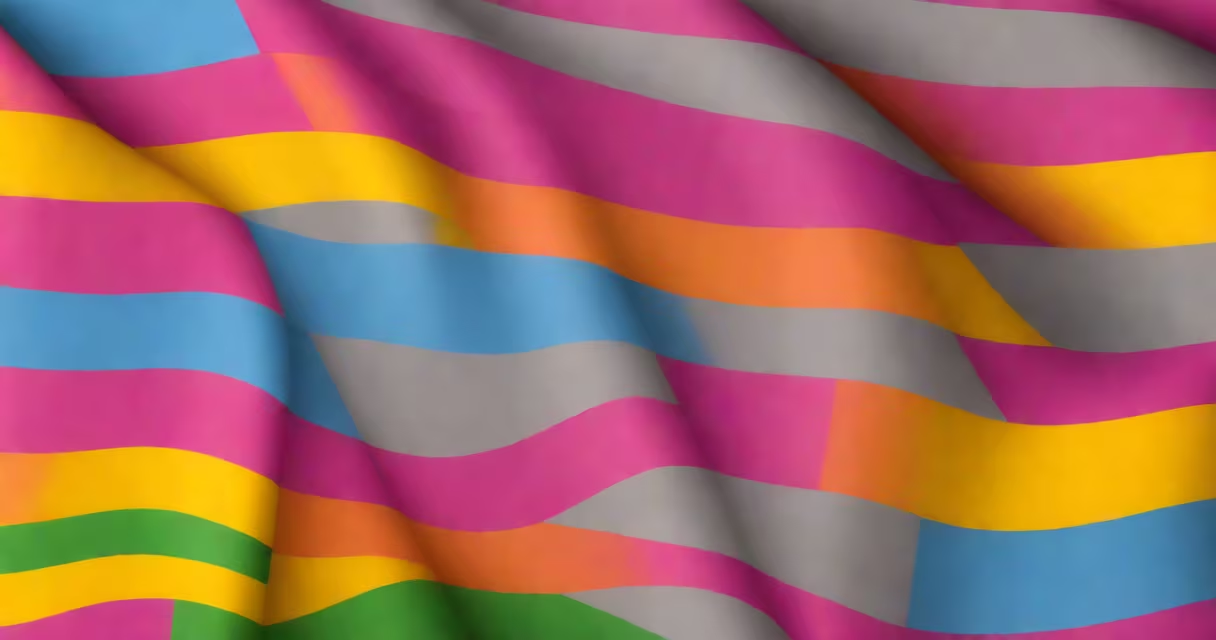
The questioning pride flag is a symbolic banner representing individuals who are uncertain about their gender identity or sexual orientation. It features a horizontal rainbow gradient with a central gray stripe, distinguishing it from the standard rainbow pride flag.
Designed in 2010 by a Tumblr user known as "Morgan" (not publicly named), the flag emerged as a visual shorthand for those going through identity formation. The gray stripe signifies ambiguity, the process of exploration, and the space between established identities. Unlike flags representing fixed identities, this flag acknowledges fluidity and uncertainty as valid parts of the LGBTQ+ experience.
According to the Human Rights Campaign, approximately 11% of U.S. adults identify as LGBTQ+, and among them, a significant portion report being in the process of understanding their identity. The questioning pride flag serves as a visible marker for this group, offering recognition without requiring definitive labels.
The flag uses color symbolism rooted in existing LGBTQ+ iconography. The rainbow spectrum reflects the diversity of sexual and gender identities within the community. The addition of gray-neither black nor white, neither light nor dark-represents the liminal state of questioning. It is not a rejection of identity but a declaration of ongoing inquiry.
Gray is not arbitrary. In color psychology, gray often denotes neutrality, balance, and introspection. When applied to identity, it signals that someone may not yet have settled on a label but is actively seeking understanding. This distinguishes the flag from others meant to represent specific identities, such as the bisexual flag (pink, purple, blue) or the pansexual flag (magenta, yellow, cyan).
A common misconception is that the flag represents indecision or lack of commitment. That's incorrect. The flag is not about hesitation-it's about presence. People who fly it are not waiting to choose; they are affirming their current state of exploration as legitimate and worthy of visibility.
The original version consists of six horizontal stripes: red, orange, yellow, green, blue, and violet, with a central gray stripe replacing the typical pink and blue bands. The gray stripe spans the full width and is typically 1/6th the height of the flag. The proportions follow standard flag ratios-3:5 or 2:3-ensuring consistency in display.
Alternative designs exist. Some versions place the gray stripe vertically, though this is less common and can cause confusion with other flags. Others use a solid gray center with a subtle gradient fade. These variations are unofficial and not standardized, but they reflect personal expression within the community.
| Flag Type | Colors | Meaning | Usage Context |
|---|---|---|---|
| Standard Questioning Flag | Rainbow + gray center | Exploring identity; not yet settled | Personal identity, social media, events |
| Vertical Gray Stripe | Rainbow + vertical gray band | Less common; sometimes mistaken for other flags | Artistic or experimental use |
| Minimalist Version | Two-tone: rainbow base with gray overlay | Subtle representation; often used in digital formats | Profile pictures, icons, small displays |
One non-obvious detail: the gray stripe is not a placeholder. It is not "waiting to be filled." The gray is intentional and permanent. It is not a temporary phase in the flag's design-just as questioning is not a temporary phase in a person's process.
The flag appears most frequently online. On platforms like Instagram, Twitter, and TikTok, users display it in profile banners, story overlays, or video captions to signal their current relationship with identity. It's especially common during Pride Month, LGBTQ+ youth events, and mental health awareness campaigns.
In physical spaces, it's seen at college LGBTQ+ centers, support groups, and pride parades. A 2022 survey by GLAAD found that 68% of LGBTQ+ youth aged 13-24 reported feeling more visible when seeing identity-specific flags, including the questioning flag. Its presence reduces isolation and validates experiences that don't fit neatly into categories.
I once attended a university pride event where a student displayed a handmade questioning flag on a backpack. They later told me they'd been using it for months after coming out as queer but still unsure whether they were gay, bisexual, or something else. "It's not about choosing," they said. "It's about being okay with not knowing yet." That moment confirmed the flag's purpose: not to resolve uncertainty, but to honor it.
People often mistake the questioning pride flag for the asexual flag (black, gray, white, purple) or the intersex flag (yellow and purple). The colors are similar-gray appears in all-but the meanings differ. Asexual identity is defined by lack of sexual attraction; intersex refers to biological sex characteristics that don't fit binary norms. Questioning is about process, not identity.
Another error is assuming the flag is only for young people. While it's popular among teens and college students, adults of all ages use it. A 2021 study published in the journal *Sexuality & Culture* found that 29% of LGBTQ+ adults over 35 had used the questioning flag at some point in their lives, particularly during periods of life transition such as divorce, career shifts, or moving to new cities.
Some assume the flag promotes "confusion." That's a misunderstanding. The flag doesn't suggest failure to decide-it affirms the validity of the search itself. As the American Psychological Association notes, identity development is not linear. Many people move through phases of questioning, even if they eventually settle into a stable identity.
The questioning pride flag is a symbol of identity in motion. It represents people who are not yet certain about their gender or sexuality but are engaged in meaningful self-exploration. Its design-rainbow hues with a central gray stripe-communicates both connection to the broader LGBTQ+ community and the unique experience of uncertainty.
Understanding this flag requires recognizing that identity is not always fixed. For many, being "questioning" is not a step toward something else-it is a complete and authentic state. The flag honors that reality. Whether worn online or at a rally, it stands as a quiet but useful statement: your process matters, even if you're still walking it.