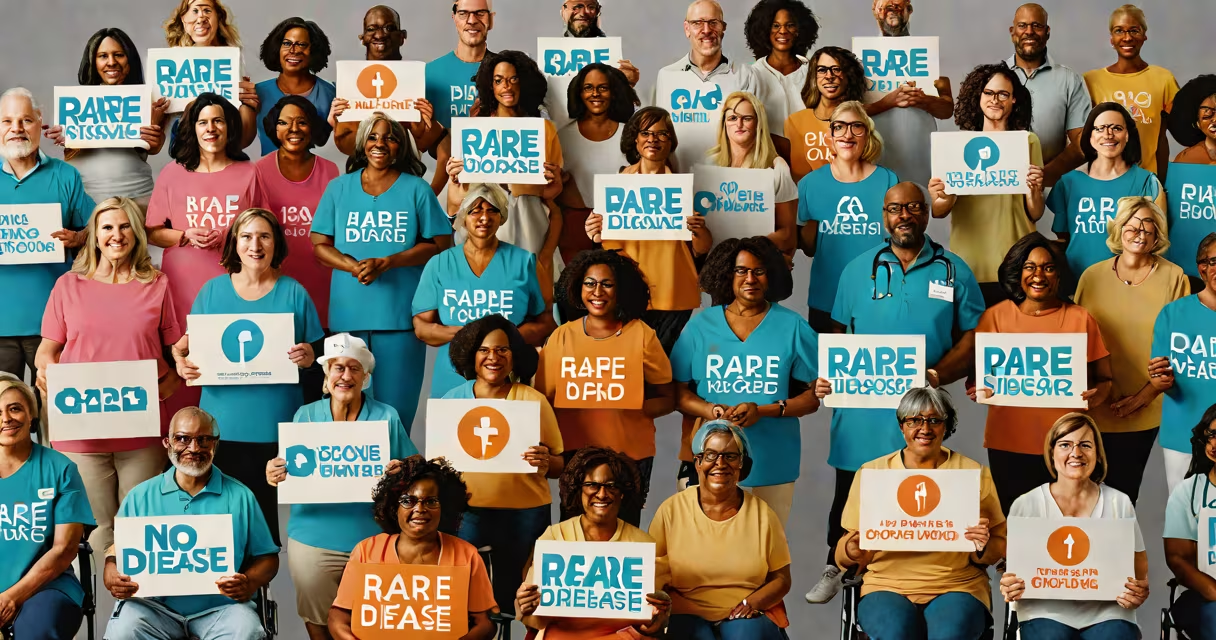
Rare Disease Day is an annual global observance held on the last day of February to raise awareness of rare diseases and their impact on patients' lives. It unites patients, families, healthcare providers, researchers, and policymakers to advocate for better access to diagnosis, treatment, and support.
First launched in 2008 by EURORDIS, a coalition of rare disease organizations across Europe, Rare Disease Day has since expanded to over 100 countries. The date was chosen to align with the European Union's definition of a rare disease-conditions affecting fewer than 1 in 2,000 people-and to emphasize the shared struggle of those living with such illnesses.
The day is marked by public events, educational campaigns, social media outreach, and policy discussions. These efforts aim to reduce diagnostic delays-often exceeding five years-and improve funding for treatments. In the U.S., the Orphan Drug Act of 1983 provides incentives for pharmaceutical companies to develop therapies for rare conditions, yet over 95% of rare diseases still lack approved treatments.
Organizations host webinars, patient stories, and scientific symposia to show challenges and progress. Events range from hospital open houses to school assemblies and virtual town halls. In 2023, over 1,200 events were registered worldwide through the official Rare Disease Day platform.
Each year, a theme guides activities. For example, the 2024 theme was "Together in Action," focusing on collaboration between patients, clinicians, and researchers. This theme underscored the importance of co-designing care and research agendas with those most affected.
Participants use the official hashtag #RareDiseaseDay to amplify messages. Social media engagement often peaks on the day itself, with millions of impressions across platforms. In 2023, the campaign reached over 60 million people globally, according to EURORDIS data.
Rare Disease Day is not a government mandate but a grassroots movement driven by patient-led coalitions. Core components include:
These elements combine to create a networked response. For example, in 2022, a joint initiative between NORD and the FDA led to a public forum on accelerating clinical trials for ultra-rare conditions-those affecting fewer than 500 people worldwide.
Rare diseases span genetic, autoimmune, metabolic, and degenerative conditions. They are grouped by prevalence, mechanism, or organ system. The following table outlines major categories and representative disorders:
| Type | Examples | Prevalence (U.S.) |
|---|---|---|
| Genetic | Cystic fibrosis, Duchenne muscular dystrophy | 1 in 3,500 births |
| Autoimmune | Lupus, Sjögren's syndrome | 1 in 1,000 adults |
| Metabolic | Phenylketonuria (PKU), Gaucher disease | 1 in 10,000-20,000 |
| Neurodegenerative | ALS, Huntington's disease | 1 in 100,000 |
Despite their low individual incidence, rare diseases collectively affect approximately 30 million Americans-about 1 in 10 people. This makes them a significant public health concern, especially given that many go undiagnosed for years.
A key distinction often missed is that "rare" does not mean "mild." Many rare diseases cause severe disability or early death. For instance, Niemann-Pick Type C, a lipid storage disorder, leads to progressive neurodegeneration and typically results in death before age 20 in untreated cases.
Rare Disease Day is used to mobilize resources, influence policy, and reduce stigma. It serves as a catalyst for action in regions with limited healthcare infrastructure. In sub-Saharan Africa, where diagnostic tools are scarce, the day has helped launch mobile screening programs for inherited metabolic disorders.
In the U.S., the day supports legislative priorities. In 2021, a bipartisan bill introduced in Congress-HR 2662-aimed to expand federal funding for rare disease research. The bill cited Rare Disease Day as a key moment for public education and constituent engagement.
Healthcare systems also use the day to train staff. A 2023 study published in Orphanet Journal of Rare Diseases found that hospitals hosting Rare Disease Day events reported a 34% increase in referrals for genetic testing within six months.
One widespread misconception is that rare diseases only affect children. While many are congenital, others emerge in adulthood. Multiple sclerosis, often diagnosed in young adults, affects about 1 in 1,000 people in the U.S.-well above the threshold for rare disease classification.
Another error is equating "rare" with "unknown." Some rare diseases have well-documented genetics and treatments. For example, Pompe disease, caused by a deficiency in the enzyme acid alpha-glucosidase, is treatable with enzyme replacement therapy. Yet fewer than half of patients receive a correct diagnosis within five years.
There's also confusion around the term "orphan disease." While synonymous with rare disease in many contexts, "orphan" specifically refers to conditions with no commercial incentive for drug development. Not all rare diseases are orphan diseases-some have active markets due to high treatment costs or existing patents.
I attended a Rare Disease Day event in Boston in 2022. A mother spoke about her daughter's diagnosis of Mucopolysaccharidosis Type I (MPS I), a lysosomal storage disorder. She described the emotional toll of waiting five years for a definitive test, during which her child lost motor skills and developed heart complications.
After the event, she connected with a research team at Massachusetts General Hospital. Within six months, her daughter enrolled in a gene therapy trial. By 2023, she had regained the ability to walk independently-a milestone not seen in decades for her condition.
This story illustrates how Rare Disease Day can trigger tangible outcomes. It's not just symbolic-it facilitates access to care, research, and community.
Rare Disease Day differs from other health awareness days in focus and structure. Unlike World AIDS Day or Breast Cancer Awareness Month, which center on single conditions, Rare Disease Day addresses over 7,000 distinct disorders identified by the NIH.
It also avoids commercial branding. While other campaigns partner heavily with corporations, Rare Disease Day remains largely independent, relying on volunteer networks and nonprofit funding. This independence strengthens its credibility among patients and clinicians.
Finally, it emphasizes equity. Events are designed to be accessible-offering sign language interpretation, multilingual materials, and free registration. In 2023, 42% of global events included accessibility features, per EURORDIS reports.
Understanding rare diseases requires more than statistics. It demands empathy, coordination, and sustained investment. Rare Disease Day is not a one-day fix-it's a recurring reminder that even the smallest patient populations deserve attention, innovation, and dignity.