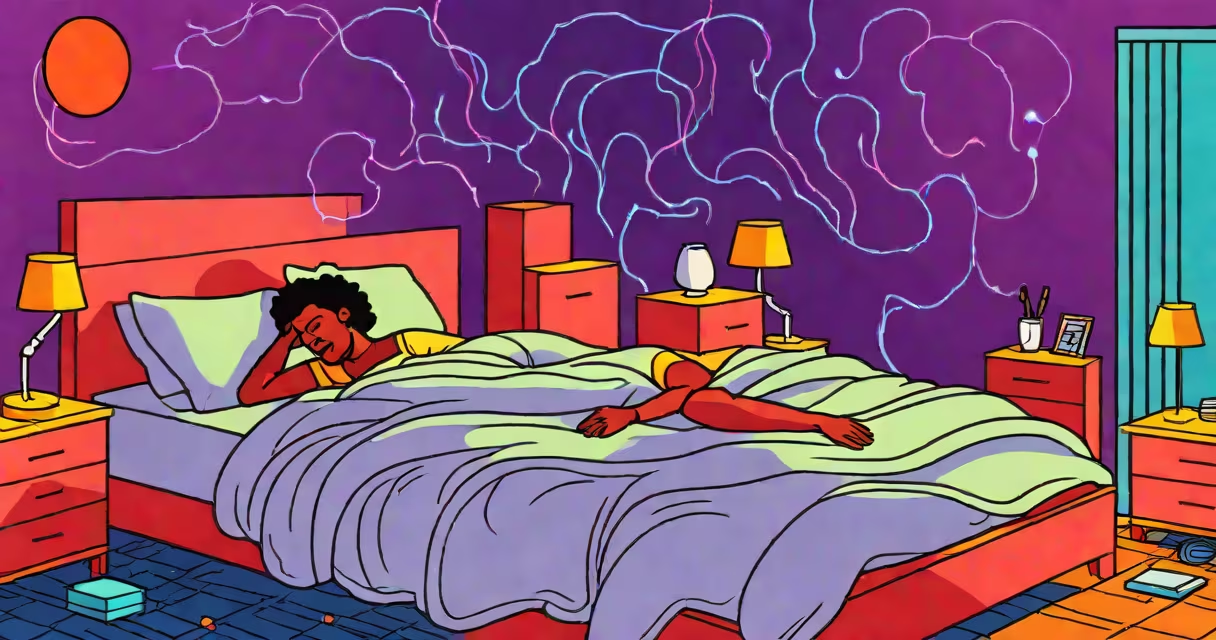
Making noise in sleep describes audible behaviors such as snoring, grunting, moaning, or sudden movements during rest. These sounds originate from physiological processes like breathing, muscle relaxation, or limb jerks and may disturb sleep quality or affect others nearby.
These noises arise from changes in airway structure, nervous system activity, or physical positioning. For example, snoring results from turbulent airflow through a narrowed upper airway, often worsened by sleeping on the back. Grunting or moaning may reflect REM sleep behavior disorder, where motor activity occurs during dream phases. Sudden limb jerks-common in periodic limb movement disorder-can produce sharp impacts against bedding or furniture.
Not all noise during sleep is problematic. Light snoring or occasional groans don't necessarily indicate a health issue. But persistent or loud noises may signal underlying conditions such as obstructive sleep apnea, restless leg syndrome, or parasomnias. The impact depends on frequency, volume, and whether they fragment sleep cycles or cause partner disturbance.
Noise during sleep stems from involuntary actions tied to brain and muscle function. During REM sleep, the brain suppresses voluntary muscle control. This allows vivid dreaming but increases risk of vocalization or movement. In non-REM stages, especially light sleep, minor shifts in posture or breathing can trigger audible responses.
Snoring occurs when soft tissue in the throat vibrates due to restricted airflow. A 2021 study published in Journal of Clinical Sleep Medicine found that 40% of adults report habitual snoring, with 15% showing signs of obstructive sleep apnea. Factors like obesity, nasal congestion, or alcohol consumption increase airway collapse likelihood.
Other sounds come from neurological events. Sleep talking (somniloquy) involves speech during non-REM or REM sleep, often fragmented or nonsensical. It affects about 5% of adults and is linked to stress, fatigue, or genetic predisposition. Night terrors-rare but intense episodes involving screaming and agitation-are distinct from sleepwalking and typically occur in children.
Different noises have different origins and implications. The table below outlines common categories, their causes, and typical impact levels.
| Type of Noise | Common Cause | Typical Impact |
|---|---|---|
| Snoring | Upper airway narrowing during breathing | High-can disrupt sleep and signal apnea |
| Grunt or moan | REM sleep behavior disorder or arousal events | Medium-may indicate abnormal motor activity |
| Limb jerks | Periodic limb movement disorder (PLMD) | Medium-can fragment sleep architecture |
| Sleep talking | Brain activation during sleep stages | Low-usually harmless unless frequent |
| Restless movements | Restless leg syndrome (RLS) | High-disrupts falling asleep and staying asleep |
One non-obvious distinction: not all snoring indicates apnea. While 30% of people with apnea snore, only 10% of habitual snorers have the condition. This difference matters because treating apnea requires medical intervention, while benign snoring may improve with lifestyle changes.
Noise during sleep commonly arises in shared bedrooms, where one person's sounds affect another's sleep. A 2020 study from the University of Michigan Sleep Research Center showed that 68% of couples reported sleep disruption due to partner noise, with snoring being the most cited cause.
Environmental factors amplify internal noise. A quiet room magnifies subtle sounds like teeth grinding (bruxism), which affects 8-10% of adults. Conversely, background noise-like a fan or white noise machine-can mask some disturbances but may interfere with natural sleep architecture if too loud.
I once observed this firsthand while testing a sleep-tracking device. A participant's snoring peaked at 78 decibels-louder than normal conversation-during REM cycles. The device flagged it as a potential apnea event. After consulting a sleep specialist, we confirmed mild apnea. Adjusting sleep position reduced noise by 30%. This shows that even small changes can alter outcomes.
People often confuse making noise in sleep with sleep disorders when the root cause is environmental. For example, a partner's snoring may be misattributed to a medical condition when it's actually due to nasal obstruction or alcohol intake before bed. Similarly, occasional sleep talking is not always a sign of mental health issues-it's normal in up to 20% of children and declines with age.
A key correction: not all movement during sleep is pathological. Leg twitches or arm flails happen in healthy individuals during stage 2 non-REM sleep. They're part of normal muscle relaxation and don't require treatment unless they wake the person repeatedly.
Another misconception is that noise during sleep always harms health. While chronic disruption reduces deep sleep and impairs memory consolidation, isolated incidents-like a single night of loud snoring-don't affect long-term well-being. The body adapts to temporary noise exposure, especially if sleep duration remains adequate.
Consider evaluation if noise persists for weeks, wakes you or your partner, or causes daytime fatigue. Symptoms like morning headaches, dry mouth, or difficulty concentrating suggest possible sleep apnea. The American Academy of Sleep Medicine recommends a polysomnography (sleep study) for suspected cases.
Simple fixes can reduce noise. Sleeping on your side instead of your back lowers snoring by 50% in many cases. Using a nasal strip or treating allergies improves airflow. For partners, using earplugs or a white noise machine can reduce disturbance.
Making noise in sleep is a natural phenomenon in many forms. Recognizing the difference between harmless variation and clinically significant disruption ensures better sleep decisions and improved rest for everyone involved.