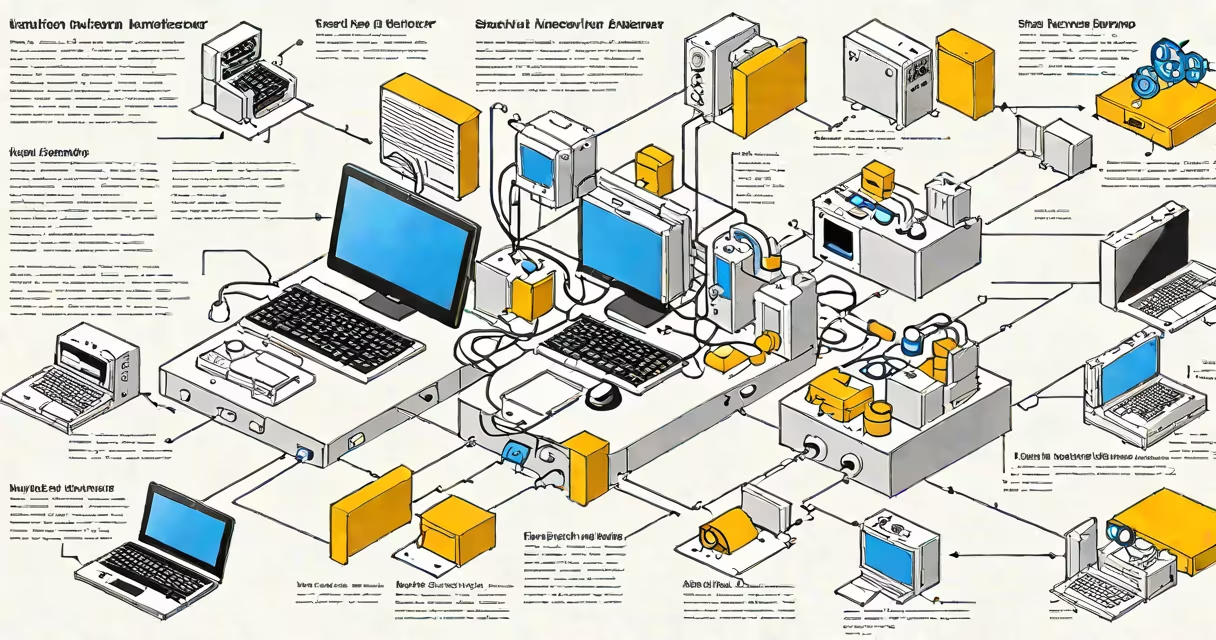
A search engine indexer is a system that analyzes and catalogs web pages so they can appear in search results. It receives raw content from crawlers, processes it, and stores key information in a structured database for fast retrieval during queries.
When a user types a search term, the indexer retrieves relevant documents from its stored index rather than scanning the entire web. This process enables responses in under half a second, even when billions of pages exist.
The indexer operates after the crawler discovers a page. While the crawler visits URLs and downloads their content, the indexer interprets that content-extracting text, metadata, links, and relevance signals-and assigns them to a searchable structure.
Indexing begins when a crawler sends a copy of a web page's HTML to the indexer. The indexer parses the document, strips out formatting, and isolates meaningful content such as headings, paragraphs, and embedded keywords.
It then applies natural language processing techniques to identify entities, topics, and relationships. For example, if a page describes a hiking trail in Yosemite National Park, the indexer may tag it with "Yosemite," "hiking," "California," and "outdoor recreation."
Each page gets assigned a unique identifier and stored in a compressed, sorted database. This allows the search engine to quickly retrieve pages matching a query using inverted indexes-data structures that map words to the list of documents containing them.
Modern search engines use multiple indexing layers. Core components include:
There are two primary indexing models:
| Type | Description | Example |
|---|---|---|
| Full-Text Index | Stores every word in a document and its location. Used for exact phrase matching. | Google's ability to return results for "best Italian restaurants near me" with precise location context. |
| Conceptual Index | Maps meaning rather than words. Uses semantic analysis to group related ideas. | Google's BERT update improved understanding of complex queries like "Why do dogs tilt their heads?" |
Some systems also maintain separate indexes for images, videos, and news articles. These are optimized for different query types and ranking criteria.
Without indexing, search engines would have to scan every webpage in real time. That would take minutes per query-impossible for a service expected to respond in milliseconds.
Indexing enables features like autocomplete, typo correction, and regional results. When you type "weather in Seattle," the indexer returns localized forecasts because it previously stored geographic metadata from trusted sources.
Many assume indexing and crawling are the same. Crawling is the act of visiting URLs. Indexing is the interpretation and storage of content. A site can be crawled but never indexed if it lacks quality signals or contains duplicate content.
Another myth is that indexing happens instantly. Pages may take hours to days to appear in search results, depending on site authority, crawl frequency, and server load. High-traffic sites like Wikipedia get indexed within minutes of updates. Smaller sites may wait days.
Indexing doesn't guarantee ranking. A page can be indexed and still rank poorly due to low relevance, poor user engagement, or algorithmic penalties. Google's PageRank algorithm evaluates hundreds of factors beyond mere presence in the index.
One non-obvious fact: search engines often store multiple versions of a page. They may index both the mobile and desktop versions separately, especially if content differs. This affects how results appear on different devices.
Consider a local news site publishing an article titled "City Council Approves New Bike Lane Plan."
https://examplecitynews.com/bike-lane-approval and downloads the HTML.This entire process takes less than five seconds from crawl to index inclusion, assuming the site allows access via robots.txt and has no technical errors.
I once published a blog post about optimizing website loading speed. I submitted the URL to Google Search Console and waited 48 hours. The page didn't appear in search results until day three. After checking the index status, I discovered the site had a slow response time, which reduced crawl priority.
After improving server performance and adding a sitemap, the page was indexed within 12 hours. This confirmed that indexing speed depends not just on content quality but on infrastructure reliability.
They ensure pages have clear titles, descriptive meta tags, and structured data. These elements help the indexer understand context and improve ranking potential.
Indexing is foundational to search. Without it, the web would remain invisible to users. Every search result you see began as raw content, processed by an indexer, and delivered in real time.
Search engine indexer is the behind-the-scenes force that turns the vastness of the internet into a usable resource. It doesn't decide what's important-it only makes it findable.