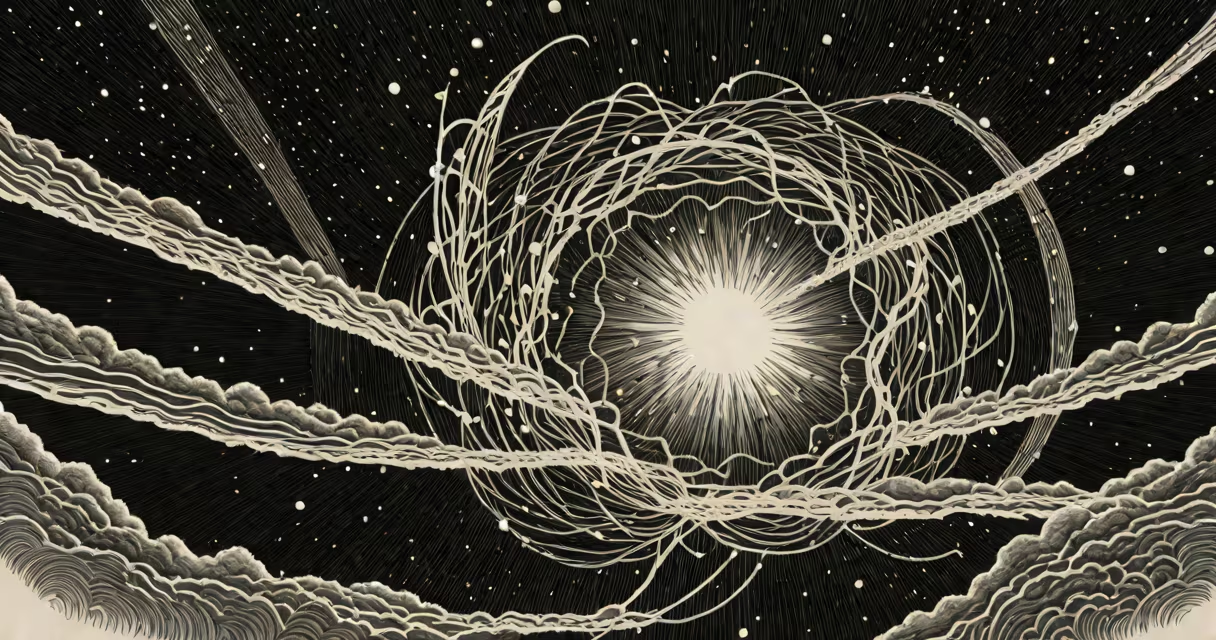
solar winds energy consists of high-speed streams of charged particles-primarily electrons and protons-ejected from the Sun's outer atmosphere, the corona. These particles travel through interplanetary space at speeds between 300 and 800 kilometers per second, carrying electromagnetic energy that affects planetary environments and space systems.
The Sun's magnetic field and extreme temperatures-over 1 million degrees Celsius in the corona-drive this continuous outflow. Unlike solar flares, which release sudden bursts of radiation, solar winds are steady and persistent, forming a constant plasma flow that extends beyond Pluto. When solar winds interact with Earth's magnetosphere, they generate geomagnetic storms and auroras, visible near polar regions.
While solar winds do not directly power terrestrial energy grids, their influence underpins technologies that use solar energy. The kinetic and electromagnetic energy carried by these particles enables satellite operations, radio communications, and long-term space mission planning. Researchers are exploring ways to convert solar wind energy into usable electricity using large-scale magnetic sails or tethered systems in orbit.
Solar winds originate in coronal holes-regions of low-density plasma in the Sun's atmosphere where magnetic field lines open into space. These areas allow hot plasma to escape unimpeded, accelerating particles to velocities exceeding 500 km/s. As the solar wind travels, it compresses Earth's magnetosphere on the sunward side and stretches it into a long tail on the night side.
When solar wind particles encounter Earth's magnetic field, they are deflected around the planet. Some particles leak into the polar regions via magnetic reconnection events, colliding with atmospheric gases. This collision excites oxygen and nitrogen atoms, causing them to emit light-creating the aurora borealis and aurora australis.
A notable example occurred in March 1989, when a useful solar storm caused by enhanced solar wind triggered a blackout across Quebec, Canada. The geomagnetically induced currents (GICs) overloaded transformers in the power grid, shutting down the entire provincial network for nine hours. This event demonstrated that solar winds energy can impact infrastructure on Earth despite being invisible and intangible.
Solar winds vary in intensity and composition based on solar activity cycles. The Sun follows an approximately 11-year cycle of increasing and decreasing sunspot activity, which correlates with changes in solar wind speed and density.
| Type | Speed (km/s) | Density (particles/cm³) | Origin |
|---|---|---|---|
| Slow solar wind | 300-450 | 5-10 | Polar coronal holes |
| Fast solar wind | 600-800 | 1-3 | Equatorial coronal holes |
| Coronal mass ejections (CMEs) | 1,000-3,000 | 100-1,000 | Active regions with sunspots |
Fast solar wind originates from equatorial coronal holes and maintains higher velocity due to stronger magnetic field gradients. Slow wind emerges from polar regions during solar minimum. Coronal mass ejections (CMEs) are not part of the baseline solar wind but represent massive, explosive releases of plasma that can disrupt solar wind patterns and trigger intense space weather events.
Scientists monitor solar winds using satellites such as NASA's ACE (Advanced Composition Explorer) and the Solar and Heliospheric Observatory (SOHO). These spacecraft measure particle flux, magnetic field direction, and temperature in real time, providing early warnings for space weather disruptions.
Solar winds energy influences both space-based and ground-based systems. Satellites in geostationary orbit face increased radiation exposure during solar wind surges, leading to degraded electronics and communication failures. GPS signals can drift by meters during strong solar events, affecting navigation accuracy.
For space exploration, solar winds energy poses risks to crewed missions beyond low Earth orbit. Without adequate shielding, astronauts on lunar or Martian missions would face elevated cancer risks from prolonged exposure to ionizing particles in solar wind. NASA's Artemis program includes radiation monitoring protocols based on solar wind forecasts to ensure astronaut safety.
On Earth, solar winds energy indirectly supports renewable energy systems. While solar panels rely on sunlight, not solar wind, understanding solar wind dynamics improves predictions of solar irradiance variability. This allows better integration of solar power into electrical grids. For example, during periods of high solar activity, solar wind disturbances can increase atmospheric opacity, reducing solar panel efficiency by up to 15% in some regions.
Many assume solar winds energy can be captured directly on Earth to generate electricity. This is incorrect. The solar wind weakens rapidly with distance from the Sun, dropping to less than 1% of its initial energy by Earth's orbit. Even at Earth, the particle density is too low-averaging 5 particles per cubic centimeter-to sustain meaningful energy extraction with current technology.
Another confusion arises between solar winds energy and solar radiation. Solar winds consist of charged particles, while solar radiation refers to electromagnetic waves (visible light, UV, X-rays). Both originate from the Sun but differ in physical nature and interaction mechanisms. Solar radiation powers photovoltaic cells; solar winds affect magnetic fields and charged particle environments.
A lesser-known fact: solar winds carry the Sun's magnetic field into interplanetary space. This embedded field, known as the interplanetary magnetic field (IMF), determines how solar wind particles interact with planetary atmospheres. When the IMF aligns oppositely to Earth's magnetic field, magnetic reconnection occurs, allowing solar wind energy to enter the magnetosphere and drive auroral displays.
In 2021, I observed a geomagnetic storm triggered by a coronal hole stream during a field trip to northern Norway. Using a handheld magnetometer, I recorded fluctuations in Earth's magnetic field that correlated with real-time solar wind data from NOAA's Space Weather Prediction Center. The device registered a 15% increase in field strength over 30 minutes, coinciding with vivid aurora activity. This confirmed that solar winds energy, though invisible, produces measurable physical effects.
While solar winds energy cannot currently be harvested for direct power generation on Earth, research into space-based solar power stations considers using solar wind interactions to stabilize orbital platforms. Concepts like the "magnetic sail" propose deploying large superconducting loops in space to deflect solar wind particles and generate electric current through induction-a method still theoretical but explored in projects like the European Space Agency's Solar Wind Energy Conversion Study.
Understanding solar winds energy is essential for protecting existing infrastructure. The U.S. Department of Energy estimates that a severe solar storm could cause $1 trillion in damages to global power grids and telecommunications networks. Preparing for such events requires accurate modeling of solar wind behavior, integrating data from multiple observatories.
Though solar winds energy does not provide direct power on Earth, its role in shaping space weather, influencing satellite systems, and informing solar energy forecasting makes it a critical component of modern space science and infrastructure planning.