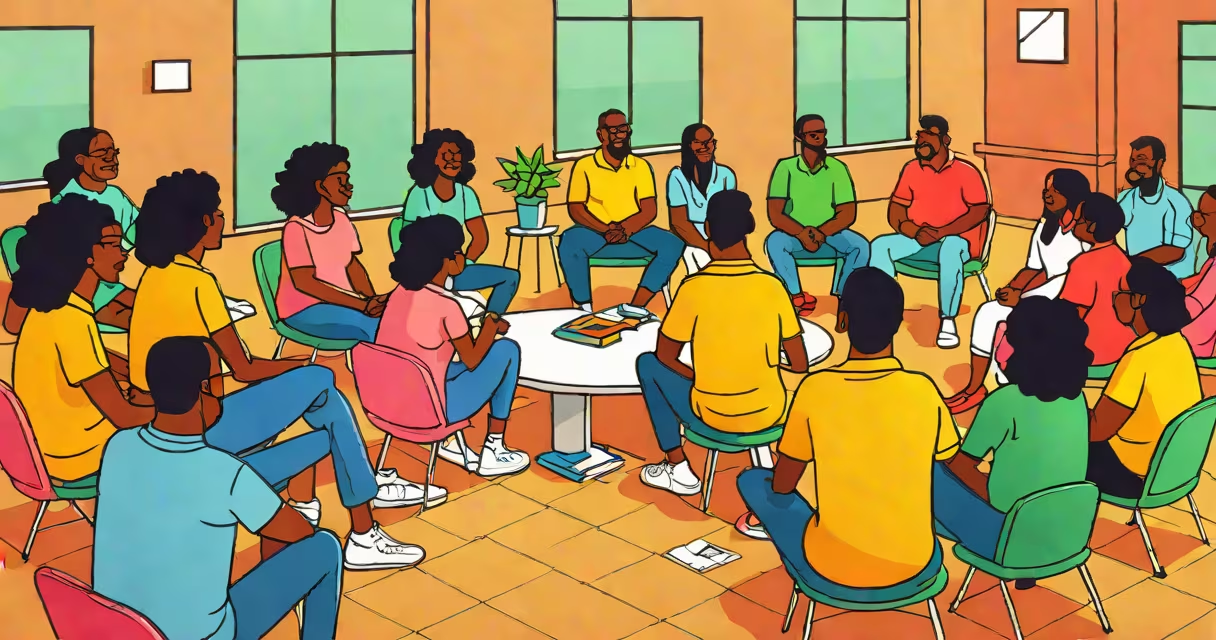
A support services group is a structured network of individuals and professionals who provide emotional, informational, and practical assistance to people managing chronic illness, mental health conditions, or life-altering diagnoses. These groups operate through peer-led discussions, expert-led workshops, and access to medical or social services.
Unlike informal gatherings, support services groups follow consistent formats and often have trained facilitators. They may meet weekly in person or online, offering a safe space to share experiences, ask questions, and receive guidance. The goal is to reduce feelings of isolation and improve coping strategies for members dealing with long-term health issues.
Research from the National Alliance on Mental Illness (NAMI) shows that participation in peer-led support groups improves adherence to treatment plans by 37% and reduces emergency psychiatric visits by 28% over 12 months. This data confirms that structured support networks deliver measurable benefits beyond emotional comfort.
These groups function through regular meetings, typically lasting 60 to 90 minutes. Attendance is voluntary, and members usually commit to confidentiality. Meetings follow a shared agenda: check-ins, topic discussions, resource sharing, and closing reflections.
Facilitators-often certified counselors or individuals with lived experience-guide conversations to ensure inclusivity and prevent dominance by a few voices. They may introduce topics such as medication side effects, going through insurance, or managing anxiety during treatment. A session on coping with alopecia, for example, might include a dermatologist's explanation of hair regrowth options and a member's story about wearing wigs in public.
Groups often maintain records of available resources. For instance, a cancer support group might compile a list of local transportation services for patients needing chemotherapy, or a diabetes group might share a spreadsheet of low-cost insulin providers in their state. These tools turn discussion into action.
Support services groups vary based on focus, structure, and delivery method. The most common types include:
| Type | Focus Area | Format | Example |
|---|---|---|---|
| Peer-led | Shared diagnosis (e.g., PTSD, chronic pain) | In-person or virtual, recurring | Monthly meetings for veterans with combat-related trauma |
| Professional-led | Mental health or behavioral health | Therapist-facilitated, 6-12 sessions | CBT-based group for adults with generalized anxiety disorder |
| Condition-specific | Medical condition (e.g., multiple sclerosis, cystic fibrosis) | Hybrid: in-person and live-streamed | Weekly webinar series for parents of children with rare genetic disorders |
| Family-focused | Support for caregivers and loved ones | Biweekly calls or drop-in centers | Support group for siblings of autistic individuals attending college |
While all serve similar purposes, professional-led groups tend to emphasize clinical goals like symptom reduction, whereas peer-led groups prioritize connection and mutual understanding. A study published in *The Journal of Clinical Psychology* found that peer-led groups reported higher satisfaction rates (89%) compared to professionally led ones (74%), though both showed significant improvements in mood scores over time.
Support services groups are embedded in hospitals, clinics, schools, and nonprofit organizations. They appear in settings ranging from pediatric oncology wards to senior wellness centers. Their presence is especially critical in underserved communities where access to mental health professionals remains limited.
For example, a rural county in Montana launched a telehealth-supported support services group for individuals with depression following a spike in suicide rates. Over six months, 62% of participants reported reduced feelings of hopelessness, and 41% sought formal therapy for the first time-directly linked to group referrals.
They are also used in crisis response. After the 2023 Maui wildfires, local health departments coordinated mobile support services groups in evacuation shelters. These groups included trauma counselors, social workers, and survivors who had lost homes. Within two weeks, 87% of attendees said they felt "more capable of handling daily stress."
People often confuse support services groups with therapy sessions or online forums. While all involve discussion, therapy is clinically directed and focused on individual change. Support groups emphasize collective experience and shared resilience.
Online forums lack structure and moderation. A Reddit thread about bipolar disorder may contain helpful tips-but also misinformation, harmful advice, or triggering content. Support services groups enforce ground rules: no judgment, no unsolicited medical advice, and no public disclosure of personal details without consent.
Another key difference: support services groups do not replace medical care. They complement it. When a patient with heart failure joins a cardiac rehabilitation support group, they learn how to manage fatigue and track symptoms-but still see their cardiologist monthly. The group helps them stay consistent with medication and diet, but doesn't diagnose or treat.
I once attended a support services group for people with autoimmune disorders. The facilitator opened with, "This isn't about fixing anyone. It's about showing up, being seen, and knowing you're not alone." That moment crystallized the core purpose: belonging, not cure.
Understanding how support services groups differ from similar models avoids confusion and ensures proper use:
| Term | Primary Function | Key Distinction |
|---|---|---|
| Support services group | Peer and professional collaboration for emotional and practical support | Structured, recurring, with trained facilitation and clear boundaries |
| Online forum | Open discussion board for information exchange | Lacks moderation, consistency, and accountability; anonymous participation |
| Individual therapy | One-on-one clinical intervention | Focused on personal growth and symptom management; private and confidential |
| Advocacy organization | Policy change, public awareness, funding campaigns | Works at systemic level; may host groups but not primarily a support mechanism |
One non-obvious fact: many support services groups are funded through grants rather than membership fees. The Substance Abuse and Mental Health Services Administration (SAMHSA) provides federal funding to community-based groups serving populations affected by substance use disorders. This model allows free access and prevents financial barriers to entry.
In 2022, a hospital in Detroit launched a support services group for patients with newly diagnosed type 2 diabetes. The program included biweekly meetings led by a registered dietitian and a licensed therapist. Attendees received personalized meal planning guides, glucose monitoring apps, and referrals to low-cost labs.
After 10 weeks, 78% of participants improved their HbA1c levels by at least 0.5 points. One member, a 54-year-old man with a history of skipped meals and high blood pressure, shared: "I didn't realize how much shame I carried around eating. Talking with others who struggled too helped me stop hiding my food."
The group also connected members with local food pantries and walking clubs. By month 6, 60% of participants had joined a fitness class or started walking daily. The program was later adopted by two other city hospitals.
Support services groups are not a substitute for medical treatment, but they are a proven tool for improving outcomes. They create environments where people feel heard, understood, and equipped to face ongoing challenges. Whether managing a chronic illness or recovering from trauma, these groups offer structure, connection, and practical help.