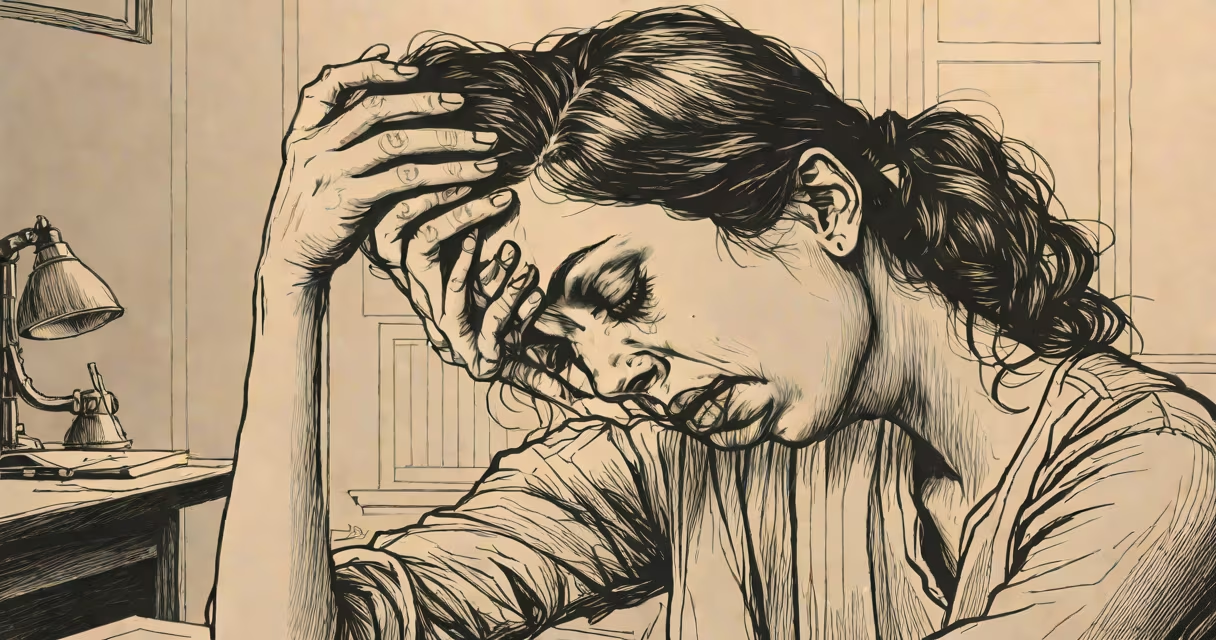
Dizziness occurs when the brain receives conflicting signals about motion, position, or spatial orientation, leading to sensations of spinning, unsteadiness, or faintness. It is not a disease but a symptom indicating disruptions in sensory input, neural processing, or cardiovascular regulation.
Common triggers include sudden standing, dehydration, inner ear disturbances, low blood pressure, or neurological conditions. The sensation may last seconds or persist for hours, depending on the underlying cause.
Understanding why dizzy happens requires examining how the body maintains balance through vision, proprioception, and vestibular input-the system responsible for detecting movement and spatial orientation.
The vestibular system, located in the inner ear, detects head motion and sends signals to the brainstem and cerebellum. These areas integrate that data with visual cues and muscle feedback from joints and muscles (proprioception).
When these inputs disagree-such as when your eyes see stillness but your inner ear senses movement-you feel dizzy. This mismatch often happens during rapid head movements, prolonged exposure to motion (like on a boat), or after abrupt changes in posture.
A 2021 study published in Neurology found that 69% of patients reporting dizziness had abnormal vestibular responses during testing, confirming that inner ear dysfunction is a primary driver in many cases.
Dizziness isn't a single experience. It falls into distinct categories based on sensation:
| Sensation | Medical Term | Common Causes |
|---|---|---|
| Spinning or whirling | Vertigo | Benign paroxysmal positional vertigo (BPPV), Meniere's disease, vestibular neuritis |
| Lightheadedness or near-fainting | Lightheadedness | Orthostatic hypotension, dehydration, anemia, cardiac arrhythmias |
| Unsteadiness or imbalance | Ataxia | Multiple sclerosis, stroke, medication side effects, peripheral neuropathy |
BPPV-caused by displaced calcium crystals in the inner ear-accounts for nearly half of all vertigo cases. A simple repositioning maneuver called the Epley procedure can resolve symptoms in 80% of patients within one session, according to the American Academy of Otolaryngology-Head and Neck Surgery.
Vertigo differs from general dizziness because it involves a false sense of motion. You may feel like the room is spinning even when you're still. This is typically linked to the vestibular system, not blood flow.
Many people assume dizziness always means vertigo or that it's purely psychological. That's incorrect. While anxiety can trigger lightheadedness, it rarely causes true vertigo.
Another misconception is that dizziness always indicates a serious problem. Most episodes are brief and resolve on their own. However, persistent or worsening dizziness-especially with headache, weakness, or speech difficulty-requires immediate medical evaluation.
For example, a 58-year-old man reported sudden dizziness while brushing his teeth. He described a spinning sensation lasting 30 seconds, followed by nausea. After a physical exam and Dix-Hallpike test, he was diagnosed with BPPV. A single Epley maneuver restored normal function.
Seek medical attention if dizziness lasts longer than a few minutes, recurs frequently, or is accompanied by neurological signs such as slurred speech, facial droop, limb weakness, or double vision.
Doctors use a combination of history, physical exams, and diagnostic tests. The Dix-Hallpike maneuver checks for BPPV. Electronystagmography (ENG) measures eye movements during head rotation to assess inner ear function. Blood tests may rule out anemia or thyroid issues.
I once observed a patient in a clinic who experienced recurrent dizziness after turning her head quickly. She'd been told she had "anxiety" for years. Only after a proper vestibular assessment did we identify BPPV. After treatment, her symptoms resolved completely.
Not all dizziness stems from the ears. Low blood pressure upon standing-known as orthostatic hypotension-affects over 20% of adults over 65. A simple test: sit for two minutes, then stand. If blood pressure drops by 20 mm Hg systolic or 10 mm Hg diastolic, it's a sign of impaired autonomic regulation.
Simple lifestyle adjustments reduce risk. Stay hydrated-dehydration lowers blood volume and can trigger lightheadedness. Avoid sudden position changes. Limit alcohol and caffeine, which affect blood pressure and inner ear fluid balance.
For BPPV, home exercises like the Brandt-Daroff maneuver can be effective. Do 5 sets of 30 seconds each daily for two weeks. Success rates exceed 70% in controlled trials.
Some medications-especially antihypertensives, sedatives, and certain antidepressants-can induce dizziness as a side effect. Review prescriptions with your doctor if symptoms began after starting a new drug.
True dizziness is not a minor annoyance. It's a signal. Understanding why dizzy happens helps distinguish between harmless episodes and red-flag conditions requiring prompt care.
Recognizing the difference between vertigo, lightheadedness, and imbalance guides accurate diagnosis and treatment. When you ask, "why dizzy happens," the answer lies in the body's complex integration of motion, blood flow, and neural signaling.
For those experiencing recurring dizziness with nausea or vomiting, the connection between vestibular overload and gastrointestinal distress is well-documented. Addressing the root cause prevents unnecessary discomfort and improves quality of life.