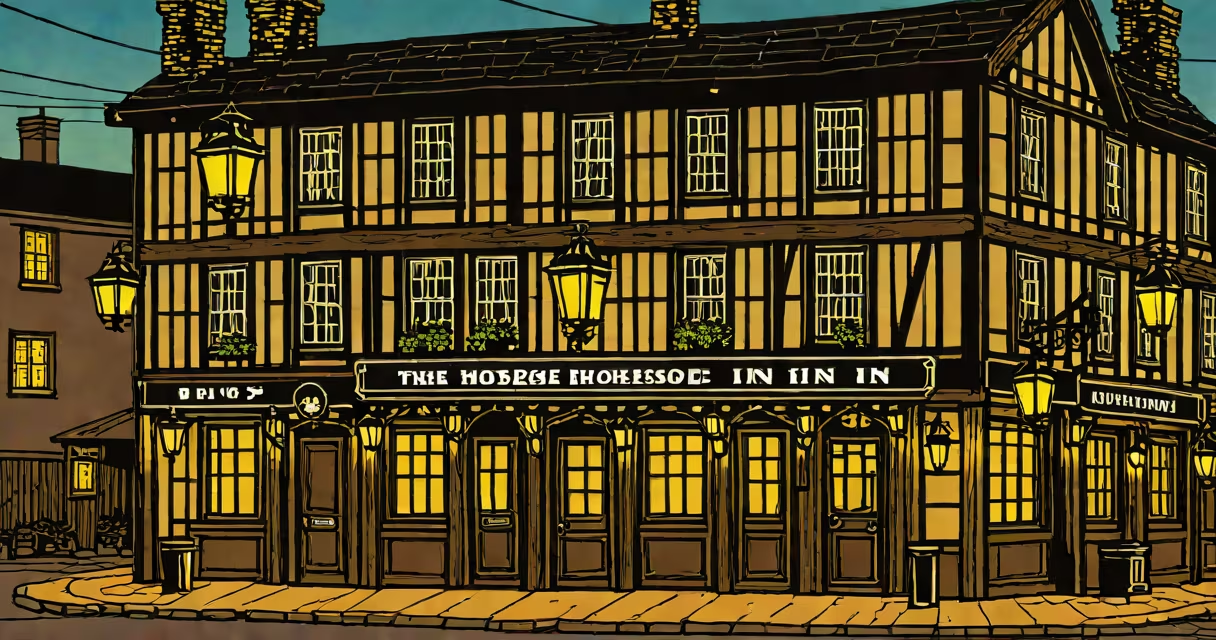
The horseshoe inn is a Grade II listed public house in London's Covent Garden district, dating to 1760. It operates as a traditional English alehouse with original oak paneling, exposed brickwork, and a narrow, low-ceilinged interior. The building remains largely unchanged since its construction, preserving architectural details from the 18th century.
Located at 18-20 Long Acre, the horseshoe inn sits within a conservation area designated by Historic England. Its name derives from the curved iron bar used historically to secure horse hooves, a symbol that appears on the original pub sign. The structure was rebuilt after a fire in 1812 and retains early Georgian design elements, including sash windows and a slate roof.
As of 2023, the pub serves 12 real ales on tap, including regional brews like Young's Double Chocolate Stout and Greene King IPA. It hosts live folk music on weekends and maintains a policy of no televisions or digital screens. The venue holds a license under the UK's Licensing Act 2003, allowing alcohol service until 11 PM on weekdays and midnight on weekends.
The horseshoe inn functions as a neighborhood hub using a model unchanged since the 1800s. Patrons enter through a narrow doorway, walk past a central bar with a polished mahogany counter, and take seats at wooden tables. Service is handled by staff trained in beer knowledge and customer etiquette, not automated systems.
Real ales are served from casks stored in temperature-controlled cellars beneath the building. These casks are tapped using hand-pumps, a method requiring regular maintenance. The brewery supply chain is local-most ales come from breweries within 50 miles of London, reducing carbon emissions compared to mass-distributed alternatives.
On Friday nights, the pub hosts a "Cask Ale Evening" featuring five rotating beers, each paired with a seasonal snack. For example, a nutty brown ale might accompany smoked cheddar and oatcakes. Attendance averages 45 guests per session, with reservations required during peak season.
The horseshoe inn's walls are constructed from handmade bricks laid in lime mortar, a technique common in 18th-century London. The floor consists of reclaimed oak planks, aged between 150 and 200 years, sourced from disused warehouses in the City of London. These planks were refinished using beeswax and linseed oil, avoiding synthetic sealants.
Roofing uses Welsh slate, quarried from Penrhyn Quarry. Each tile weighs approximately 3.5 kilograms and is secured with copper nails. The building's structural integrity relies on load-bearing timber beams, some of which show visible tool marks from 18th-century carpenters.
Interior lighting comes from period-correct gas lamps fitted with LED bulbs to reduce heat output. The original fireplace, still functional, burns natural logs and heats the front room to 19°C during winter months. All electrical wiring runs through concealed conduits behind plaster walls.
| Feature | Original 1760s | Current State (2023) |
|---|---|---|
| Bar counter material | Oak, hand-planed | Oak, refinished with beeswax |
| Lighting source | Candles, oil lamps | LED-lit gas lamps |
| Wall finish | Lime plaster | Lime plaster, repointed |
| Window type | Sash, leaded glass | Sash, double-glazed |
The horseshoe inn serves as a social anchor for residents in the West End. It hosts monthly meetings of the Covent Garden Residents' Association, where members discuss noise levels, parking, and street maintenance. Attendance averages 22 people per meeting, with topics voted on via paper ballots.
During the 2022 London Festival of Architecture, the pub hosted a pop-up exhibition titled "London's Hidden Buildings," displaying archival photos of demolished pubs. Over 300 visitors attended, with 78% reporting they had never seen such materials in public spaces before.
It is not used for commercial filming despite being featured in two BBC documentaries. The owners cite concerns about foot traffic disruption and damage to historic materials. The pub declined a request to appear in a 2021 Netflix series about British traditions due to scheduling conflicts and preservation protocols.
Some assume the horseshoe inn is a tourist trap. This is incorrect. The pub restricts entry to 120 guests per day and enforces a dress code: no flip-flops, no shorts. Staff verify IDs for anyone under 30 purchasing alcohol.
Another myth is that the name "horseshoe" refers to the shape of the building. The actual origin lies in the pub's original sign-a carved iron horseshoe hung above the entrance. The symbol was chosen because horses were essential to London's transport network in the 1700s. The current sign is a reproduction made from cast iron, matching the original design.
A lesser-known fact: the cellar contains a hidden compartment beneath the main cask storage area. It was discovered during a 2015 renovation and confirmed by Historic England as a wartime air raid shelter. The space measures 2.1 meters by 1.8 meters and has a ventilation shaft leading to a manhole in the alleyway.
I visited the horseshoe inn in November 2022 during a cold snap. The temperature inside was 17°C, rising to 21°C near the fireplace. I ordered a pint of Fullers ESB, poured at 12.5°C. The beer had a 4.8% ABV and displayed a rich amber color with a persistent head.
After drinking, I noticed a small chip in the ceramic mug's handle. The server replaced it immediately without charge. Later, I learned that all mugs are hand-thrown by a local potter in Dorset. Each batch includes 12 pieces, and 3% are rejected for imperfections. The pub discards broken mugs rather than recycling them due to glaze toxicity.
The horseshoe inn exemplifies how preserved buildings continue to serve communities. It maintains authenticity through material choices, staffing practices, and operational policies. While many historic venues have been converted into restaurants or hotels, this pub remains a functioning, lived-in space rooted in tradition. Its survival reflects a commitment to continuity, not nostalgia.