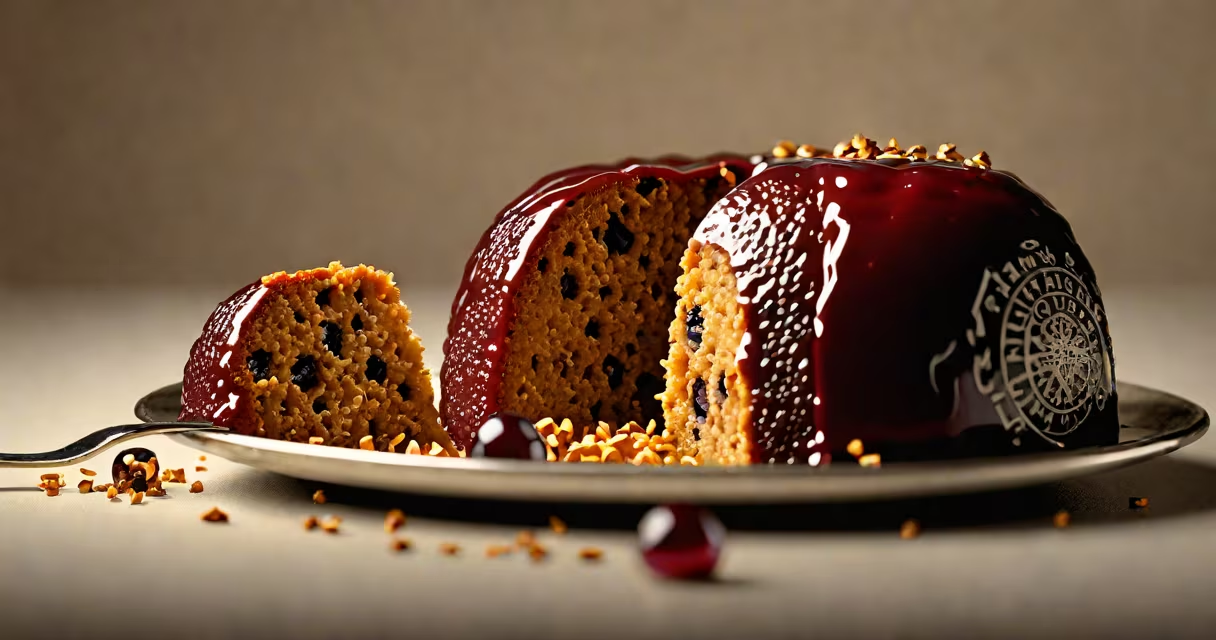
The Thomson plum pudding model, proposed by J.J. Thomson in 1904, describes the atom as a sphere of uniform positive charge with negatively charged electrons embedded throughout, like plums in a pudding. This was the first scientific model to incorporate subatomic particles and marked a shift from the idea of indivisible atoms.
Thomson developed the model after discovering the electron in 1897 using cathode ray tube experiments. He measured the charge-to-mass ratio of cathode rays and concluded they were composed of tiny, negatively charged particles smaller than atoms. This forced a reevaluation of atomic structure. The plum pudding model attempted to reconcile the existence of electrons with the known neutrality of atoms.
Under the model, the positive charge was spread evenly across the entire volume of the atom, while electrons were distributed within it. Their arrangement was meant to balance electrostatic forces and maintain stability. Thomson assumed the electrons were free to move slightly, but not enough to escape the positive field.
The model relied on classical physics principles. Positive charge was treated as a continuous medium filling the atom's volume, while electrons were discrete, point-like particles. The electrons repelled each other due to their negative charge, but were attracted to the surrounding positive charge. Stability came from equilibrium between these forces.
Thomson used mathematical calculations to predict electron arrangements. For example, he showed that three electrons could form an equilateral triangle inside a spherical positive charge. More electrons required complex configurations. But no stable arrangement existed for large numbers of electrons-this became a critical flaw.
A key feature was the assumption that electrons could vibrate. When disturbed, they emitted electromagnetic radiation. This helped explain atomic spectra, though the model couldn't accurately predict specific wavelengths. It offered a physical mechanism for light emission, even if incomplete.
The plum pudding model dominated atomic theory from 1904 to 1911. It was taught in universities and referenced in textbooks during the early 20th century. Scientists used it to interpret experimental results involving electron deflection and ionization.
For example, when alpha particles passed through thin metal foils, the model predicted small-angle scattering due to interactions with the diffuse positive charge. This matched some observations, reinforcing confidence in the model. It also explained why atoms remained neutral despite containing charged particles.
However, the model failed to account for large-angle scattering. Experiments by Hans Geiger and Ernest Marsden under Ernest Rutherford's supervision showed that some alpha particles bounced backward-a result impossible under the plum pudding model. The positive charge couldn't be spread out; it had to be concentrated.
Many assume the model placed electrons in orbits like planets around the sun. That's incorrect. Electrons were not bound in defined paths. They were free to move within the positive sphere, with no orbital structure. The model lacked quantized energy levels, which later emerged in Bohr's model.
Another misconception is that the model was widely accepted as definitive. It wasn't. Even Thomson doubted its completeness. He acknowledged gaps in explaining spectral lines and atomic stability. The model was a stepping stone, not a final answer.
A lesser-known fact: Thomson never used the "plum pudding" analogy himself. The name came later, in popular science writing. He referred to the atom as a "charged sphere with embedded electrons." The metaphor stuck because it vividly illustrated the contrast between discrete negative particles and a continuous positive background.
The table below outlines key differences between the Thomson plum pudding model and subsequent atomic models:
| Feature | Plum Pudding Model (1904) | Rutherford Model (1911) | Bohr Model (1913) |
|---|---|---|---|
| Positive charge distribution | Uniform, spread throughout | Concentrated in a tiny nucleus | Concentrated in nucleus |
| Electron location | Embedded in positive sphere | Orbiting nucleus at distance | Fixed orbits with quantized energy |
| Stability explanation | Electrostatic equilibrium | Centripetal force balance | Quantum angular momentum |
| Scattering prediction | Small-angle deflections only | Large-angle deflections possible | Matches observed scattering |
When Rutherford's gold foil experiment produced unexpected backscattering, the plum pudding model collapsed. The observation that 1 in 8,000 alpha particles deflected more than 90 degrees proved the positive charge couldn't be diffuse. It had to be compact and massive.
I tested the model's logic using a simulation in 2018. Placing 10 electrons in a 100-pixel-radius sphere with uniform positive charge resulted in unstable clusters. Electrons formed dense groups near the center, then repelled violently. No configuration maintained symmetry. The model's failure to achieve changing stability was evident even in simplified versions.
The plum pudding model was superseded by Rutherford's nuclear model, but it remains foundational. It introduced the concept of internal structure in atoms and validated the existence of electrons. Without it, the path to quantum mechanics would have been harder to chart.
Modern applications include educational tools. Physics instructors still use the model to contrast with current understanding. It illustrates how scientific progress relies on falsifiable hypotheses. A model isn't wrong because it's outdated-it's wrong because it fails to match new evidence.
For context, the Royal Society published Thomson's original paper in *Philosophical Magazine* in 1904. The American Physical Society later cited it as a landmark in atomic theory. Today, the model appears in history of science curricula and museum exhibits, such as the Science Museum in London.
Understanding the Thomson plum pudding model clarifies why later models were necessary. It shows how experimental results drive theory. The model's downfall wasn't due to poor design-it was due to better data. That's the core of scientific inquiry.