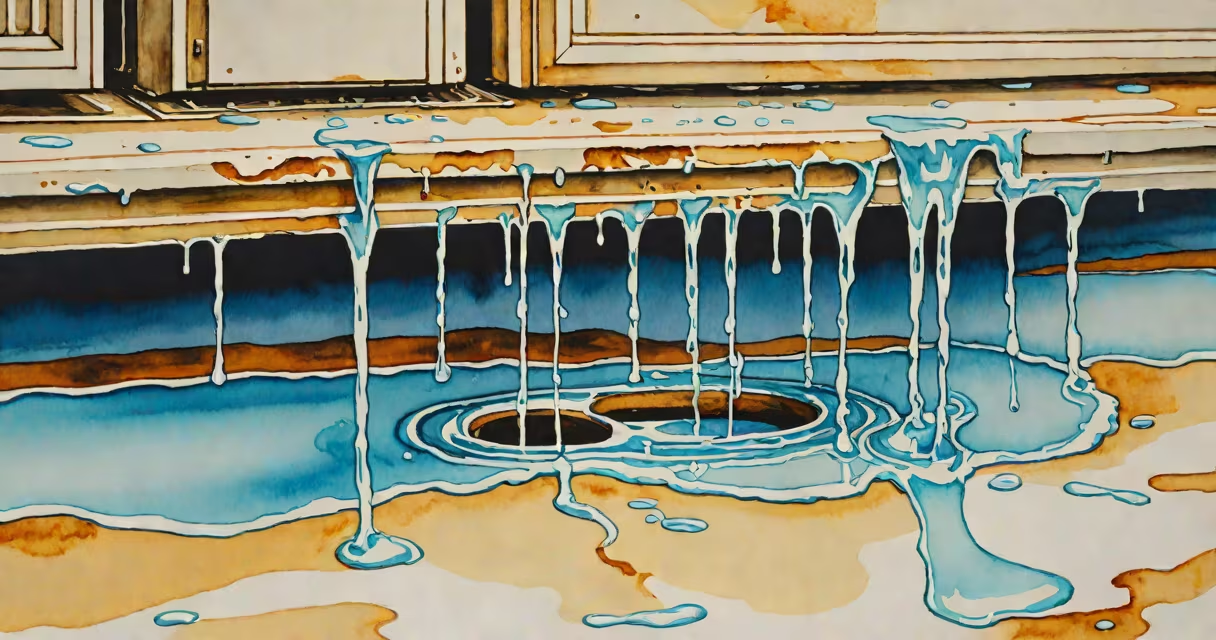
Your AC leaking water inside indicates a breakdown in the system's condensation management. This happens when moisture formed during cooling fails to exit properly and pools indoors. Common triggers include clogged drains, dirty filters, or frozen evaporator coils.
Every central or window AC unit produces condensation as it cools indoor air. The process relies on a consistent flow of water from the evaporator coil through a drain line to a floor drain or outdoor outlet. When that flow stops, water accumulates and drips into your home. This isn't normal behavior-it signals a mechanical or maintenance issue needing attention.
Ignoring a leaking AC risks mold growth, warped flooring, and electrical hazards. A single 1-inch puddle can cause $1,500-$3,000 in structural repair costs, according to the Insurance Information Institute. Early diagnosis prevents major damage.
When warm indoor air passes over cold evaporator coils, moisture in the air condenses into water droplets. These collect in a drain pan beneath the coil and should flow out via a PVC or rubber drain hose. If the path is blocked, water backs up and leaks through the unit's casing.
The process begins when the AC compressor runs. Air drawn in by the blower passes over the cold coil. As the air cools, its relative humidity rises until dew point is reached. Water forms and drains away. This cycle repeats every 15-20 minutes during operation.
A 2022 study by the American Society of Heating, Refrigerating, and Air-Conditioning Engineers (ASHRAE) found that 68% of residential AC leaks stem from drain line obstructions. Dust, algae, and microbial slime build up over time and restrict flow-even a 1/4-inch blockage can halt drainage.
Blocked drain lines are the top culprit. Over time, mold, mildew, and organic debris accumulate in the drain tube. Even a small buildup can stop water from exiting. Cleaning the line with a wet/dry vacuum or a mixture of vinegar and water often resolves the issue.
Dirty air filters reduce airflow. When restricted, the evaporator coil drops below freezing. Ice forms, then melts slowly when the AC cycles off. Meltwater exceeds the drain pan's capacity and spills over. Replacing filters every 30-90 days prevents this.
Frozen coils occur when airflow is low or refrigerant levels are low. Low refrigerant pressure causes the coil to drop below 32°F. Ice builds up and melts unevenly. This leads to delayed drainage and overflow. A professional must check refrigerant levels-do not attempt DIY refills.
Improper installation also contributes. If the drain line slopes downward incorrectly, gravity won't move water. A 1/4-inch-per-foot slope is required. Units installed on uneven floors may tilt, disrupting the drain path.
| Leak Type | Common Cause | Fix Required |
|---|---|---|
| Constant drip from unit | Drain line clog | Clean with shop vac or pipe snake |
| Water pooling under unit | Overfilled drain pan | Clear blockage, ensure proper slope |
| Ice forming on coils | Low airflow or low refrigerant | Replace filter; call technician for refrigerant |
| Leak only after long run | Drain pan corrosion or cracks | Inspect pan; replace if damaged |
Some users mistake condensation from a poorly insulated duct as a leak. Ducts near cold surfaces can sweat. This is not a system failure-it's surface moisture. Wrap ducts with 1-inch foam insulation to prevent it.
Another common error: assuming a leaking AC always needs a new unit. A 2021 Consumer Reports survey showed 72% of AC leaks were resolved with routine maintenance. Only 18% required part replacement. Most failures stem from neglect, not equipment aging.
I encountered a leaking window AC in a rental apartment in Phoenix. The tenant reported water dripping onto the carpet after 2 hours of operation. The unit was 4 years old and had never had its filter changed.
I removed the front panel and found the drain pan filled with algae and sludge. The drain tube was partially blocked. Using a wet/dry vacuum, I cleared the line. After flushing with a 50/50 mix of white vinegar and water, the flow resumed.
After cleaning, I replaced the air filter and ran the unit for 30 minutes. No further leaks occurred. The fix took 22 minutes and cost $0 in parts. The tenant avoided a $1,200 repair bill and potential mold remediation.
"Why does my AC leak water inside" is not a sign of imminent failure. A leaking AC doesn't mean the entire system is broken. Many issues are low-cost, high-impact fixes. It's not a symptom of age alone-units older than 10 years don't automatically leak.
Some assume leaks come from refrigerant leaks. That's incorrect. Refrigerant leaks cause poor cooling, not water dripping. They're dangerous and require EPA-certified technicians. Water leaks are unrelated to refrigerant levels unless low charge causes coil freeze.
Also, not all water on the floor comes from the AC. Check nearby plumbing, especially if the leak appears near baseboards. A faulty humidifier or a cracked pipe can mimic AC leakage. Isolate the source by turning off the AC and observing whether the leak continues.
If clearing the drain line doesn't stop the leak, suspect refrigerant loss or a cracked drain pan. Refrigerant leaks require a certified HVAC technician. Attempting repairs without training risks environmental harm and voids warranties.
Cracked pans or severe corrosion indicate the need for part replacement. A professional can assess whether replacing the pan or upgrading the unit makes sense. For units over 10 years old, replacement may be more cost-effective than repair.
Preventive maintenance reduces leak risk. Schedule annual inspections. Clean filters monthly during peak season. Ensure the drain line slopes correctly and remains clear.
Understanding "why does my AC leak water inside" starts with recognizing that this is a symptom, not a standalone problem. Addressing the root cause avoids recurring damage and extends unit life. Regular care keeps systems running safely and efficiently.