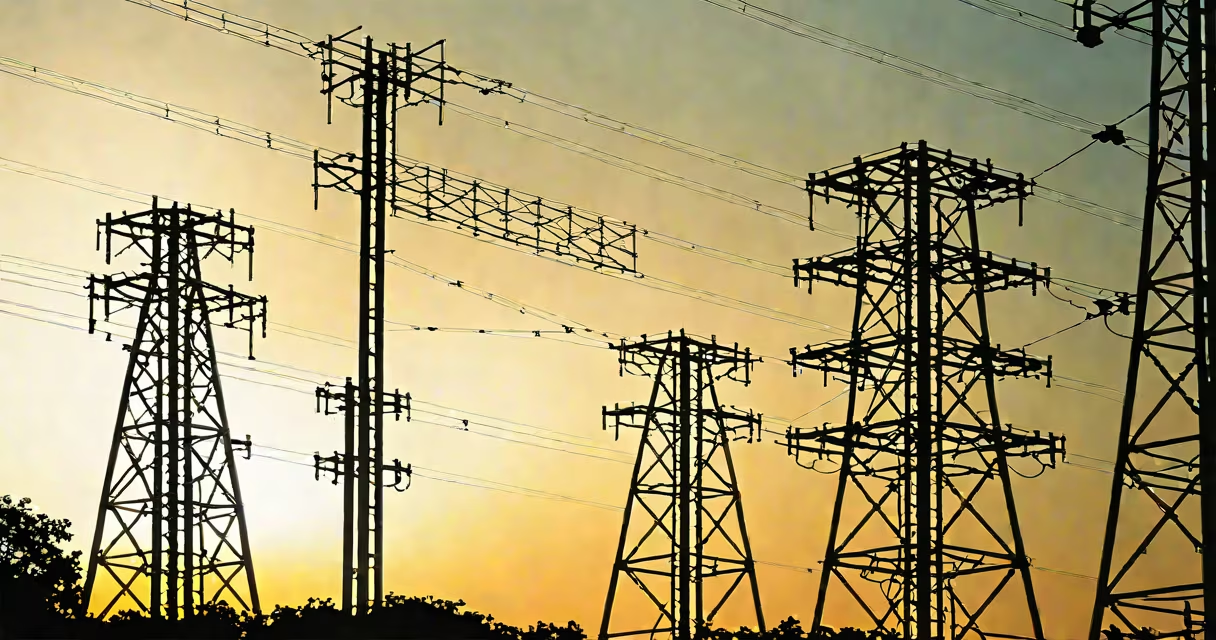
Total wireless towers are infrastructure installations that support radio frequency equipment used to transmit and receive mobile phone signals. These towers form the core of wireless networks, enabling voice calls, text messages, and data services across urban centers and remote regions.
Each tower contains antennas, transceivers, power supplies, and cooling systems housed in weatherproof enclosures. Antennas broadcast signals in specific directions and frequencies, while receivers capture incoming transmissions. The equipment connects to a central network via fiber-optic or microwave links, routing traffic through carriers' core systems.
Operators deploy multiple towers in a region to create overlapping coverage zones. This ensures continuous service as users move between locations. A single tower typically serves a radius of 1 to 10 miles, depending on terrain, antenna height, and signal frequency.
When a smartphone sends a call or data request, it transmits a weak radio signal to the nearest tower. The tower's receiver captures the signal, amplifies it, and forwards it through a network to a switching center. That center routes the request to its destination-another phone, a server, or a landline.
The return path follows the same route in reverse. The receiving device sends a response, which travels back through the network and is transmitted from the tower to the user's device. This process happens in milliseconds, enabling real-time communication.
Modern towers support multiple frequency bands. Low-band frequencies (600-700 MHz) travel far and penetrate buildings well but offer slower speeds. Mid-band (2.5 GHz) balances range and speed. High-band millimeter wave (24-40 GHz) delivers ultra-fast 5G performance but covers only short distances and struggles with walls.
Towers come in several forms based on structure, location, and deployment method. The most common types serve different needs across population density and geography.
| Type | Height Range | Use Case | Example Deployment |
|---|---|---|---|
| Lattice tower | 60-200 ft | High-capacity urban areas | Chicago downtown, New York City neighborhoods |
| Monopole | 40-100 ft | Suburban and highway corridors | Interstate 95 near Philadelphia |
| Stealth tower | 15-50 ft | Residential zones, historic districts | San Francisco rooftops disguised as flagpoles |
| Roof-mounted | Varies | Indoor coverage, small cells | Shopping malls, office buildings |
Stealth towers blend into surroundings using design elements like trees, church spires, or flagpoles. They're often required in communities concerned about visual impact or property values. Monopoles are single steel poles, simpler to install than lattice designs, and common in suburban settings.
Small cells-low-power base stations placed on lampposts or building facades-are increasingly used alongside traditional towers. They improve capacity in dense areas but require more units to cover the same ground.
Without total wireless towers, mobile networks would collapse. They provide the physical layer for all wireless communication. A single tower failure can disrupt service for thousands of users within its coverage area.
Carriers like Verizon, AT&T, and T-Mobile operate vast tower networks. Verizon alone manages over 140,000 sites across the U.S., including both owned and shared facilities. These sites are managed through agreements with tower companies such as American Tower Corporation and Crown Castle.
As demand grows for faster data speeds and lower latency, operators upgrade existing towers with new hardware. For example, upgrading a 4G tower to support 5G requires installing new antennas and software-defined radios capable of handling higher frequencies.
A key insight often missed: not all towers are built to the same standard. Some older towers lack the structural integrity or electrical capacity needed for modern 5G equipment. Retrofitting them can cost $10,000 to $30,000 per site, depending on location and complexity.
People often confuse total wireless towers with cell phones or Wi-Fi routers. A tower is not a device-it's a fixed installation. It doesn't make calls or send texts. It enables devices to do so.
Another misconception is that more towers always mean better coverage. In reality, poor planning leads to signal overlap and interference. Overlapping coverage from too many nearby towers causes dropped calls and slow speeds due to handoff failures.
Some assume that 5G replaces all previous generations. That's false. 5G coexists with 4G, 3G, and even 2G in many areas. Legacy systems remain essential for basic calling and texting in low-population zones where 5G infrastructure hasn't reached.
I once observed a rural town in eastern Washington where residents reported dead zones despite having a tower 3 miles away. The issue wasn't distance-it was terrain. A ridge blocked the signal path. Engineers had to reroute the beam using a directional antenna and adjust tilt angles manually. After the fix, signal strength improved from -110 dBm to -85 dBm, restoring usable service.
While total wireless towers are central to mobile networks, they differ from other infrastructure types:
Backhaul is critical. A tower without reliable backhaul becomes a dead end. Even the fastest 5G signal fails if the connection to the internet is slow or unreliable.
According to the Cellular Telecommunications Industry Association (CTIA), the U.S. had approximately 2.7 million active wireless sites in 2023, including towers, rooftops, and small cells. Of those, around 180,000 were dedicated towers.
The Federal Communications Commission (FCC) reports that over 90% of Americans live within 1 mile of a 4G or 5G tower. However, only 67% have access to download speeds above 100 Mbps, indicating that tower presence doesn't guarantee performance.
Deployment costs vary widely. Building a new tower in a city center averages $250,000 to $500,000. Rural construction runs $100,000 to $200,000 due to lower labor and material costs.
total wireless towers are essential components of modern communication. They enable connectivity across vast distances and support billions of daily interactions. Understanding their role helps clarify how mobile networks function-and where improvements are still needed.