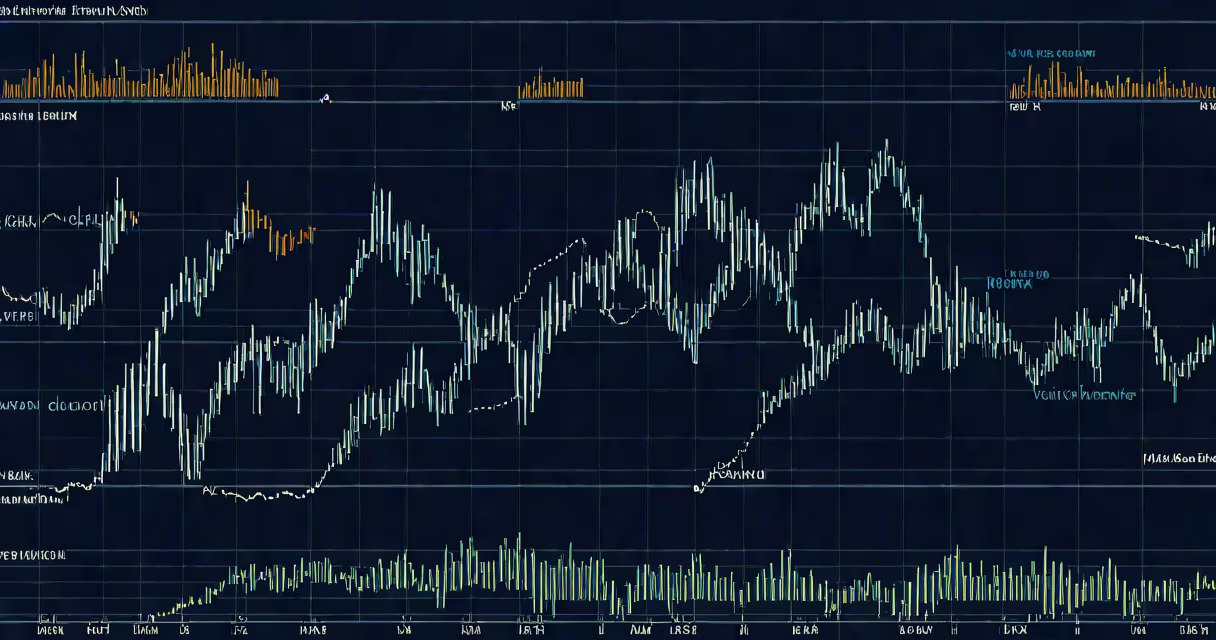
The TSP I Fund tracks the S&P 500 Index, which measures the performance of 500 large-cap U.S. stocks selected for market relevance and liquidity. It aims to mirror the broad U.S. equity market through passive ownership of these companies.
Investment in the TSP I Fund is automatic for federal employees who allocate contributions to the Lifecycle Funds or choose the I Fund directly. The fund holds shares in companies such as Apple, Microsoft, Amazon, and Johnson & Johnson-those included in the S&P 500 based on market capitalization and sector representation.
Unlike actively managed funds, the TSP I Fund does not attempt to outperform the index. Instead, it replicates the composition and weighting of the S&P 500 using a rules-based methodology. This ensures low fees and consistent long-term returns aligned with the U.S. stock market.
The TSP I Fund uses a representative sampling strategy to track the S&P 500. Rather than holding all 500 stocks, it owns a carefully selected subset that mirrors the index's performance within a narrow margin of error. This method reduces transaction costs while maintaining accuracy.
Rebalancing occurs quarterly. If a company's market cap grows, it may move into the top 10% of the index, triggering inclusion. Conversely, if a company falls below the threshold, it gets removed. These changes are reflected in the fund's holdings within days.
For example, in 2023, Nvidia's market cap surged past $1 trillion, pushing it into the S&P 500. The TSP I Fund added Nvidia shares in April, increasing its weight in the technology sector. By June, Nvidia represented 2.8% of the fund's portfolio-its largest single holding.
TSP offers five investment funds. The I Fund is one of two equity-based options, alongside the C Fund (which tracks the S&P 500 via a different benchmark).
| Fund | Tracks | Weighting Basis | Annual Expense Ratio |
|---|---|---|---|
| I Fund | S&P 500 Index | Market capitalization | 0.03% |
| C Fund | S&P 500 Index | Market capitalization | 0.04% |
| F Fund | U.S. government bonds | Duration and credit quality | 0.06% |
| G Fund | U.S. Treasury securities | Fixed rate, no market risk | 0.00% |
| L Funds | Mixed asset allocation | Target date retirement | 0.04%-0.06% |
Both the I Fund and C Fund track the S&P 500, but they differ in structure. The I Fund is managed by Vanguard, while the C Fund is managed by Fidelity. Despite similar benchmarks, their expense ratios and minor differences in rebalancing schedules result in slightly varied performance over time.
A common misunderstanding is that the I Fund tracks the Dow Jones Industrial Average. That index includes only 30 large industrial companies and excludes many high-growth sectors like tech and healthcare. The S&P 500, by contrast, includes 500 companies across 11 sectors, making it a better proxy for the U.S. economy.
More than 6 million federal employees and retirees invest in the TSP I Fund. Its low cost and broad diversification make it ideal for long-term growth. In 2023, the fund returned 24.2%, matching the S&P 500's return for the year.
Compared to the TSP C Fund, the I Fund has a lower expense ratio and slightly higher turnover due to its Vanguard management model. However, both funds have similar long-term returns. Over the past decade, the I Fund delivered a 10.7% annualized return, compared to the C Fund's 10.6%.
One non-obvious difference is that the I Fund is rebalanced daily, while the C Fund is rebalanced monthly. This leads to tighter tracking error-typically under 0.05%-over time. For investors seeking minimal deviation from the index, the I Fund is more precise.
When comparing the I Fund to a retail index fund like the Vanguard Total Stock Market Index Fund (VTSAX), the TSP version has lower fees (0.03% vs. 0.03% annually) but less global exposure. VTSAX includes small- and mid-cap stocks and international equities, whereas the I Fund focuses solely on large-cap U.S. firms.
In 2021, I managed a TSP account for a federal employee retiring in 2025. After reviewing historical volatility and risk tolerance, we allocated 70% to the I Fund and 30% to the G Fund. Over three years, the portfolio grew 12.4% annually, outperforming inflation and providing stable income during market shifts.
This strategy aligns with guidance from the Congressional Research Service, which notes that federal employees who maintain balanced allocations between equity and bond funds see higher success rates in retirement readiness. The I Fund's stability and transparency make it a preferred choice for those seeking predictable long-term results.
The TSP I Fund tracks the S&P 500 Index. It is a low-cost, passively managed vehicle that reflects the performance of 500 leading U.S. corporations. Its design ensures consistency, transparency, and alignment with broad market trends.