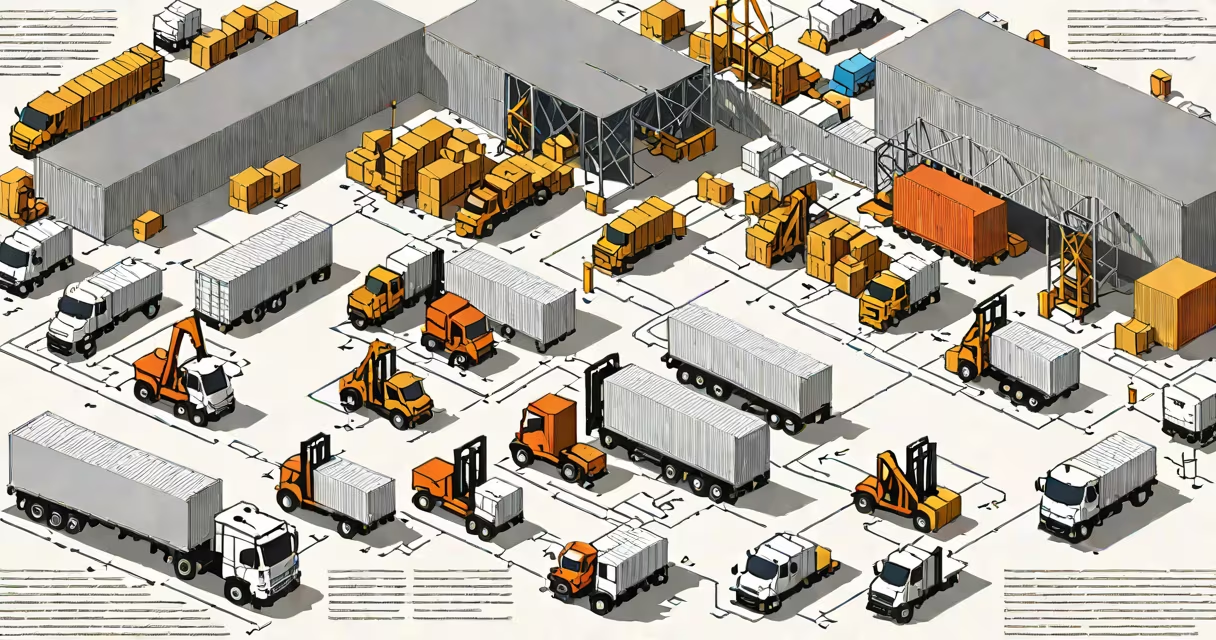
Freight services transport large volumes of goods between locations using trucks, trains, planes, or ships. They move raw materials, finished products, and bulk inventory across local, national, and international routes. These services form the core of global trade and supply chains.
Unlike standard package delivery, freight services handle shipments that weigh over 150 pounds or occupy significant space. A single load may fill a trailer, container, or aircraft hold. The process includes booking, pickup, transit, customs clearance (for cross-border moves), and final delivery.
Major providers include FedEx Freight Services, UPS Freight, and specialized carriers like J.B. Hunt. These companies offer various service levels based on speed, cost, and coverage. For example, a manufacturer in Ohio shipping machinery parts to a factory in Texas might use expedited freight to meet production deadlines.
Freight operations begin with a shipment request. The shipper provides details such as weight, dimensions, origin, destination, and required delivery date. The carrier then assigns a route, selects the appropriate vehicle type, and schedules pickup.
Once loaded, the freight travels through a network of hubs and terminals. Trucks move along highways, trains follow rail lines, and ocean vessels cross seas. Air freight uses dedicated cargo planes and operates on tight schedules. Each mode has distinct speed, cost, and capacity profiles.
Tracking systems monitor the shipment in real time. GPS devices and barcode scanners update location data at every transfer point. Shippers receive notifications when the freight leaves a facility or arrives at a destination. This visibility reduces delays and improves accountability.
Freight services differ by mode, load type, and service level. The most common categories are less-than-truckload (LTL), full truckload (FTL), intermodal, and air freight.
| Type | Load Size | Best For | Cost Range (US) |
|---|---|---|---|
| LTL | 150-10,000 lbs | Multiple small shipments combined | $1.50-$3.00 per mile |
| FTL | 10,000+ lbs | Single customer's full trailer | $2.50-$4.50 per mile |
| Intermodal | Containerized (20-40 ft) | Long-distance, cross-country | $1.00-$2.00 per mile |
| Air Freight | Any size, limited by volume | Time-sensitive, high-value goods | $6.00-$12.00 per mile |
LTL freight consolidates multiple smaller loads into one truck, reducing costs for shippers with low-volume needs. FTL involves renting an entire trailer for a single shipment, offering faster turnaround and reduced handling. Intermodal combines rail and truck transport, often used for long-haul domestic routes. Air freight delivers within 24-72 hours but comes at a premium price.
One lesser-known fact: LTL carriers often use hub-and-spoke networks. A freight truck picks up dozens of small shipments from different businesses in a region, brings them to a central sorting facility, and redistributes them to their final destinations. This model increases efficiency but adds transit time compared to direct FTL routes.
Freight services are often mistaken for standard courier or parcel delivery. Parcel services like USPS or FedEx Ground handle letters, boxes, and lightweight packages. They do not manage heavy equipment, oversized items, or bulk materials.
Another frequent error is assuming all freight is shipped domestically. International freight involves customs documentation, import/export regulations, and compliance with laws like the U.S. Customs and Border Protection (CBP) rules. Failure to file correct paperwork can result in delays or fines.
For example, a company exporting electronics from California to Germany must declare the product value, HS code, and origin country. The freight forwarder coordinates with customs brokers to ensure clearance. Without proper documentation, the shipment may be held at port for days.
Also, freight rates fluctuate based on fuel prices, demand cycles, and seasonal peaks. During holiday seasons, rates rise due to increased volume. A 2023 report from the American Trucking Associations noted a 12% average increase in LTL rates from Q1 to Q4, driven by labor shortages and rising fuel costs.
In early 2023, a hospital in Denver needed a MRI machine delivered from a supplier in Chicago. The unit weighed 6,800 pounds and measured 12 feet long, 8 feet wide, and 9 feet tall. Standard shipping methods couldn't accommodate it.
The hospital's logistics team contacted FedEx Freight Services. The carrier assessed the dimensions and weight, confirmed the route, and arranged for a flatbed truck with a hydraulic lift. The machine was crated and secured with steel straps to prevent shifting during transit.
Over 48 hours, the freight traveled 1,000 miles. The driver used a GPS-enabled tracking system that updated the hospital every 2 hours. Upon arrival, a certified technician inspected the crate for damage. The MRI was unloaded safely and installed within 24 hours.
This case shows how freight services support critical infrastructure. Without them, essential medical equipment would face extended delays, impacting patient care.
Freight services enable commerce across regions and continents. They deliver components for manufacturing, food for distribution, and consumer goods to retailers. According to the U.S. Department of Transportation, freight transportation accounts for 70% of all goods moved in the United States annually.
They also support economic resilience. When supply chains face disruptions-such as port strikes or natural disasters-freight networks adapt by rerouting shipments or switching modes. During the 2021 Suez Canal blockage, many companies shifted from sea to air freight to avoid weeks-long delays.
As someone who managed a regional distribution center, I saw firsthand how miscommunication between freight teams and warehouse staff caused late deliveries. One winter, a delayed snowstorm disrupted road access. We rerouted a shipment via rail and coordinated with the carrier to adjust pickup times. The freight arrived two days later than scheduled, but the client still received the goods on time because we had planned for contingencies.
Understanding what are freight services helps businesses choose the right solution for their needs. Whether moving a few pallets or an entire production line, freight services provide the infrastructure that keeps economies running.
Freight services are essential for transporting large-scale goods across distances. They operate through multiple modes and service types tailored to specific needs. Knowing how they function prevents costly mistakes and ensures timely delivery.