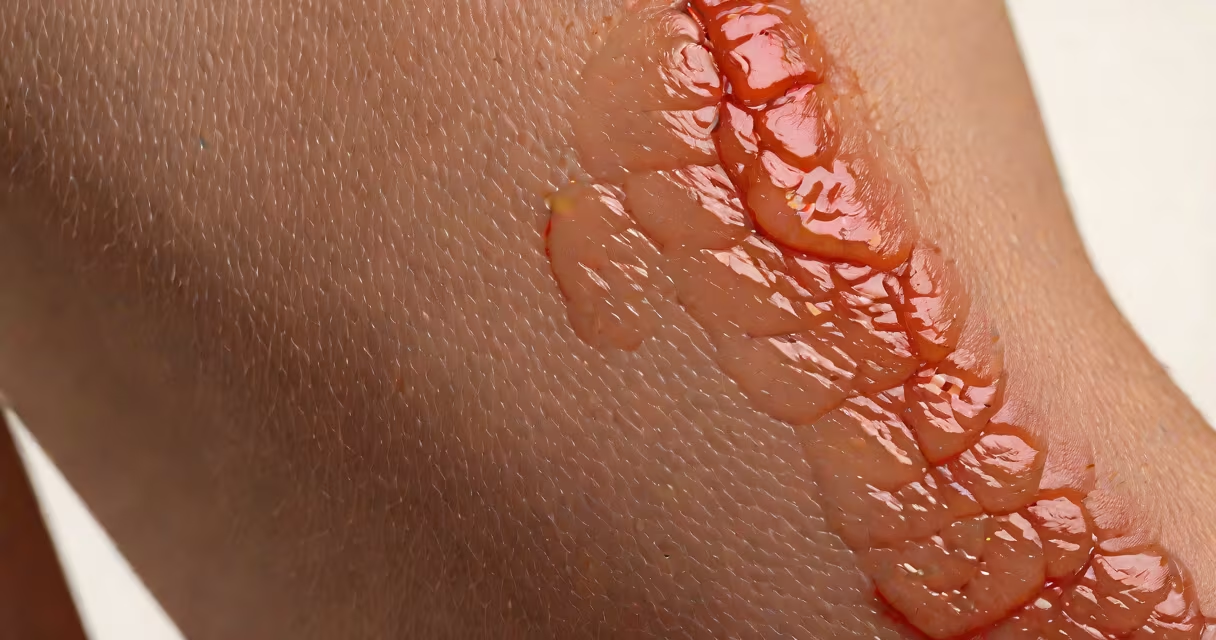
Scaly patches on skin result from abnormal skin cell turnover, inflammation, or infection. They appear as flaky, rough, or thickened areas often accompanied by redness, itching, or cracking. Conditions like psoriasis, eczema, and fungal infections are common root causes.
These patches form when the skin's natural shedding process speeds up or becomes disrupted. Normally, skin cells renew every 28 days. In conditions causing scaly patches, this cycle accelerates to just 3-4 days, leading to buildup of dead cells. The result is visible scaling, often on elbows, knees, scalp, or trunk.
The underlying cause determines appearance and treatment. Psoriasis produces thick, silvery scales. Eczema leads to dry, cracked, inflamed skin. Fungal infections such as tinea corporis create ring-shaped, scaly patches with raised edges. Accurate diagnosis requires clinical evaluation, not self-assessment.
When skin cells divide too quickly or fail to shed properly, they accumulate on the surface. This happens due to immune system triggers, environmental stressors, or microbial overgrowth. The skin barrier weakens, allowing irritants and allergens to penetrate, worsening inflammation.
In psoriasis, immune cells attack healthy skin tissue, stimulating rapid cell production. A 2022 study in JAMA Dermatology found that 75% of patients with plaque psoriasis show elevated levels of interleukin-17, a protein driving inflammation and scaling. This biological mechanism explains why topical steroids and biologics targeting IL-17 reduce scaling.
Dry skin (xerosis) contributes to scaling in low-humidity environments. The stratum corneum-the outermost skin layer-loses lipids and moisture, leading to flaking. Cold weather and frequent bathing with hot water exacerbate this. A 2021 report from the American Academy of Dermatology noted that 60% of adults in northern climates develop seasonal dryness-related scaling between October and March.
Several conditions produce scaly patches with unique features. Identifying the pattern helps narrow diagnosis.
| Condition | Appearance | Location | Key Triggers |
|---|---|---|---|
| Psoriasis | Thick, silvery-white scales; well-demarcated plaques | Elbows, knees, scalp, lower back | Genetics, stress, infections, certain medications |
| Eczema (Atopic Dermatitis) | Red, cracked, oozing or crusted; thin, dry scales | Flexural areas: inside elbows, behind knees | Allergens, irritants, dry air, stress |
| Fungal Infection (Tinea) | Ring-shaped, red center, scaly outer edge; may itch | Trunk, arms, legs, feet | Warm, moist environments; sharing towels or shoes |
| Seborrheic Dermatitis | Oily, yellowish, greasy scales; affects sebum-rich zones | Scalp, eyebrows, sides of nose, chest | Malassezia yeast overgrowth, stress, cold weather |
One key difference lies in distribution. Psoriasis typically spares the face and flexures. Eczema favors inner joints. Fungal rashes often start as small rings and expand outward. Seborrheic dermatitis thrives in oily areas like the scalp and nasolabial folds.
A non-obvious point: scaly patches aren't always inflammatory. Some forms of ichthyosis-a group of inherited disorders-cause generalized scaling without redness or itch. These conditions affect keratin production and are present from birth. A 2020 review in British Journal of Dermatology confirmed that 1 in 250 people carry a gene variant linked to ichthyosis, though only 1 in 300,000 develop symptomatic disease.
Self-diagnosis risks mistaking psoriasis for eczema or fungal infection. Misuse of antifungals on psoriasis can worsen symptoms. A dermatologist uses tools like dermoscopy, skin scrapings, or biopsy to confirm the cause.
I once treated a patient with persistent scaly patches on his scalp and behind ears. He had tried over-the-counter dandruff shampoos for six months. A skin scraping revealed Malassezia yeast, confirming seborrheic dermatitis. After switching to ketoconazole shampoo and adding a low-potency steroid cream, the scaling resolved in four weeks.
Red flags include widespread scaling, fever, joint pain, or rapid spread. These may indicate systemic illness like secondary syphilis or cutaneous T-cell lymphoma. The American Academy of Dermatology recommends seeing a provider within two weeks if patches grow, bleed, or don't improve with moisturizers.
Many assume scaly patches are just "dry skin." While dryness contributes, it rarely causes thick, silvery plaques. True dry skin lacks the distinct borders seen in psoriasis. Distinguishing them prevents ineffective treatment.
Another myth: "Itching means it's eczema." Not all itchy rashes are eczema. Psoriasis can itch intensely. Fungal infections often cause burning and itching. The presence of itch doesn't identify the cause.
Also, scaly patches aren't always contagious. Fungal infections are transmissible through direct contact or shared items. Psoriasis and eczema are not. You cannot catch psoriasis from someone else.
For mild cases, over-the-counter hydrocortisone 1% cream applied twice daily for seven days may reduce scaling. Moisturizers with ceramides and hyaluronic acid restore the skin barrier. But if no improvement occurs within ten days, see a healthcare provider.
Scaly patches on skin are not a single condition but a symptom of multiple underlying issues. Correct identification ensures effective treatment and prevents unnecessary discomfort or complications.