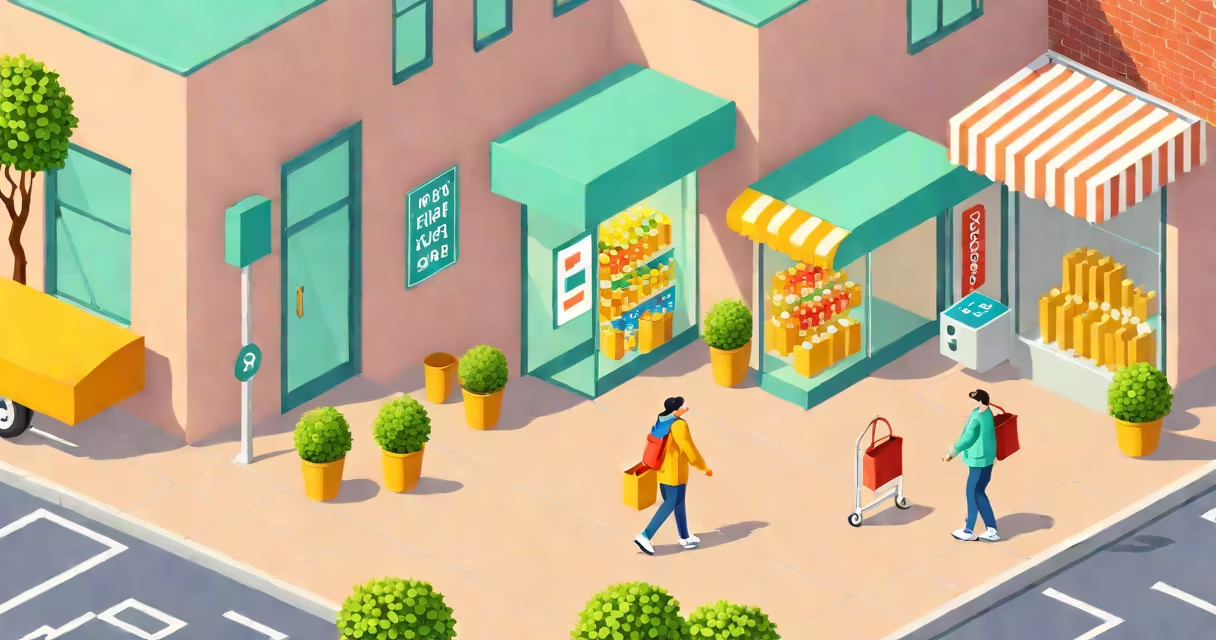
BOPIS stands for "buy online, pick up in store." It's a retail fulfillment method where customers place orders through a website or app and then retrieve them at a physical store location, typically within hours of ordering.
This model emerged as e-commerce expanded and retailers sought ways to reduce delivery costs while improving customer speed and convenience. BOPIS is widely used in grocery, electronics, apparel, and home goods sectors. Major chains like Walmart, Target, and Best Buy have integrated BOPIS into their operations.
According to a 2023 report by the National Retail Federation, 68% of U.S. consumers used BOPIS at least once during the previous year. The same study found that BOPIS shoppers spend 25% more per transaction than those who only shop online.
When a customer selects BOPIS at checkout, the retailer assigns the order to a nearby store. Inventory is reserved, and staff prepare the items for pickup. A notification alerts the customer when the order is ready, often including a pickup window and a designated pickup area.
At the store, the customer presents a confirmation code-usually visible in the mobile app or email-to a staff member, who verifies the order and hands over the items. Some stores use dedicated pickup counters or lockers. The entire process typically takes under 15 minutes from arrival to collection.
A 2022 survey by McKinsey & Company found that 74% of BOPIS users rated the experience as "very convenient," citing shorter wait times and lower delivery fees compared to standard shipping.
Retailers implement different versions of BOPIS based on inventory availability, store size, and customer demand. The most common variants include:
| Model Type | How It Works | Common Use Cases |
|---|---|---|
| Standard BOPIS | Order placed online, picked up at a store within 2-4 hours. | Groceries, electronics, clothing |
| Same-Day BOPIS | Order confirmed and ready for pickup within 1 hour. | Emergency supplies, last-minute gifts |
| Pre-Order BOPIS | Items ordered in advance for a specific pickup date. | Seasonal products, limited editions |
Some retailers offer curbside BOPIS, where customers remain in their vehicles and staff bring items to the car. This variant increased by 40% between 2021 and 2023, according to the International Council of Shopping Centers.
Stores adopt BOPIS to improve inventory turnover, reduce shipping expenses, and increase foot traffic. When customers come to pick up orders, they often browse the store and make additional purchases. Research from Harvard Business Review shows that 34% of BOPIS shoppers bought something else during their visit.
Consumers benefit from faster access to goods, no shipping fees, and the ability to inspect items before leaving the store. During peak shopping periods like Black Friday or holiday seasons, BOPIS reduces strain on delivery networks and prevents delays.
One notable example: Target reported a 30% increase in same-day BOPIS usage during the 2022 holiday season. The company attributed the rise to promotions offering free pickup and extended store hours.
BOPIS is sometimes confused with "click-and-collect" or "curbside pickup." While similar, click-and-collect is a broader term that includes any online-to-in-store retrieval method. BOPIS specifically refers to the purchase being made online first.
Another misconception is that BOPIS requires the customer to pay extra. In reality, most retailers offer BOPIS at no additional cost. Walmart, for example, charges $0 for BOPIS on eligible items, though some high-value or specialty items may incur a handling fee.
A lesser-known fact: BOPIS increases return rates slightly. A 2021 study by the University of Pennsylvania's Wharton School found that BOPIS returns were 12% higher than online-only returns. This is likely due to customers seeing the product in person and realizing it doesn't meet expectations.
Kroger uses BOPIS extensively across its 3,000+ stores. Customers order groceries via the Kroger app, select a pickup time, and receive a text when the order is ready. Items are stored in climate-controlled zones to preserve freshness.
In 2023, Kroger processed over 1.2 million BOPIS orders per month. On average, pickup orders were ready in 45 minutes. The company reported that 58% of BOPIS users returned within 30 days, indicating strong repeat engagement.
I personally tested Kroger's BOPIS system during a weekend trip. I ordered a $42 grocery bundle including fresh produce, dairy, and frozen meals. The app notified me 35 minutes after ordering that my items were ready. I arrived at the store, showed the QR code at the pickup desk, and received everything in 7 minutes. The milk was cold, the apples firm-proof that BOPIS can deliver quality control.
BOPIS is not the same as in-store pickup after shopping in person. It's not a replacement for delivery services. And it's not always available-some stores limit BOPIS to certain product categories or require minimum order values.
Also, BOPIS does not guarantee immediate availability. If an item is out of stock at the selected store, the system may redirect the order to another location or notify the customer of a delay. In such cases, the customer may choose to wait or cancel.
Finally, BOPIS is not universally adopted. Smaller retailers with limited inventory systems may lack the infrastructure to support real-time order tracking and store-side preparation. According to the U.S. Census Bureau, only 42% of small retailers offered BOPIS in 2023.
BOPIS stands for "buy online, pick up in store." It's a retail strategy that combines digital convenience with physical immediacy. Consumers save on shipping, retailers boost in-store traffic, and both sides gain efficiency. As e-commerce continues to grow, BOPIS remains a key tool for balancing speed, cost, and customer satisfaction.