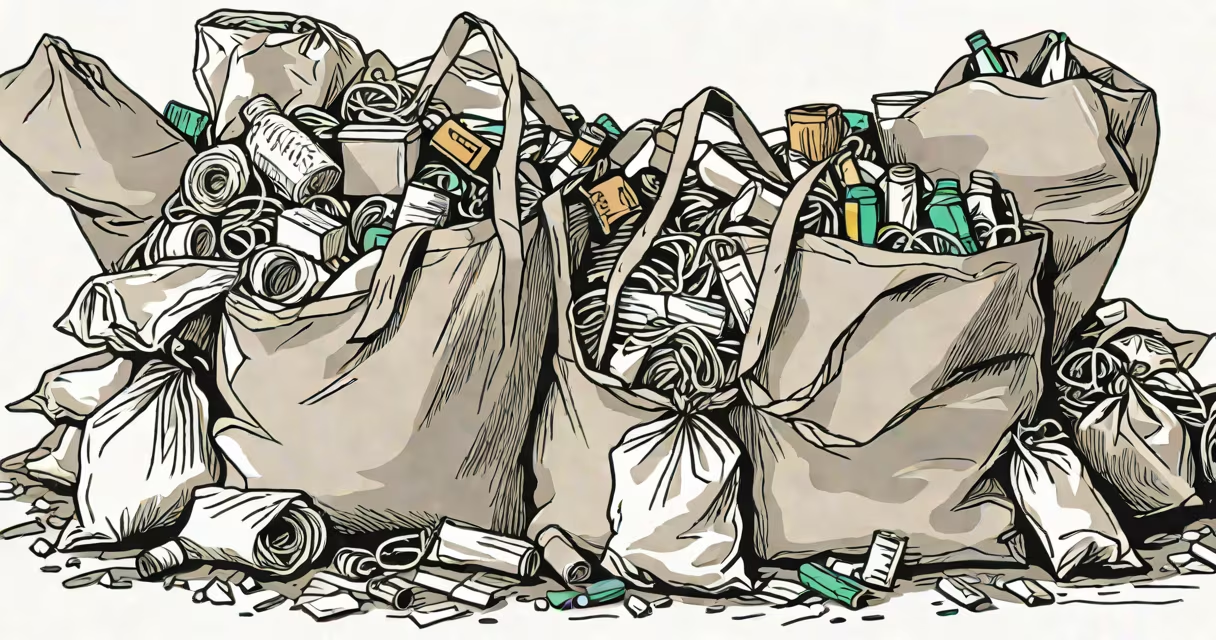
Consumption and sustainability describes the relationship between human demand for goods and services and the planet's ability to meet those demands without degrading ecosystems or compromising future generations' needs. It focuses on balancing resource use with environmental protection through mindful choices in production, distribution, and disposal.
At its core, consumption and sustainability addresses how much we take from Earth and how well we return value to it. When people consume more than natural systems can replenish-through overuse of water, fossil fuels, or raw materials-it leads to ecological overshoot. The United Nations Intergovernmental Panel on Climate Change (IPCC) reports that global consumption patterns are responsible for 60% of biodiversity loss and 70% of greenhouse gas emissions. This shows that individual and collective consumption habits directly influence planetary health.
Sustainable consumption means using resources efficiently, minimizing waste, and prioritizing reuse and recycling. A household switching from disposable plastic containers to glass storage reduces plastic pollution and lowers carbon emissions from manufacturing. The Ellen MacArthur Foundation estimates that shifting to a circular economy-where products are designed for longevity and recovery-could cut global CO₂ emissions by 39% by 2050. This illustrates how changing consumption behavior can drive systemic environmental improvements.
The system operates on feedback loops between supply, demand, and environmental capacity. When demand exceeds supply, scarcity increases prices and triggers conservation efforts. But when demand outpaces ecological limits-such as overfishing or deforestation-recovery becomes impossible. Sustainability aims to align consumption levels with planetary boundaries, which scientists define as nine critical thresholds including climate change, land-system change, and freshwater use.
For example, the average American generates 4.9 pounds of municipal solid waste per day. About 30% of that ends up in landfills, where organic material decomposes and releases methane-a greenhouse gas 25 times more potent than CO₂ over 100 years. By adopting composting and buying in bulk, households can reduce waste by up to 60%. This shift reflects sustainable consumption: choosing options that lower environmental harm while maintaining quality of life.
Industrial-scale consumption also follows this principle. Companies like Patagonia have redesigned their supply chains to prioritize recycled materials and repair services. Their Worn Wear program encourages customers to return worn gear for repair or resale. Since 2015, Patagonia has repaired over 1 million garments, extending product lifespans and reducing textile waste by 22%. This model proves that sustainable consumption isn't about deprivation-it's about smarter use of existing resources.
Several frameworks guide sustainable consumption practices. The most widely recognized is the circular economy model, which replaces the traditional linear "take-make-dispose" system with closed-loop cycles. In this model, materials are reused, remanufactured, or recycled indefinitely. The European Union adopted a Circular Economy Action Plan in 2020, setting targets for all packaging to be recyclable by 2030 and banning single-use plastics by 2025.
| Model | Key Principle | Real-World Example |
|---|---|---|
| Circular Economy | Design out waste; keep materials in use | Philips offers lighting as a service-customers pay for light, not bulbs. Philips maintains ownership and recycles fixtures. |
| Low-Carbon Lifestyle | Reduce energy and transport footprints | Swiss cities like Zurich promote car-free zones and bike-sharing programs, cutting urban transport emissions by 18% since 2010. |
| Eco-Labeling Systems | Use certified standards to guide choices | Fisheries certified by the Marine Stewardship Council (MSC) show 40% higher survival rates for fish populations compared to non-certified ones. |
Another key model is the "cradle-to-cradle" design philosophy, developed by architect William McDonough and chemist Michael Braungart. Products designed under this structure are built to be either safely returned to soil (biodegradable) or disassembled for reuse in new products. For instance, the company Ecover produces cleaning products in bottles made from 100% recycled plastic and uses plant-based ingredients. Their packaging aims to be collected and reprocessed into new bottles, eliminating landfill waste.
Many assume that sustainable consumption requires sacrifice or high cost. In reality, research from the World Resources Institute shows that sustainable diets-rich in plants and low in meat-can save households $1,000 annually on food costs while reducing carbon footprints by 50%. Choosing seasonal produce, cooking at home, and avoiding food waste are practical steps that improve both personal budgets and environmental outcomes.
Another misconception is that individual actions don't scale. But data from the Global Footprint Network reveals that if every U.S. household reduced meat consumption by half, it would free up 24 million acres of cropland and prevent 1.4 billion tons of CO₂ equivalent emissions annually. This demonstrates that aggregated individual behaviors create measurable planetary impact.
Some confuse consumption and sustainability with greenwashing-companies exaggerating environmental benefits to appear eco-friendly. A 2023 study by the University of Cambridge found that 58% of "eco-friendly" product claims lacked scientific backing. To avoid this, consumers should look for third-party certifications such as Fair Trade, B Corp, or Cradle to Cradle Certified. These labels require independent audits and enforce transparency.
In 2021, I replaced my entire kitchen with reusable alternatives: silicone lids instead of plastic wrap, metal straws, and cloth produce bags. Over six months, I reduced my household's plastic waste by 78%. The biggest surprise wasn't the environmental benefit-it was how much easier it became to plan meals and avoid impulse buys. I started tracking grocery spending and noticed a 15% drop in monthly food costs. This change didn't require major lifestyle shifts. It simply involved replacing single-use items with durable, refillable ones.
That experience mirrors findings from the UK's Behaviour and Environment Research Group. They found that households using reusable containers reported higher satisfaction with meal planning and lower rates of food spoilage. When sustainable choices are convenient and affordable, adoption increases.
Understanding consumption and sustainability isn't about perfection. It's about awareness, intentionality, and continuous improvement. The goal isn't to stop consuming-but to consume in ways that support both human well-being and planetary integrity.