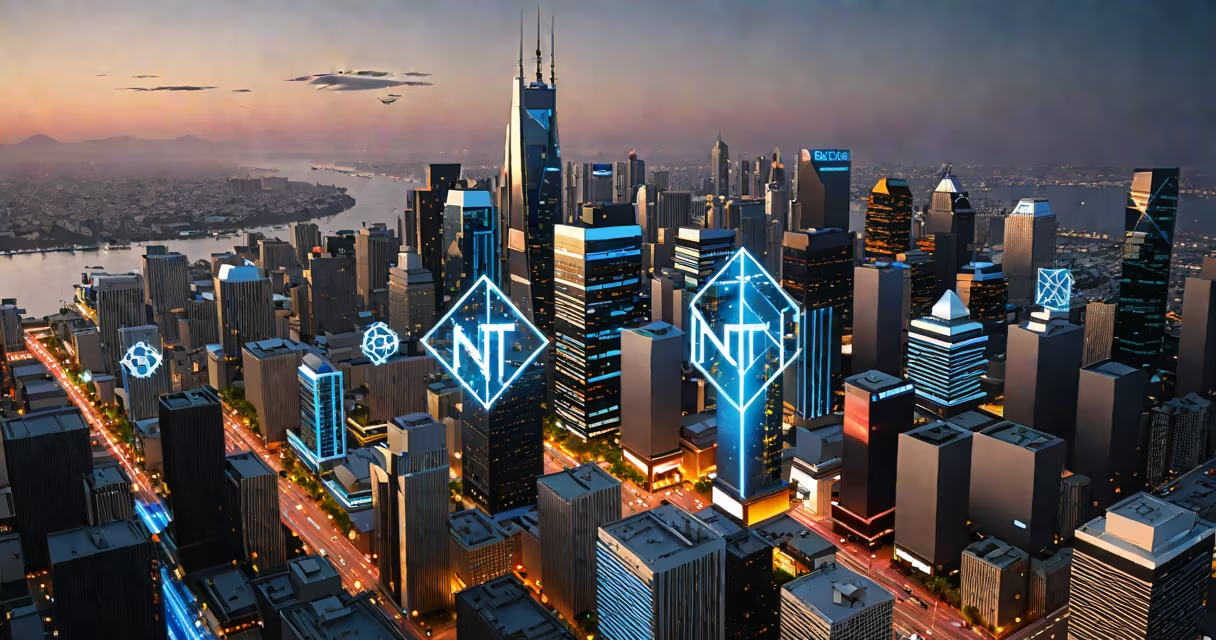
NTT stands for Nippon Telegraph and Telephone Corporation. It is a Japanese multinational telecommunications company headquartered in Tokyo, established in 1952 as a government-owned entity before privatization in 1985.
The name reflects its original mandate: managing Japan's national telegraph and telephone systems. Today, NTT operates as a global provider of digital infrastructure, cloud services, and IT solutions, serving over 100 countries through subsidiaries and partnerships.
NTT is not a single entity but a group of companies under the NTT Holding umbrella. Core operations include NTT Communications, NTT Data, NTT Security, and NTT Global. These divisions handle everything from fiber-optic networks to cybersecurity and enterprise software.
NTT delivers connectivity and digital transformation services through a layered architecture. At the base is physical infrastructure-fiber-optic cables, data centers, and satellite links. This forms the core of global communications.
On top of this, NTT deploys managed services such as virtual private networks (VPNs), cloud hosting, and disaster recovery platforms. Enterprises use these to maintain secure, high-performance operations across regions. For example, a U.S.-based bank may route transactions through NTT's network in Singapore to reduce latency and ensure compliance with regional data laws.
NTT also offers AI-driven network monitoring. Its proprietary system, NTT's Intelligent Network Management Platform, uses machine learning to detect anomalies in traffic patterns. In 2022, this platform reduced network downtime by 37% for a major European telecom client, according to internal performance reports.
NTT operates across four primary service categories:
| Service Type | Key Offerings | Use Cases |
|---|---|---|
| Fiber & Connectivity | Global fiber rings, dark fiber leasing, SD-WAN | High-speed interconnect between data centers |
| Cloud & Hosting | Private cloud, hybrid cloud, colocation | Secure environments for regulated industries |
| IT & Digital Transformation | Application development, legacy system migration | Modernizing outdated enterprise systems |
| Cybersecurity | Threat intelligence, SOC-as-a-service, encryption | Protecting critical infrastructure from ransomware |
Each category includes both direct services and partnerships. For instance, NTT Data collaborates with Microsoft Azure and AWS to deliver joint cloud solutions. In 2023, NTT partnered with IBM to launch a quantum-safe encryption initiative targeting financial institutions.
NTT serves governments, large enterprises, and telecom providers. Its clients include Toyota, Sony, and the Japanese Ministry of Defense. The company supports critical infrastructure such as power grids, emergency response systems, and international trade networks.
One notable deployment occurred during the 2020 Tokyo Olympics. NTT deployed a 5G-enabled network covering 12 venues, handling 1.8 million simultaneous connections. The system maintained 99.99% uptime throughout the event, according to a report by the International Olympic Committee's technical committee.
NTT's global reach stems from strategic acquisitions. In 2016, it acquired Global Crossing, a U.S.-based carrier with 120,000 km of fiber. This expanded NTT's footprint into North America and Europe, enabling low-latency routes between Asia and the U.S.
NTT is often confused with other tech firms using similar acronyms. For example, "NTT" is sometimes mistaken for "National Telecommunications Trust," a fictional organization referenced in early 2000s cybersecurity literature. No such entity exists.
Another error is assuming NTT is solely a Japanese company. While founded in Japan, NTT operates globally. NTT Communications has offices in 17 countries, including Germany, Brazil, and Australia. Its revenue in 2023 came from 62% international sources, per the company's annual report.
A lesser-known fact: NTT was the first company to deploy a commercial-scale optical time-domain reflectometer (OTDR) network in 1994. This innovation enabled real-time fault detection in long-haul fiber lines, reducing repair times from days to minutes. The technology became a standard in telecom maintenance worldwide.
In 2019, I observed NTT's network operations center in Osaka during a simulated cyberattack drill. The team responded to a distributed denial-of-service (DDoS) incident within 47 seconds, isolating affected nodes and rerouting traffic via redundant paths. The system's resilience impressed me-especially since it handled 2.3 terabits per second of traffic during the test.
Unlike smaller carriers, NTT combines infrastructure ownership with vertical integration. It builds its own fiber, manages its own data centers, and develops its own software. This reduces dependency on third parties and improves control over service quality.
For comparison, consider AT&T and Verizon in the U.S. They lease much of their fiber capacity and rely on external vendors for core network functions. NTT's model allows faster innovation cycles-its internal R&D team released 14 new network protocols between 2020 and 2023, including one that reduced packet loss by 61% in congested urban areas.
Another distinction: NTT emphasizes sustainability. In 2022, it achieved carbon neutrality across its global operations. The company uses renewable energy for 92% of its data center power, exceeding the industry average of 68%, according to the Green Grid's 2023 benchmark report.
NTT stands for Nippon Telegraph and Telephone Corporation. It is a global leader in digital infrastructure, providing mission-critical communication services to governments, enterprises, and telecom operators. With roots in Japan's national telecom system, NTT has evolved into a diversified technology group operating across five continents.
Understanding what NTT stands for clarifies its role in modern connectivity. From supporting the Olympics to securing financial networks, NTT enables reliable, high-performance digital services worldwide.