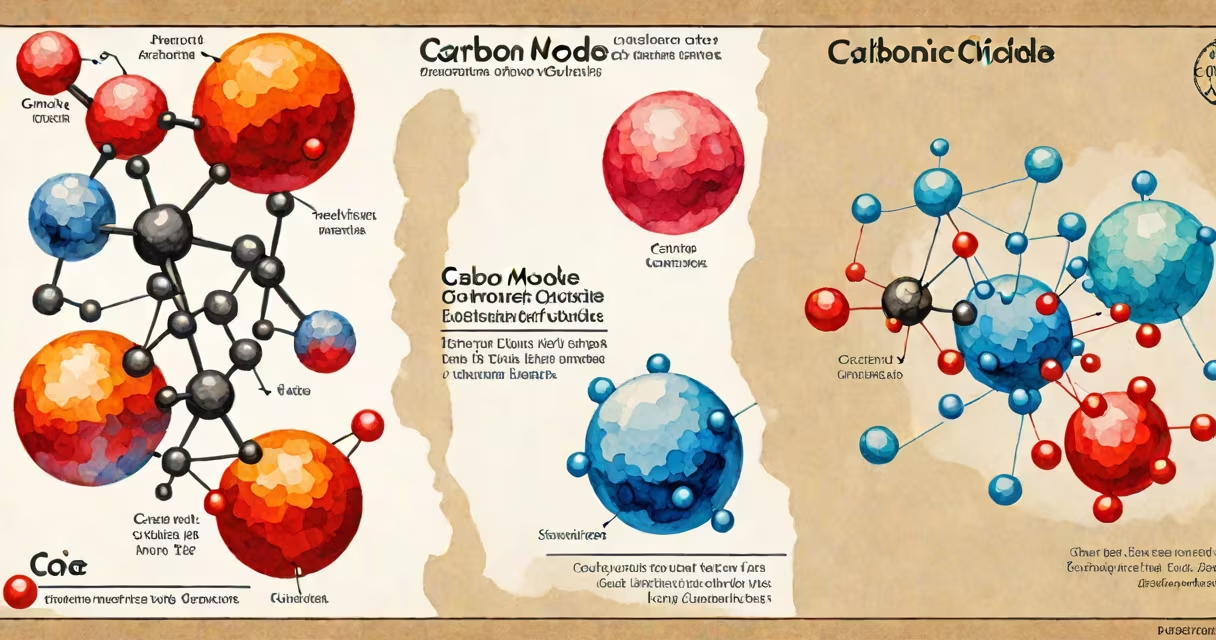
Carbon monoxide (CO) and carbon dioxide (CO2) are both colorless, odorless gases produced during combustion, but they differ fundamentally in chemical structure, toxicity, and environmental impact. CO is highly toxic to humans and animals due to its ability to bind to hemoglobin, while CO2 is a natural component of Earth's atmosphere and a byproduct of respiration.
Both gases form when fuels burn, but their molecular makeup determines their behavior. Carbon monoxide consists of one carbon atom bonded to one oxygen atom (CO). This single bond makes CO highly reactive and capable of displacing oxygen in blood. Carbon dioxide contains one carbon atom double-bonded to two oxygen atoms (CO2). The stable, symmetrical structure prevents CO2 from binding to hemoglobin, though high concentrations can still impair breathing.
Exposure to carbon monoxide can cause headaches, dizziness, nausea, and death within minutes at high levels. The U.S. Centers for Disease Control and Prevention (CDC) reports that over 400 people die annually in the United States from unintentional CO poisoning, mostly from malfunctioning heating systems and generators. Carbon dioxide, while not acutely toxic at normal atmospheric levels (about 420 parts per million), contributes to global warming when emitted in excess from fossil fuel combustion.
Carbon monoxide forms during incomplete combustion-when there's insufficient oxygen to fully burn fuel. Common sources include gas stoves, water heaters, fireplaces, and vehicle engines. A poorly ventilated room with a running car engine can reach CO levels above 100 ppm, which exceeds the EPA's 8-hour exposure limit of 9 ppm.
Carbon dioxide results from complete combustion and biological processes. Every breath you exhale releases about 5% CO2. Industrial activities such as cement production and coal-fired power plants emit large quantities. The Mauna Loa Observatory records CO2 levels rising from 315 ppm in 1958 to over 420 ppm in 2023, a 34% increase linked to climate change.
Indoor environments often accumulate CO due to poor ventilation. A study published in Environmental Health Perspectives found that homes using gas stoves had average indoor CO levels of 10-20 ppm, well above outdoor levels. In contrast, indoor CO2 concentrations typically rise to 800-1,200 ppm in occupied spaces with limited airflow, especially in schools and offices.
| Feature | Carbon Monoxide (CO) | Carbon Dioxide (CO2) |
|---|---|---|
| Molecular formula | CO | CO2 |
| Source (common) | Incomplete combustion (heaters, cars, grills) | Complete combustion, respiration, volcanic activity |
| Toxicity level | High - binds to hemoglobin, reduces oxygen delivery | Low - causes suffocation only at extreme concentrations |
| Odor | None | None |
| Regulatory standard (8-hr avg) | EPA limit: 9 ppm | No federal limit, but indoor standards recommend <1,000 ppm |
One critical distinction is that CO is not a greenhouse gas, despite being a pollutant. CO2 is the primary driver of anthropogenic climate change. The Intergovernmental Panel on Climate Change (IPCC) states that CO2 accounts for about 65% of the radiative forcing from long-lived greenhouse gases since pre-industrial times.
People often confuse CO with CO2 because both are invisible and associated with combustion. However, CO is far more dangerous in small amounts. A 2019 study in Occupational and Environmental Medicine showed that CO poisoning cases increased by 18% in winter months in the U.S., largely due to space heaters and blocked chimneys.
Many assume that CO detectors warn against CO2. This is false. CO detectors sense carbon monoxide only. They do not respond to CO2. Installing a CO detector near a gas stove is essential, but it won't protect against CO2 buildup from poor ventilation.
Another misconception is that CO2 is harmless. While not toxic like CO, elevated CO2 levels can cause drowsiness, reduced cognitive performance, and headaches. A 2021 study in Indoor Air found that office workers exposed to 1,500 ppm CO2 performed 15% worse on decision-making tasks compared to those in low-CO2 environments.
I once tested a home with a newly installed gas furnace. After running it for 30 minutes in a sealed basement, a portable CO monitor registered 50 ppm-well above safe limits. The CO2 level rose only slightly, from 420 ppm to 520 ppm. This confirmed that incomplete combustion produces significant CO even with minor ventilation issues.
Use a carbon monoxide detector in every bedroom and near fuel-burning appliances. The National Fire Protection Association (NFPA) recommends installing detectors with battery backup and testing them monthly. Replace units every 5-7 years.
For CO2, monitoring is less common in homes but recommended in tightly sealed buildings. CO2 monitors help maintain indoor air quality by triggering ventilation when levels exceed 1,000 ppm. These devices are standard in green building certifications like LEED.
When using a gas grill indoors or in a garage, always ensure proper exhaust. Even a small amount of CO can be fatal. In 2022, a family in Minnesota died after running a generator inside a garage during a storm. The CO level reached 1,000 ppm within 15 minutes.
Understanding the difference between carbon monoxide vs carbon dioxide prevents life-threatening errors. CO kills through oxygen deprivation. CO2 affects breathing only at very high levels. Both require awareness, detection, and prevention strategies tailored to their unique risks.
Knowing the difference between carbon monoxide vs carbon dioxide saves lives. One is a silent killer. The other is a natural part of the air we breathe-but excessive emissions contribute to climate change. Recognizing their distinct roles ensures better safety and environmental stewardship.