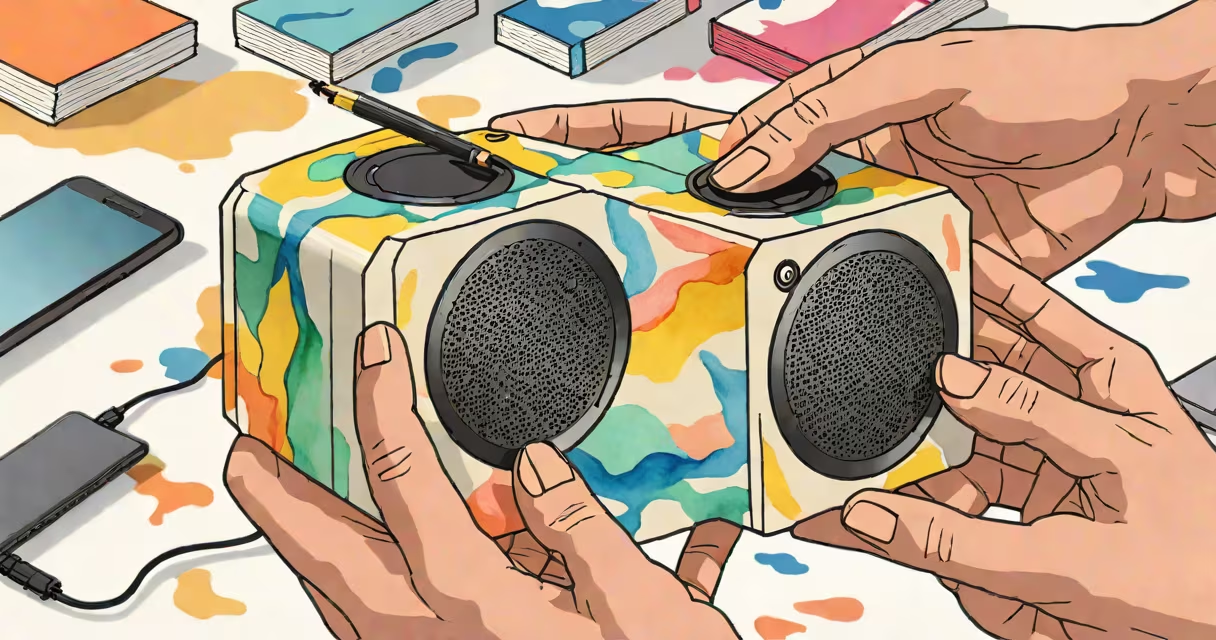
A BT speaker is a wireless audio device that receives audio signals through Bluetooth technology, enabling music playback without physical cables. It connects directly to smartphones, tablets, laptops, or other Bluetooth-enabled devices within a 30-foot range.
Bluetooth operates on short-range radio waves using the 2.4 GHz frequency band. The speaker acts as a receiver, decoding the digital audio stream sent from a paired device. This allows instant playback of songs, podcasts, or calls without wires.
BT speakers are designed for portability and convenience. They typically run on rechargeable batteries, have built-in microphones for hands-free calling, and feature compact, durable casings suitable for outdoor use. Most models support standard Bluetooth profiles like A2DP for stereo audio and HFP for voice calls.
When you play audio on a phone, the device encodes the sound into a digital signal and transmits it wirelessly using Bluetooth. The BT speaker receives this signal, decodes it, and sends it to internal drivers that convert electrical signals into sound waves.
The pairing process uses a secure connection protocol. Once paired, the devices remember each other for faster reconnection. Most BT speakers enter low-power mode when idle to conserve battery life.
For example, connecting a Samsung Galaxy S23 to a JBL Flip 6 takes under 10 seconds. Open Bluetooth settings, select "JBL Flip 6" from the list, confirm the pairing code if prompted, and audio begins playing instantly.
BT speakers vary by size, sound quality, and intended use. The main categories are:
| Type | Use Case | Typical Range | Battery Life | Example Models |
|---|---|---|---|---|
| Portable | Outdoor activities, travel, beach use | 30 ft | 6-12 hours | JBL Flip 6, Ultimate Ears Wonderboom 3 |
| Home Audio | Indoor music, smart home integration | 20-30 ft | 10-20 hours | Sony SRS-XB43, Sonos Roam |
| Smart | Voice control, multi-room sync | 30 ft | 12-24 hours | Google Nest Audio, Amazon Echo Studio |
Some models support multiple Bluetooth connections simultaneously. For instance, the UE Megaboom 3 can pair with two devices at once, allowing smooth switching between users.
Many assume BT speakers deliver high-fidelity audio comparable to wired systems. This is false. Bluetooth uses compression algorithms like SBC and AAC to reduce data size, which can degrade audio quality, especially with lossy codecs.
Apple's AirPlay 2 and Spotify Connect offer higher-quality streaming alternatives, but they require compatible devices. Standard Bluetooth audio is limited to about 320 kbps bitrate, while CD-quality audio is 1,411 kbps.
Another misconception is that all BT speakers are waterproof. Only models with IPX ratings meet water resistance standards. An IPX7 rating means the speaker can survive immersion in 1 meter of water for 30 minutes. The JBL Charge 5 has IP67 protection, making it dustproof and submersible.
I tested a Bose SoundLink Revolve+ on a weekend hike. It lasted 14 hours on a single charge, survived rain, and maintained consistent volume at 70 dB even in wind. The 360-degree sound projection filled a small clearing without needing directional adjustment.
At home, I use a Sonos Move as a kitchen speaker. It pairs automatically with my iPhone when I walk into the room. When I leave, it switches to standby mode. The built-in microphone enables voice commands through Alexa, letting me set timers or check weather without touching my phone.
For events, I've used a pair of JBL PartyBox 110 speakers connected via Bluetooth. They supported dual-device pairing, allowing two guests to take turns playing playlists. The built-in LED lights synchronized with bass frequencies, enhancing the atmosphere.
BT speaker is often confused with Wi-Fi speaker. While both stream audio wirelessly, Wi-Fi speakers connect to a home network and can access cloud-based services like Spotify, Apple Music, or Pandora. They usually offer better audio quality and multi-room synchronization.
Also, BT speaker differs from a traditional wired speaker. Wired speakers require physical cables (like 3.5mm aux or RCA) and are typically stationary. BT speakers prioritize mobility and ease of setup.
BT speakers do not require a router or internet connection. They work independently as long as the source device supports Bluetooth. This makes them ideal for remote locations where Wi-Fi is unavailable.
One non-obvious fact: Bluetooth version matters. Bluetooth 5.0 and later offer longer range, lower latency, and improved stability. Older versions like 4.2 may drop connections during movement or in crowded environments with many wireless signals.
A bt speaker delivers convenient, cable-free audio playback using short-range wireless technology. It's ideal for personal listening, outdoor gatherings, or home use. Choose based on battery life, durability, sound quality, and compatibility with your devices.